Updates

  1. Person pages list letters, writing, profiles and links as sortable tables with filters, and show each person's companies as links; Fund letters show each letter's description in its own column.
  2. Experts show a checked job title and a short description of each person; 30 more people have photographs.
  3. Every company, fund, university and publication the experts work for has a page listing the people there.
  4. Fund letters show each letter's thesis and filter by it; 225 person pages list the essays, columns and newsletter issues the person wrote.
  5. Person pages list every essay and newsletter issue a person wrote, and their own books as a table in List view.
  6. Recommends shows the five largest kinds of book and the rest under More; browse pictures load sooner.
  7. Podcasts and talks link the original episode, filter by Audio and video or Press, and list each publisher once.
  8. Pages are wider, Recommends has List and Grid, and a filter clicked again turns off.
  9. Book cards sit in a ruled grid with Open Library and Goodreads links and each book's one-line note.
  10. Funds is now Investors; each investor's styles are buttons that filter the table.
  11. Podcasts and talks on a person's page filter by year and publisher and show as a list or a grid of pictures.
  12. Quotes show only people's own words: 472 summaries written by list sites are gone.
  13. Country pages open from Browse again, and every link on the shelf lands on a page.
  14. Subject and person pages show their sections as tabs, and each book appears once on a person's page.
  15. Book cards show the quote, who said it and the source; grids show five cards to a row.
  16. On a phone, a menu holds the sections, search, Updates, Feedback and dark mode.
  17. Feedback takes a screenshot of the page with no browser prompt, opens a screenshot full size when you click it, and clears itself once sent.
  18. Book cards are centred, search names the topic each book sits in, and any text cut short shows whole on hover.
  19. Search groups its results by kind: people, companies, geographies, subjects, topics, books, funds, fund letters and papers.
  20. The Books table lists who recommended each book by name, and the browser tab names the section you are in.
  21. Feedback can take a screenshot of the page, or one you paste or choose, and opens in the corner beside Updates.
  22. Each rail button reopens its section where you left it, and Browse, Table and People show on every book and subject page.
  23. Filters grey out choices that hold nothing instead of hiding them, and Books › People filters by authors or recommenders.
  24. Feedback takes a subject line and up to three screenshots.
  25. Biographies are grouped by the person they are about: 41 new pages, from Abraham Lincoln to Lee Kuan Yew.
  26. Sport splits into 23 sports, and Religion into one topic per faith.
  27. Book lists show as cards: the cover, one recommendation quote and every recommender by name.
  28. Seventeen subjects that had two or three pages under different names now have one page each.
  29. Every page lists its Experts as authors and recommenders, with a link to them on the Experts tab.
  30. Economics, Financial history, Financial panics and Accounting are subjects of their own, with one page per financial crisis.
  31. Book, person and subject pages open inside the app, so the tabs stay in view.
  32. 996 more book covers, and photographs or logos for 227 more people and companies.
  33. Books › Browse shows every subject as cards, and the rail holds Fund letters, Papers, Experts, Books and Funds.
  34. Every topic over 150 books splits into narrower topics, each with a page of its own.

Send feedback

What is it?
Screenshots, up to 3 (optional)
or paste one with Ctrl+V

We use your email only to reply to you.

Canada at the Crossroads

Canada at the Crossroads

Michael E. Porter
1991
T4 468 pages · about 7h 48m to read Open Librarygoodreads

Study of Canadian competitiveness with the Monitor Company

Summary

The reference has not verified this book in detail; the summary states only what the title, author and subject establish.

Porter produced this study of Canadian competitiveness for the Business Council on National Issues and the Canadian government, applying the framework from The Competitive Advantage of Nations to a single country.

The reference has not verified the report's detailed findings. The framework Porter applies is his diamond: factor conditions, meaning the inputs available including specialised skills and infrastructure; demand conditions, meaning whether domestic customers are sophisticated and demanding; related and supporting industries, meaning the presence of competitive suppliers and adjacent industries forming clusters; and firm strategy, structure and rivalry, meaning whether domestic competition is intense enough to drive improvement.

Applied to Canada, the analysis identified a set of concerns that Porter and others had raised: an economy dependent on resource extraction and on the exploitation of natural advantages rather than on created advantages; branch plant manufacturing operations owned by foreign parents that conducted little research and served only the domestic market behind tariff protection; weak domestic rivalry in several sectors; low commercial research spending; and an education and training system not producing the specialised skills that upgrading required. The report was produced as the free trade agreement with the United States was taking effect, which removed the protection that had sustained the branch plant structure.

Porter's general prescription in such studies is to upgrade from competing on inherited advantages toward competing on created ones, which requires investment in specialised skills, sophisticated domestic demand, cluster development and genuine domestic competition.

Readers should treat this as a commissioned country study from 1991 whose specific findings are dated, and should verify the report's actual content.

Key takeaways 7

  1. Competing on inherited natural advantages does not sustain rising living standards, which requires created advantages instead.
  2. Branch plant operations owned by foreign parents conduct little research and serve only the protected domestic market.
  3. Removing tariff protection removes the rationale for branch plants, which forces either upgrading or closure.
  4. Sophisticated and demanding domestic customers drive firms to improve in ways that undemanding markets do not.
  5. Clusters of competitive suppliers and related industries produce advantages that individual firm policy cannot.
  6. Weak domestic rivalry produces firms that cannot compete internationally regardless of their protected domestic profitability.
  7. The specific findings are from 1991 and should be verified rather than assumed current.

Who should read it

Readers interested in applying Porter's national competitiveness framework to a specific country, treating the findings as historical.

About Michael E. Porter

Bishop William Lawrence University Professor Emeritus, Harvard Business School; founder, Institute for Strategy and Competitiveness

Competitive Strategy and the five-forces framework are the primary source for industry analysis, and Competitive Advantage supplied the value-chain vocabulary the field still uses.

Harvard Business School, Institute for Strategy and Competitiveness

Similar books 6

Chosen by shared topics, the entries that hold them, and the people who recommended both.
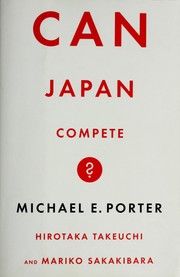
Michael E. Porter, Hirotaka Takeuchi, Mariko Sakakibara · 2000
Yanis Varoufakis · 2016

The euro's design flaws traced back through the postwar monetary system.

Costas Meghir, Christopher A. Pissarides, Dimitri Vayanos, Nikolaos Vettas · 2017

How the Greek economy actually works: its product markets, courts and firms.

Peadar Kirby · 2010

Structural reading of why the growth model was fragile from the start.

Martin Sandbu · 2015

Argues the currency was not the problem, the crisis management was; the best contrarian case.

Ashoka Mody · 2018

The euro from its intellectual origins to 2018, in nine acts.

Where it sits in the reference 2

Strategists
Economics

Topics

EconomicsBusiness and ManagementPolitics and GovernmentGlobalisation, development and offshore money