Updates

  1. Person pages list letters, writing, profiles and links as sortable tables with filters, and show each person's companies as links; Fund letters show each letter's description in its own column.
  2. Experts show a checked job title and a short description of each person; 30 more people have photographs.
  3. Every company, fund, university and publication the experts work for has a page listing the people there.
  4. Fund letters show each letter's thesis and filter by it; 225 person pages list the essays, columns and newsletter issues the person wrote.
  5. Person pages list every essay and newsletter issue a person wrote, and their own books as a table in List view.
  6. Recommends shows the five largest kinds of book and the rest under More; browse pictures load sooner.
  7. Podcasts and talks link the original episode, filter by Audio and video or Press, and list each publisher once.
  8. Pages are wider, Recommends has List and Grid, and a filter clicked again turns off.
  9. Book cards sit in a ruled grid with Open Library and Goodreads links and each book's one-line note.
  10. Funds is now Investors; each investor's styles are buttons that filter the table.
  11. Podcasts and talks on a person's page filter by year and publisher and show as a list or a grid of pictures.
  12. Quotes show only people's own words: 472 summaries written by list sites are gone.
  13. Country pages open from Browse again, and every link on the shelf lands on a page.
  14. Subject and person pages show their sections as tabs, and each book appears once on a person's page.
  15. Book cards show the quote, who said it and the source; grids show five cards to a row.
  16. On a phone, a menu holds the sections, search, Updates, Feedback and dark mode.
  17. Feedback takes a screenshot of the page with no browser prompt, opens a screenshot full size when you click it, and clears itself once sent.
  18. Book cards are centred, search names the topic each book sits in, and any text cut short shows whole on hover.
  19. Search groups its results by kind: people, companies, geographies, subjects, topics, books, funds, fund letters and papers.
  20. The Books table lists who recommended each book by name, and the browser tab names the section you are in.
  21. Feedback can take a screenshot of the page, or one you paste or choose, and opens in the corner beside Updates.
  22. Each rail button reopens its section where you left it, and Browse, Table and People show on every book and subject page.
  23. Filters grey out choices that hold nothing instead of hiding them, and Books › People filters by authors or recommenders.
  24. Feedback takes a subject line and up to three screenshots.
  25. Biographies are grouped by the person they are about: 41 new pages, from Abraham Lincoln to Lee Kuan Yew.
  26. Sport splits into 23 sports, and Religion into one topic per faith.
  27. Book lists show as cards: the cover, one recommendation quote and every recommender by name.
  28. Seventeen subjects that had two or three pages under different names now have one page each.
  29. Every page lists its Experts as authors and recommenders, with a link to them on the Experts tab.
  30. Economics, Financial history, Financial panics and Accounting are subjects of their own, with one page per financial crisis.
  31. Book, person and subject pages open inside the app, so the tabs stay in view.
  32. 996 more book covers, and photographs or logos for 227 more people and companies.
  33. Books › Browse shows every subject as cards, and the rail holds Fund letters, Papers, Experts, Books and Funds.
  34. Every topic over 150 books splits into narrower topics, each with a page of its own.

Send feedback

What is it?
Screenshots, up to 3 (optional)
or paste one with Ctrl+V

We use your email only to reply to you.

Chokepoints

Chokepoints

Edward Fishman
2025
T2 536 pages · about 8h 56m to read Open Librarygoodreads

Sanctions and export controls as the force actually moving supply chains.

Summary

Fishman worked on sanctions policy at the State Department and in the Treasury, and wrote this history of how the United States built economic warfare into its principal instrument of coercion.

The historical narrative covers the development of the modern sanctions toolkit. After 2001 the Treasury developed methods for cutting entities off from the dollar clearing system, which works because dollar transactions ultimately clear through American institutions, giving the United States jurisdiction over transactions between foreign parties. The Iran programme built on this, using secondary sanctions that penalise foreign firms for dealing with sanctioned parties, which forced banks and companies worldwide to comply with American policy regardless of their own governments' positions. Fishman covers the Russia programmes after 2014 and after 2022, including the freezing of central bank reserves, which was the most consequential single action because it demonstrated that reserves held in Western currencies are not unconditionally available. He also covers export controls on semiconductors and on the equipment used to make them, which he treats as the more powerful instrument against China because the chokepoints in that supply chain are narrow and held by American and allied firms.

His analytical argument concerns durability. Each use of these instruments demonstrates their power and simultaneously gives every other country a reason to reduce its exposure. He examines the alternatives being built, including payment systems outside the dollar, central bank reserve diversification, and Chinese semiconductor investment, and argues that the instruments' effectiveness will decline as those alternatives mature.

The book is written by a former practitioner with access to participants and covers events through the current period. Its judgement about how quickly alternatives will develop is a forecast rather than a finding, and the evidence on de-dollarisation to date is mixed.

Key takeaways 7

  1. Dollar transactions clear through American institutions, which gives the United States jurisdiction over transactions between foreign parties.
  2. Secondary sanctions penalise foreign firms for dealing with sanctioned parties, which forces compliance regardless of their own government's position.
  3. Freezing Russian central bank reserves demonstrated that reserves held in Western currencies are not unconditionally available.
  4. Export controls on semiconductor equipment are more powerful than financial sanctions because the supply chain chokepoints are narrower.
  5. Each use of these instruments demonstrates their power and gives every other country a reason to reduce its exposure.
  6. The instruments' effectiveness depends on the absence of alternatives, so their use accelerates the development of those alternatives.
  7. Economic coercion has become the primary instrument of American statecraft because military options are costly and diplomacy alone is weak.

Who should read it

Investors and operators exposed to sanctions, export controls or supply chain concentration who need the mechanics and the strategic trajectory.

Similar books 6

Chosen by shared topics, the entries that hold them, and the people who recommended both.
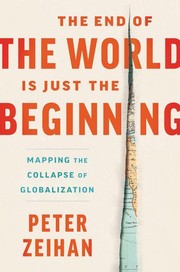
Peter Zeihan · 2022

Why the US-guarded trading order is ending, and what that means for supply chains.

Recommended by: Andrew Wilkinson
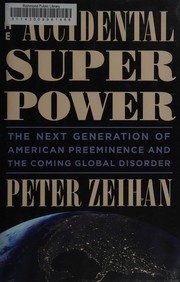
Peter Zeihan · 2014

How geography, demography and shale energy set America up to dominate as others age.

Recommended by: Mohnish Pabrai
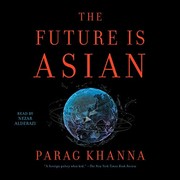
Parag Khanna · 2019

Asia as one order from Saudi Arabia to Japan, linking five billion people by trade.

Recommended by: Balaji S. Srinivasan
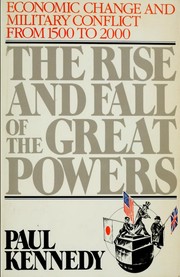
Paul Kennedy · 1987

Military spending measured against the economy that has to carry it.

“The River Out of Eden by Richard Dawkins, The Rise and Fall of the Great Powers by Paul Kennedy” — Ray Dalio

Source: Ray Dalio Reddit AMA, r/IAmA (u/RayTDalio)

Recommended by: Ray Dalio, Michael Wong
Where it sits in the reference 2

Secular themes
Economics

Topics

Politics and GovernmentEconomicsWar and StrategyGeopolitics and international relations