Updates

  1. Person pages list letters, writing, profiles and links as sortable tables with filters, and show each person's companies as links; Fund letters show each letter's description in its own column.
  2. Experts show a checked job title and a short description of each person; 30 more people have photographs.
  3. Every company, fund, university and publication the experts work for has a page listing the people there.
  4. Fund letters show each letter's thesis and filter by it; 225 person pages list the essays, columns and newsletter issues the person wrote.
  5. Person pages list every essay and newsletter issue a person wrote, and their own books as a table in List view.
  6. Recommends shows the five largest kinds of book and the rest under More; browse pictures load sooner.
  7. Podcasts and talks link the original episode, filter by Audio and video or Press, and list each publisher once.
  8. Pages are wider, Recommends has List and Grid, and a filter clicked again turns off.
  9. Book cards sit in a ruled grid with Open Library and Goodreads links and each book's one-line note.
  10. Funds is now Investors; each investor's styles are buttons that filter the table.
  11. Podcasts and talks on a person's page filter by year and publisher and show as a list or a grid of pictures.
  12. Quotes show only people's own words: 472 summaries written by list sites are gone.
  13. Country pages open from Browse again, and every link on the shelf lands on a page.
  14. Subject and person pages show their sections as tabs, and each book appears once on a person's page.
  15. Book cards show the quote, who said it and the source; grids show five cards to a row.
  16. On a phone, a menu holds the sections, search, Updates, Feedback and dark mode.
  17. Feedback takes a screenshot of the page with no browser prompt, opens a screenshot full size when you click it, and clears itself once sent.
  18. Book cards are centred, search names the topic each book sits in, and any text cut short shows whole on hover.
  19. Search groups its results by kind: people, companies, geographies, subjects, topics, books, funds, fund letters and papers.
  20. The Books table lists who recommended each book by name, and the browser tab names the section you are in.
  21. Feedback can take a screenshot of the page, or one you paste or choose, and opens in the corner beside Updates.
  22. Each rail button reopens its section where you left it, and Browse, Table and People show on every book and subject page.
  23. Filters grey out choices that hold nothing instead of hiding them, and Books › People filters by authors or recommenders.
  24. Feedback takes a subject line and up to three screenshots.
  25. Biographies are grouped by the person they are about: 41 new pages, from Abraham Lincoln to Lee Kuan Yew.
  26. Sport splits into 23 sports, and Religion into one topic per faith.
  27. Book lists show as cards: the cover, one recommendation quote and every recommender by name.
  28. Seventeen subjects that had two or three pages under different names now have one page each.
  29. Every page lists its Experts as authors and recommenders, with a link to them on the Experts tab.
  30. Economics, Financial history, Financial panics and Accounting are subjects of their own, with one page per financial crisis.
  31. Book, person and subject pages open inside the app, so the tabs stay in view.
  32. 996 more book covers, and photographs or logos for 227 more people and companies.
  33. Books › Browse shows every subject as cards, and the rail holds Fund letters, Papers, Experts, Books and Funds.
  34. Every topic over 150 books splits into narrower topics, each with a page of its own.

Send feedback

What is it?
Screenshots, up to 3 (optional)
or paste one with Ctrl+V

We use your email only to reply to you.

Common Sense: The Investor's Guide to Equali

Common Sense: The Investor's Guide to Equality, Opportunity, and Growth

Joel Greenblatt
2020
T4 144 pages · about 2h 24m to read Open Librarygoodreads

Summary

Greenblatt, who runs Gotham Capital and wrote The Little Book That Beats the Market, applied his analytical habits to public policy questions in this short book.

His method is to ask what actually produces the outcome in each case and to look for the intervention with the best return per dollar. On education he argues from the charter school lottery evidence, which uses random assignment among applicants to identify the effect of attending, that certain school models produce large measurable gains for low-income students, and that expanding what works rather than reforming what does not is the higher-return approach. He was personally involved in funding schools in New York, which informs the discussion.

On banking he proposes narrow banking arrangements that would separate deposit-taking from risk-taking, on the argument that government guarantees of deposits inevitably subsidise the risk-taking attached to them.

On monetary policy he argues that quantitative easing operated primarily by raising asset prices and therefore benefited existing asset holders, and he proposes alternative mechanisms for putting money into the hands of people who would spend it.

On immigration, on job training and on other questions he applies the same approach: identify the measurable effect and the cost.

The book is short and written for general readers. Its strength is the insistence on evidence about what works rather than on ideological position, and Greenblatt is explicit that he is applying an investor's habits to fields where he is not an expert. The charter school evidence he relies on is genuine but contested in its generalisability, since lottery studies identify the effect of the schools that are oversubscribed rather than of the sector. His policy proposals are sketches rather than developed programmes.

Key takeaways 7

  1. Charter school lottery studies use random assignment among applicants, which identifies the effect of attending rather than of who applies.
  2. Expanding school models that measurably work produces better returns than reforming those that do not.
  3. Government guarantees of bank deposits inevitably subsidise the risk-taking attached to the same institutions.
  4. Separating deposit-taking from risk-taking would remove the subsidy without eliminating either function.
  5. Quantitative easing operated by raising asset prices, which benefited people who already held assets.
  6. Policy questions should be assessed by measurable effect per dollar spent rather than by ideological position.
  7. Lottery studies identify the effect of oversubscribed schools, which limits what they establish about the sector as a whole.

Who should read it

Readers who want an investor's evidence-first approach applied to education, banking and monetary policy, treating the proposals as sketches.

About Joel Greenblatt

Founder of Gotham Capital (1985) and Managing Principal of Gotham Asset Management; long-time adjunct professor at Columbia Business School

You Can Be a Stock Market Genius is the standard text on special-situations investing, and the Magic Formula books turned quantitative value into a method ordinary investors can follow.

Gotham Asset Management, Columbia Business School

Similar books 6

Chosen by shared topics, the entries that hold them, and the people who recommended both.
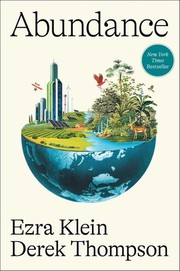
Ezra Klein, Derek Thompson · 2025

Why America lost the ability to build housing, energy and infrastructure.

Recommended by: Andrew Wilkinson, Bill Gates
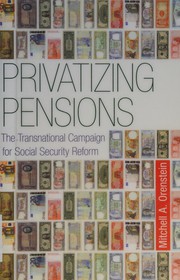
Mitchell A. Orenstein · 2008

How Chile's AFP model was exported worldwide, and who profited.
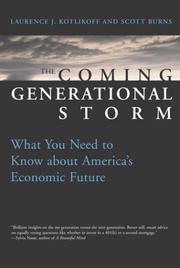
Laurence J. Kotlikoff, Scott Burns · 2004

US fiscal promises far exceed future revenue, which official debt figures hide.
Where it sits in the reference 2

Investors
Economics

Topics

EconomicsPolitics and GovernmentRegulation, central banks and public policy