Updates

  1. Person pages list letters, writing, profiles and links as sortable tables with filters, and show each person's companies as links; Fund letters show each letter's description in its own column.
  2. Experts show a checked job title and a short description of each person; 30 more people have photographs.
  3. Every company, fund, university and publication the experts work for has a page listing the people there.
  4. Fund letters show each letter's thesis and filter by it; 225 person pages list the essays, columns and newsletter issues the person wrote.
  5. Person pages list every essay and newsletter issue a person wrote, and their own books as a table in List view.
  6. Recommends shows the five largest kinds of book and the rest under More; browse pictures load sooner.
  7. Podcasts and talks link the original episode, filter by Audio and video or Press, and list each publisher once.
  8. Pages are wider, Recommends has List and Grid, and a filter clicked again turns off.
  9. Book cards sit in a ruled grid with Open Library and Goodreads links and each book's one-line note.
  10. Funds is now Investors; each investor's styles are buttons that filter the table.
  11. Podcasts and talks on a person's page filter by year and publisher and show as a list or a grid of pictures.
  12. Quotes show only people's own words: 472 summaries written by list sites are gone.
  13. Country pages open from Browse again, and every link on the shelf lands on a page.
  14. Subject and person pages show their sections as tabs, and each book appears once on a person's page.
  15. Book cards show the quote, who said it and the source; grids show five cards to a row.
  16. On a phone, a menu holds the sections, search, Updates, Feedback and dark mode.
  17. Feedback takes a screenshot of the page with no browser prompt, opens a screenshot full size when you click it, and clears itself once sent.
  18. Book cards are centred, search names the topic each book sits in, and any text cut short shows whole on hover.
  19. Search groups its results by kind: people, companies, geographies, subjects, topics, books, funds, fund letters and papers.
  20. The Books table lists who recommended each book by name, and the browser tab names the section you are in.
  21. Feedback can take a screenshot of the page, or one you paste or choose, and opens in the corner beside Updates.
  22. Each rail button reopens its section where you left it, and Browse, Table and People show on every book and subject page.
  23. Filters grey out choices that hold nothing instead of hiding them, and Books › People filters by authors or recommenders.
  24. Feedback takes a subject line and up to three screenshots.
  25. Biographies are grouped by the person they are about: 41 new pages, from Abraham Lincoln to Lee Kuan Yew.
  26. Sport splits into 23 sports, and Religion into one topic per faith.
  27. Book lists show as cards: the cover, one recommendation quote and every recommender by name.
  28. Seventeen subjects that had two or three pages under different names now have one page each.
  29. Every page lists its Experts as authors and recommenders, with a link to them on the Experts tab.
  30. Economics, Financial history, Financial panics and Accounting are subjects of their own, with one page per financial crisis.
  31. Book, person and subject pages open inside the app, so the tabs stay in view.
  32. 996 more book covers, and photographs or logos for 227 more people and companies.
  33. Books › Browse shows every subject as cards, and the rail holds Fund letters, Papers, Experts, Books and Funds.
  34. Every topic over 150 books splits into narrower topics, each with a page of its own.

Send feedback

What is it?
Screenshots, up to 3 (optional)
or paste one with Ctrl+V

We use your email only to reply to you.

Abundance

Abundance

Ezra Klein, Derek Thompson
2025
T4 304 pages · about 5h 4m to read Open Librarygoodreads

Why building housing, energy and infrastructure became so hard in America

Summary

Klein and Thompson argue that the United States has lost the capacity to build the physical things it needs, including housing, transmission lines, clean energy, transport and public infrastructure, and that the obstacle is a set of procedural constraints created by people who intended to protect the public.

Their central claim is that the political left has focused on distributing access to goods while losing the ability to increase their supply, and that the resulting scarcity in housing, energy and infrastructure produces the outcomes it was meant to prevent. They document the cost and schedule overruns on specific projects including California high-speed rail, and the procedural requirements including environmental review, litigation exposure and multi-agency approval that produce them.

Their analysis of housing follows the supply argument, holding that restriction produces the prices that then require subsidy, and that the subsidy does not address the restriction. On energy they argue that transmission capacity rather than generation is the binding constraint on decarbonisation, and that the permitting regime prevents building it. On science and technology they argue that funding mechanisms have become risk-averse and process-heavy in ways that select against the work most likely to produce breakthroughs.

The book is a political argument aimed at a specific audience and published in 2025. Critics on the left argue that it understates the interests protected by the procedures and treats regulatory capture as procedural failure. Critics on the right argue that it avoids the question of state capacity. The specific documentation of how long things take and why is the substantive material.

Key takeaways 8

  1. The United States has lost the capacity to build physical infrastructure at reasonable cost and schedule, which is a procedural rather than a technical failure.
  2. Procedural constraints created to protect the public now prevent the construction of the things the public needs.
  3. Restricting housing supply produces the prices that then require subsidy, and the subsidy does not address the restriction.
  4. Transmission capacity rather than generation is the binding constraint on decarbonisation, and permitting prevents building it.
  5. Environmental review processes are used to block projects including those with clear environmental benefits, which inverts their purpose.
  6. Distributing access to a scarce good and increasing its supply are different problems, and political attention has gone almost entirely to the first.
  7. Research funding mechanisms have become risk-averse and process-heavy in ways that select against the work most likely to produce breakthroughs.
  8. Critics argue the book treats regulatory capture as procedural failure and understates the interests the procedures protect.

Who should read it

Investors and operators in housing, energy and infrastructure who want the supply-side argument and specific documentation of what delays projects.

Who recommended it 2 · 2 direct

Similar books 6

Chosen by shared topics, the entries that hold them, and the people who recommended both.

Alain Bertaud · 2018

Cities as labour markets, and planning that works with land markets.

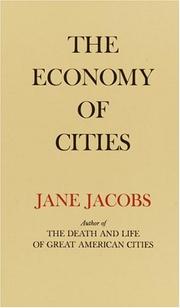
Jane Jacobs · 1969

Cities, not farms, drive economic growth by adding new work to old.

Enrico Moretti · 2012

Why US cities have split apart in wages and jobs, and why innovation hubs pull ahead.
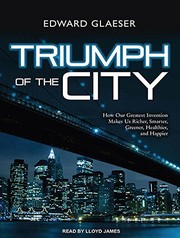
Edward L. Glaeser · 2011

How dense cities make people more productive, inventive and green.

“on the central role cities play in our world and why it's so important for us to build them” — Marc Andreessen

Source: @pmarca, companion thread to 'It's Time to Build'

Recommended by: Marc Andreessen, Mohnish Pabrai and 2 others

Where it sits in the reference 3

Secular themes
Secular themes
Economics

Topics

Politics and GovernmentEconomicsRegulation, central banks and public policy