Updates

  1. Person pages list letters, writing, profiles and links as sortable tables with filters, and show each person's companies as links; Fund letters show each letter's description in its own column.
  2. Experts show a checked job title and a short description of each person; 30 more people have photographs.
  3. Every company, fund, university and publication the experts work for has a page listing the people there.
  4. Fund letters show each letter's thesis and filter by it; 225 person pages list the essays, columns and newsletter issues the person wrote.
  5. Person pages list every essay and newsletter issue a person wrote, and their own books as a table in List view.
  6. Recommends shows the five largest kinds of book and the rest under More; browse pictures load sooner.
  7. Podcasts and talks link the original episode, filter by Audio and video or Press, and list each publisher once.
  8. Pages are wider, Recommends has List and Grid, and a filter clicked again turns off.
  9. Book cards sit in a ruled grid with Open Library and Goodreads links and each book's one-line note.
  10. Funds is now Investors; each investor's styles are buttons that filter the table.
  11. Podcasts and talks on a person's page filter by year and publisher and show as a list or a grid of pictures.
  12. Quotes show only people's own words: 472 summaries written by list sites are gone.
  13. Country pages open from Browse again, and every link on the shelf lands on a page.
  14. Subject and person pages show their sections as tabs, and each book appears once on a person's page.
  15. Book cards show the quote, who said it and the source; grids show five cards to a row.
  16. On a phone, a menu holds the sections, search, Updates, Feedback and dark mode.
  17. Feedback takes a screenshot of the page with no browser prompt, opens a screenshot full size when you click it, and clears itself once sent.
  18. Book cards are centred, search names the topic each book sits in, and any text cut short shows whole on hover.
  19. Search groups its results by kind: people, companies, geographies, subjects, topics, books, funds, fund letters and papers.
  20. The Books table lists who recommended each book by name, and the browser tab names the section you are in.
  21. Feedback can take a screenshot of the page, or one you paste or choose, and opens in the corner beside Updates.
  22. Each rail button reopens its section where you left it, and Browse, Table and People show on every book and subject page.
  23. Filters grey out choices that hold nothing instead of hiding them, and Books › People filters by authors or recommenders.
  24. Feedback takes a subject line and up to three screenshots.
  25. Biographies are grouped by the person they are about: 41 new pages, from Abraham Lincoln to Lee Kuan Yew.
  26. Sport splits into 23 sports, and Religion into one topic per faith.
  27. Book lists show as cards: the cover, one recommendation quote and every recommender by name.
  28. Seventeen subjects that had two or three pages under different names now have one page each.
  29. Every page lists its Experts as authors and recommenders, with a link to them on the Experts tab.
  30. Economics, Financial history, Financial panics and Accounting are subjects of their own, with one page per financial crisis.
  31. Book, person and subject pages open inside the app, so the tabs stay in view.
  32. 996 more book covers, and photographs or logos for 227 more people and companies.
  33. Books › Browse shows every subject as cards, and the rail holds Fund letters, Papers, Experts, Books and Funds.
  34. Every topic over 150 books splits into narrower topics, each with a page of its own.

Send feedback

What is it?
Screenshots, up to 3 (optional)
or paste one with Ctrl+V

We use your email only to reply to you.

The New Geography of Jobs

The New Geography of Jobs

Enrico Moretti
2012
T2 294 pages · about 4h 54m to read Open Librarygoodreads

Why a few metropolitan areas capture most of the gains.

Summary

Enrico Moretti, a labour economist at Berkeley, examines why American cities have diverged so sharply in wages, employment and opportunity, and what determines which cities gain.

His central empirical finding concerns the local multiplier. Using data on employment across metropolitan areas, he estimates that each new job in the traded innovation sector generates roughly five additional jobs in local services in the same city, and that this multiplier is far larger than for traditional manufacturing, where he estimates about 1.6. The mechanism is that innovation workers earn high wages and spend them locally on services that cannot be traded, which raises wages for the people supplying those services, including workers without college education.

He then explains why innovation activity clusters. Three forces produce agglomeration: thick labour markets that let specialised workers and firms find each other, supplier ecosystems, and knowledge spillovers between people working on related problems. These forces are self-reinforcing, which produces divergence rather than convergence between cities. Moretti argues that the resulting geographic inequality is now the dominant form of American inequality, that mobility has fallen partly because housing costs in successful cities are prohibitive, and that place-based subsidies to attract firms generally fail. His policy conclusions favour housing supply, education and mobility support. The multiplier estimate has been contested on identification grounds, and the housing constraint argument has become the more widely accepted part.

Key takeaways 7

  1. Each job in the traded innovation sector generates roughly five additional local service jobs, a multiplier far above manufacturing's.
  2. Innovation clusters because thick labour markets, supplier ecosystems and knowledge spillovers reinforce each other.
  3. Agglomeration forces produce divergence rather than convergence between cities, so successful cities pull further ahead.
  4. Workers without college education earn substantially more in innovation-hub cities than in declining ones, doing the same jobs.
  5. Housing costs in successful cities absorb the wage gains and prevent the mobility that would equalise outcomes.
  6. Place-based subsidies to attract individual firms generally fail because they do not create the conditions clustering requires.
  7. Moretti argues that geographic divergence is now the dominant form of American economic inequality.

Who should read it

Investors and policymakers thinking about regional economies, housing and where technology employment concentrates.

Similar books 6

Chosen by shared topics, the entries that hold them, and the people who recommended both.

Alain Bertaud · 2018

Cities as labour markets, and planning that works with land markets.

Jane Jacobs · 1969

Cities, not farms, drive economic growth by adding new work to old.
Edward L. Glaeser · 2011

How dense cities make people more productive, inventive and green.

“on the central role cities play in our world and why it's so important for us to build them” — Marc Andreessen

Source: @pmarca, companion thread to 'It's Time to Build'

Recommended by: Marc Andreessen, Mohnish Pabrai and 2 others
Ezra Klein, Derek Thompson · 2025

Why America lost the ability to build housing, energy and infrastructure.

Recommended by: Andrew Wilkinson, Bill Gates
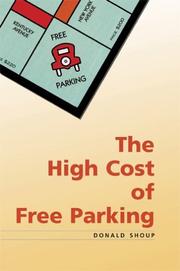
Donald Shoup · 2005

How free parking costs society, and why parking should be priced and deregulated.

Recommended by: Bill Gurley

Clive Hamilton, Richard Denniss · 2006

Recommended by: The Barefoot Investor

Where it sits in the reference 2

Secular themes
Economics

Topics

EconomicsSociology and CultureCities and urban life