Deep Value
Traces the method from Graham through Icahn to the acquirer's multiple.
Summary
Carlisle examines the empirical evidence for deep value investing, meaning the purchase of statistically cheap and frequently troubled companies, and argues that the simplest measures outperform more sophisticated ones. His central finding runs against Buffett's later approach. Carlisle tests the acquirer's multiple, meaning enterprise value divided by operating earnings, against Greenblatt's magic formula which combines that measure with return on capital, and reports that the simple cheapness measure alone outperformed the combination. His explanation is that high returns on capital mean-revert, so paying for quality means paying for a characteristic that will not persist, while cheapness does not depend on any forecast.
He develops the mean reversion argument through the history of value investing, covering Graham's net current asset approach, the evidence on the value premium, and the specific mechanism by which troubled businesses recover, which is that poor returns attract less capital and competitors exit.
He also covers the role of activist investors as the mechanism that forces value realisation in companies where management will not act, drawing on Icahn's early campaigns and on the academic literature on activist returns. His treatment of the psychological difficulty is honest. Deep value portfolios hold companies with bad news, declining businesses and visible problems, which is why the returns persist and why most investors will not hold them.
The backtests carry the standard problems of survivorship, transaction costs and small-company liquidity. Value strategies have performed poorly across an extended period since publication. The argument that quality mean-reverts and cheapness does not is the book's most useful contribution.
Key takeaways 8
- The simplest cheapness measure, enterprise value divided by operating earnings, outperformed combinations that add a quality measure.
- High returns on capital mean-revert, so paying a premium for quality means paying for a characteristic that will not persist.
- Cheapness does not depend on a forecast, which is why it survives as a criterion where quality assessments do not.
- Poor returns in an industry attract less capital and drive competitors out, which is the mechanism by which troubled businesses recover.
- Deep value portfolios hold companies with visible problems and bad news, which is why most investors will not hold them and why the returns persist.
- Activist investors provide the mechanism that forces value realisation where management will not act voluntarily.
- Buffett's shift toward quality at fair prices is contradicted by this evidence, which Carlisle addresses directly rather than avoiding.
- Value strategies have underperformed for an extended period since publication, which readers should weigh against the historical backtests.
Who should read it
Value investors deciding between cheapness and quality as the primary criterion, wanting the empirical case for the simpler measure.
About Tobias E. Carlisle
Australian-born fund manager and founder of Acquirers Funds; writes on deep-value screening and systematic value investing.
Deep Value examines why the cheapest, most beaten-down companies outperform higher-quality compounders on average, and traces the activist and liquidation history behind that result. The Acquirer's Multiple sets out the enterprise-value-to-operating-earnings screen he runs, and Quantitative Value tests value rules against the data with the discretionary error removed.
Who recommended it 2 · 2 direct
Similar books 6
Chosen by shared topics, the entries that hold them, and the people who recommended both.
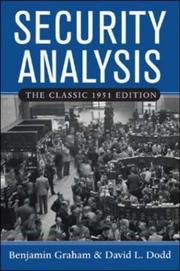
How to read financial statements sceptically and value bonds and stocks.
“I've spent more time with all of the editions of Benjamin Graham and David Dodd's Security Analysis than with any other book” — Christopher Bloomstran
Source: Semper Augustus 2024 Letter to Clients, 'Books and Tunes for Walking', p. 95
Recommended by: Christopher Bloomstran, Howard Marks and 11 others
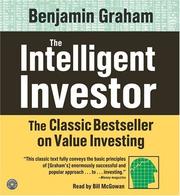
Treat stocks as parts of businesses and buy only with a margin of safety.
“I have been accused of telling all my secrets. I have written a number of books, and I reveal them all in these books.” — Benjamin Graham
Source: Graham on revealing everything he knows in his books
Recommended by: Benjamin Graham, Christopher Bloomstran and 27 others
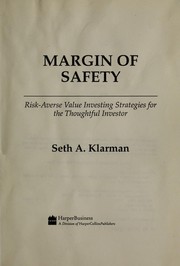
Avoid permanent loss: buy well below value and aim for absolute returns.
“Seth Klarman's 'Margin of Safety' is a good book about risk.” — Arnold Van Den Berg
Source: Van Den Berg on Margin of Safety as a book about risk
Recommended by: Arnold Van Den Berg, Frank Martin, Guy Spier and 6 others
Safe and cheap investing: a security can be both lower-risk and higher-return.
Recommended by: Guy Spier, Mohnish Pabrai, Seth Klarman
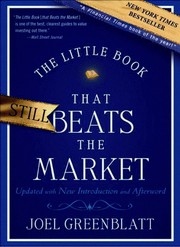
The magic formula: buy cheap stocks with high returns on capital, mechanically.
Recommended by: Mohnish Pabrai and 2 others
Where it sits in the reference 5
Topics