Quantitative Value: A Practitioner's Guide to Automating Intelligent Investment and Eliminating Behavioral Errors
Summary
Gray and Carlisle build a systematic value strategy from the ground up and backtest each component. They start from the observation that Joel Greenblatt's magic formula and Piotroski's F-score both work, then decompose the problem into four steps: avoid permanent loss, screen for quality, buy cheap, and confirm with signals from informed parties.
The screening architecture is specific. They use accruals and financial distress measures, including a probability-of-bankruptcy model, to eliminate candidates with accounting manipulation or default risk. They compare quality metrics and conclude that returns on capital measured with the Greenblatt definition and a franchise-strength assessment beat alternatives. On valuation they test the common multiples against each other and find enterprise value to operating earnings outperforms price to book, price to earnings, and free cash flow yield over their sample. They then add confirming signals from insider buying, short interest and institutional activity. The backtests run from 1974 to 2011 on United States data.
The book's real argument is not about which factor wins but about process. Gray and Carlisle marshal the evidence from Meehl onward that simple statistical models beat expert judgement, and argue that the correct role for a value investor is to build the model and then not override it. That claim is the most useful part and the most resisted. The weaknesses are the usual ones for backtested research: the sample is a single country over a specific regime, the results are sensitive to how survivorship and delisting returns are handled, and value factors performed poorly for most of the decade after publication, which the book's confidence does not prepare a reader for.
Key takeaways 7
- Simple statistical models applied consistently outperform expert judgement in security selection, and the main source of underperformance is the analyst overriding the model.
- Enterprise value to operating earnings selects better than price to book, price to earnings or free cash flow yield across the tested period.
- Screening out accounting manipulation and financial distress before valuing anything improves returns more than refining the valuation metric does.
- High accruals relative to cash flow predict future earnings disappointment and should disqualify a candidate.
- Quality measured as return on invested capital combined with evidence of a durable franchise separates cheap-and-good from cheap-and-deteriorating.
- Insider purchases and low short interest add incremental information to a value screen, while sell-side ratings add none.
- Concentrating a value portfolio in the highest-ranked decile produces materially better results than diluting it across a broad value universe.
Who should read it
Quantitative and value investors who want a fully specified, backtested screening process and the evidence for preferring rules over discretion.
About Wesley R. Gray
Founder and CEO, Alpha Architect; formerly assistant professor of finance at Drexel University's LeBow College of Business; former U.S. Marine Corps captain
Quantitative Value and Quantitative Momentum are the standard build-it-yourself manuals for systematic value and momentum, and Alpha Architect is a heavily used practitioner research archive.
Similar books 6
Chosen by shared topics, the entries that hold them, and the people who recommended both.
Traces the method from Graham through Icahn to the acquirer's multiple.
Recommended by: Mohnish Pabrai, Patrick O'Shaughnessy
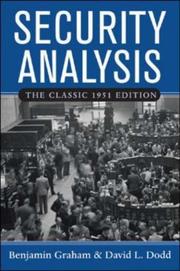
How to read financial statements sceptically and value bonds and stocks.
“I've spent more time with all of the editions of Benjamin Graham and David Dodd's Security Analysis than with any other book” — Christopher Bloomstran
Source: Semper Augustus 2024 Letter to Clients, 'Books and Tunes for Walking', p. 95
Recommended by: Christopher Bloomstran, Howard Marks and 11 others

Updates Graham and Dodd's valuation method for modern financial statements
Recommended by: Mohnish Pabrai
Short popular version of the enterprise-value-to-operating-earnings screen.
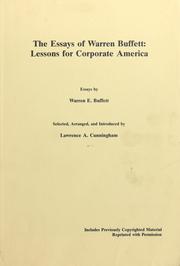
Berkshire's shareholder letters arranged by topic: governance, valuation, mergers.
“The resource is as valuable as Larry Cunningham's The Essays of Warren Buffett, which similarly organizes by subject matter” — Christopher Bloomstran
Source: Semper Augustus 2024 Letter to Clients, 'Books and Tunes for Walking', p. 96
Recommended by: Christopher Bloomstran, Francois Rochon and 11 others

Where it sits in the reference 6
Topics