The Acquirer's Multiple
Short popular version of the enterprise-value-to-operating-earnings screen.
Summary
Tobias Carlisle argues that the simplest measure of cheapness outperforms more sophisticated value approaches, and that the specific measure to use is enterprise value divided by operating earnings, which he calls the acquirer's multiple because it is what a buyer of the whole business would look at.
His argument against quality-adjusted value is the more interesting part. Joel Greenblatt's magic formula combines cheapness with return on capital, and Carlisle's backtests find that the cheapness component alone outperforms the combination. His explanation is mean reversion: high returns on capital attract competition and decline, low returns attract exit and improve, and paying for current quality means paying for a characteristic that will erode. Buying cheapness alone means buying businesses whose current results are poor and whose future results will be better than the price implies.
He supports this with backtests, with the academic literature on value and on mean reversion, and with the behaviour of activist investors, who target exactly the cheap companies with poor current returns and force the change. He also covers Buffett's evolution from Graham's statistical cheapness toward quality, and argues that Buffett's approach works for Buffett because of scale and permanence rather than because it dominates generally. The backtests are the author's own and the sample periods are chosen by him, which readers should discount. The book is short and the argument is clearly stated and testable, which is more than most investment books offer.
Key takeaways 7
- Enterprise value divided by operating earnings is the measure a whole-business buyer would use and outperforms equity-only ratios.
- Cheapness alone outperforms cheapness combined with quality measures, because quality mean-reverts and is paid for at purchase.
- High returns on capital attract competition and decline, so paying for them means paying for a characteristic that will erode.
- Deep value portfolios buy businesses whose current results are poor and whose future results improve toward the mean.
- Activist investors target cheap companies with poor current returns, which supplies the catalyst that deep value strategies need.
- Carlisle argues that Buffett's shift toward quality suits his scale and permanent capital rather than dominating generally.
- Simple mechanical rules outperform judgement in value investing because they remove the discretion through which biases enter.
Who should read it
Value investors deciding between deep value and quality approaches who want a clearly stated and testable argument for the former.
About Tobias E. Carlisle
Australian-born fund manager and founder of Acquirers Funds; writes on deep-value screening and systematic value investing.
Deep Value examines why the cheapest, most beaten-down companies outperform higher-quality compounders on average, and traces the activist and liquidation history behind that result. The Acquirer's Multiple sets out the enterprise-value-to-operating-earnings screen he runs, and Quantitative Value tests value rules against the data with the discretionary error removed.
Similar books 6
Chosen by shared topics, the entries that hold them, and the people who recommended both.
Traces the method from Graham through Icahn to the acquirer's multiple.
Recommended by: Mohnish Pabrai, Patrick O'Shaughnessy
Recommended by: Mohnish Pabrai
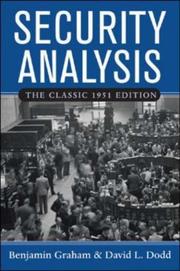
How to read financial statements sceptically and value bonds and stocks.
“I've spent more time with all of the editions of Benjamin Graham and David Dodd's Security Analysis than with any other book” — Christopher Bloomstran
Source: Semper Augustus 2024 Letter to Clients, 'Books and Tunes for Walking', p. 95
Recommended by: Christopher Bloomstran, Howard Marks and 11 others
Safe and cheap investing: a security can be both lower-risk and higher-return.
Recommended by: Guy Spier, Mohnish Pabrai, Seth Klarman
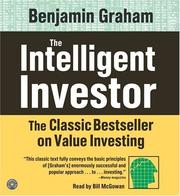
Treat stocks as parts of businesses and buy only with a margin of safety.
“I have been accused of telling all my secrets. I have written a number of books, and I reveal them all in these books.” — Benjamin Graham
Source: Graham on revealing everything he knows in his books
Recommended by: Benjamin Graham, Christopher Bloomstran and 27 others
Where it sits in the reference 2
Topics