Updates

  1. Every US-listed company has a page with its SEC filings. Company pages list their experts and their management, past and present. Fund managers sit under Investors. Each show has a page of its episodes, and an episode page names its guests and hosts. Biographies lists groups, then people. Breadcrumbs show where a page sits.
  2. Media lists every podcast episode, video, interview and talk, over 10,000, by person, company, publisher and event; each filter searches its own choices. Books opens on its table, then Browse, then Authors and Recommenders. A filter's count no longer covers its arrow.
  3. A book that no company, country or subject page lists shows its topics under Where it sits in the reference. On a phone, a page's tabs scroll sideways only. Descriptions read the same on every page. See them in the Experts tab lists every expert the page names.
  4. Every podcast episode, video and interview has its own page with a video or audio player and a link to the source. Investor pages show each company's sector and market cap; firms such as Berkshire Hathaway have one page that holds their letters and their company tabs. Letters tabs filter by company and search the theses. Companies filter by Public, Private and Defunct and link each company's website.
  5. Every tab, view and search has its own address, such as /books/table/asset or /letters/companies, so Back works and a link opens the same place. Page addresses no longer end in .html. Fund letters, Investors, Companies and Papers load about a fifth of the data they did.
  6. Fund letters has a Companies tab: every company the letters name, with its market cap, sector, country, and how many letters and investors name it. Investor pages link each investor's website. Lists in table cells end with “… and N more” at every width.
  7. 1,120 more book summaries; descriptions for 373 papers; pages for 137 more companies, each with the fund letters that discuss it; 215 official photographs; search has its own page.
  8. 411 more books have a summary; person pages list 930 more of the books they wrote; 147 people show their official photograph.
  9. Every investor has a page with its letters and the companies they discuss; company pages list the investors whose letters name them.
  10. A Companies section at the top of the rail lists every company the books, experts and fund letters name.
  11. Person pages list letters, writing, profiles and links as sortable tables with filters, and show each person's companies as links; Fund letters show each letter's description in its own column.
  12. Experts show a checked job title and a short description of each person; 30 more people have photographs.
  13. Every company, fund, university and publication the experts work for has a page listing the people there.
  14. Fund letters show each letter's thesis and filter by it; 225 person pages list the essays, columns and newsletter issues the person wrote.
  15. Person pages list every essay and newsletter issue a person wrote, and their own books as a table in List view.
  16. Recommends shows the five largest kinds of book and the rest under More; browse pictures load sooner.
  17. Podcasts and talks link the original episode, filter by Audio and video or Press, and list each publisher once.
  18. Pages are wider, Recommends has List and Grid, and a filter clicked again turns off.
  19. Book cards sit in a ruled grid with Open Library and Goodreads links and each book's one-line note.
  20. Funds is now Investors; each investor's styles are buttons that filter the table.
  21. Podcasts and talks on a person's page filter by year and publisher and show as a list or a grid of pictures.
  22. Quotes show only people's own words: 472 summaries written by list sites are gone.
  23. Country pages open from Browse again, and every link on the shelf lands on a page.
  24. Subject and person pages show their sections as tabs, and each book appears once on a person's page.
  25. Book cards show the quote, who said it and the source; grids show five cards to a row.
  26. On a phone, a menu holds the sections, search, Updates, Feedback and dark mode.
  27. Feedback takes a screenshot of the page with no browser prompt, opens a screenshot full size when you click it, and clears itself once sent.
  28. Book cards are centred, search names the topic each book sits in, and any text cut short shows whole on hover.
  29. Search groups its results by kind: people, companies, geographies, subjects, topics, books, funds, fund letters and papers.
  30. The Books table lists who recommended each book by name, and the browser tab names the section you are in.
  31. Feedback can take a screenshot of the page, or one you paste or choose, and opens in the corner beside Updates.
  32. Each rail button reopens its section where you left it, and Browse, Table and People show on every book and subject page.
  33. Filters grey out choices that hold nothing instead of hiding them, and Books › People filters by authors or recommenders.
  34. Feedback takes a subject line and up to three screenshots.
  35. Biographies are grouped by the person they are about: 41 new pages, from Abraham Lincoln to Lee Kuan Yew.
  36. Sport splits into 23 sports, and Religion into one topic per faith.
  37. Book lists show as cards: the cover, one recommendation quote and every recommender by name.
  38. Seventeen subjects that had two or three pages under different names now have one page each.
  39. Every page lists its Experts as authors and recommenders, with a link to them on the Experts tab.
  40. Economics, Financial history, Financial panics and Accounting are subjects of their own, with one page per financial crisis.
  41. Book, person and subject pages open inside the app, so the tabs stay in view.
  42. 996 more book covers, and photographs or logos for 227 more people and companies.
  43. Books › Browse shows every subject as cards, and the rail holds Fund letters, Papers, Experts, Books and Funds.
  44. Every topic over 150 books splits into narrower topics, each with a page of its own.

Send feedback

What is it?
Screenshots, up to 3 (optional)
or paste one with Ctrl+V

We use your email only to reply to you.

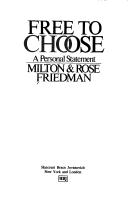
Free to Choose: A Personal Statement

Free to Choose: A Personal Statement

The case for free markets and limited government, policy area by policy area.

Milton Friedman
1980
T1 338 pages · about 5h 38m to read Open Librarygoodreads

The popular companion to Capitalism and Freedom, written with Rose Friedman. More accessible and more polemical. Best read as a rhetorical document as much as an economic one — it shows how free-market ideas get translated into public argument, for better and worse.

Summary

Friedman and Rose Friedman wrote this to accompany their 1980 television series, stating the case for free markets and limited government for a general audience. It is more accessible and more political than Friedman's academic work.

The argument runs through specific policy areas. The price system coordinates activity without central direction, which the Friedmans illustrate through Leonard Read's account of the pencil, whose production involves people worldwide who share no common purpose. They argue that the Great Depression was caused by Federal Reserve policy failure rather than by any inherent market instability, which draws on Friedman and Schwartz's Monetary History. They oppose tariffs and argue for unilateral free trade. They attack occupational licensing, minimum wages, rent control and consumer protection agencies as measures that benefit incumbents at the expense of the people they claim to protect.

On education they propose vouchers, arguing that public funding does not require public provision. On welfare they propose a negative income tax replacing the entire apparatus of targeted programmes. On inflation they argue that it is always and everywhere a monetary phenomenon. Their general claim is that regulatory agencies are captured by the industries they regulate, and that concentrated benefits and diffuse costs explain why bad policies persist.

The book is advocacy and treats contested empirical questions as settled. The monetary explanation of the Depression, the school voucher evidence and the minimum wage claims have all been substantially contested since. Friedman received the Nobel Prize and his academic work is more careful than this. Read it as the clearest statement of one position rather than as analysis.

Key takeaways 8

  1. The price system coordinates the activity of people worldwide who share no common purpose and no knowledge of each other.
  2. Voluntary exchange benefits both parties, which is why transactions occur at all, and this is what makes coordination without direction possible.
  3. The Great Depression resulted from Federal Reserve policy failure in allowing the money supply to contract rather than from market instability.
  4. Inflation is always and everywhere a monetary phenomenon, produced by increases in money supply exceeding output growth.
  5. Regulatory agencies become captured by the industries they regulate, because concentrated interests have more at stake than diffuse ones.
  6. Occupational licensing restricts entry and raises prices while providing minimal protection to the consumers it is justified by.
  7. Public funding of education does not require public provision, and vouchers would separate the two.
  8. A negative income tax would replace the entire targeted welfare apparatus with a single mechanism and remove the perverse incentives of means testing.

Who should read it

Readers who want the clearest popular statement of the case for markets and limited government, read as advocacy rather than as settled analysis.

About Milton Friedman

Economist at the University of Chicago and the Hoover Institution who led the monetarist school and won the 1976 Nobel prize.

A Monetary History of the United States, written with Anna Schwartz, established that the Federal Reserve's contraction of the money supply turned the 1929 downturn into the Depression, and it set the terms of monetary policy argument ever since. Capitalism and Freedom and Free to Choose make the political case for markets and supply the standard arguments on floating rates, schooling and regulation.

Who recommended it 4 · 2 direct

Similar books 6

Chosen by shared topics, the entries that hold them, and the people who recommended both.
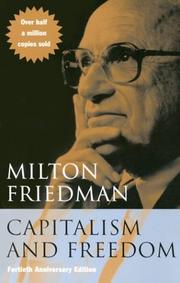
Milton Friedman · 1962

Economic freedom as a condition of political freedom, applied to policy questions.

Recommended by: Marc Andreessen

Isabel Paterson · 1943

An inquiry into the nature of freedom and the uses of power.

Recommended by: Marc Andreessen
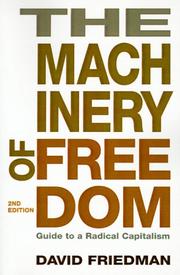
David D. Friedman · 1973

The case for anarcho-capitalism, a society run on markets without a state.

Recommended by: Marc Andreessen
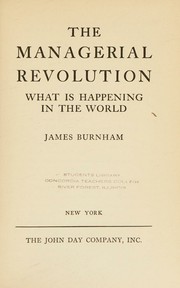
James Burnham · 1941

Why managers and technocrats would replace capitalists as society's ruling class.

Recommended by: Marc Andreessen
Bryan Caplan · 2007

Voters hold systematic biases about economics, so democracies choose bad policies.

“The median American is a moderate national socialist – statist to the core on both economic and social policy.” — Marc Andreessen

Source: @pmarca, 'Thread: Books I've recently read and recommend'

Recommended by: Marc Andreessen, Patrick Collison

Where it sits in the reference 2

Academics
Economics

Topics 3

EconomicsPolitics and GovernmentPolitical philosophy and ideology