Updates

  1. Person pages list letters, writing, profiles and links as sortable tables with filters, and show each person's companies as links; Fund letters show each letter's description in its own column.
  2. Experts show a checked job title and a short description of each person; 30 more people have photographs.
  3. Every company, fund, university and publication the experts work for has a page listing the people there.
  4. Fund letters show each letter's thesis and filter by it; 225 person pages list the essays, columns and newsletter issues the person wrote.
  5. Person pages list every essay and newsletter issue a person wrote, and their own books as a table in List view.
  6. Recommends shows the five largest kinds of book and the rest under More; browse pictures load sooner.
  7. Podcasts and talks link the original episode, filter by Audio and video or Press, and list each publisher once.
  8. Pages are wider, Recommends has List and Grid, and a filter clicked again turns off.
  9. Book cards sit in a ruled grid with Open Library and Goodreads links and each book's one-line note.
  10. Funds is now Investors; each investor's styles are buttons that filter the table.
  11. Podcasts and talks on a person's page filter by year and publisher and show as a list or a grid of pictures.
  12. Quotes show only people's own words: 472 summaries written by list sites are gone.
  13. Country pages open from Browse again, and every link on the shelf lands on a page.
  14. Subject and person pages show their sections as tabs, and each book appears once on a person's page.
  15. Book cards show the quote, who said it and the source; grids show five cards to a row.
  16. On a phone, a menu holds the sections, search, Updates, Feedback and dark mode.
  17. Feedback takes a screenshot of the page with no browser prompt, opens a screenshot full size when you click it, and clears itself once sent.
  18. Book cards are centred, search names the topic each book sits in, and any text cut short shows whole on hover.
  19. Search groups its results by kind: people, companies, geographies, subjects, topics, books, funds, fund letters and papers.
  20. The Books table lists who recommended each book by name, and the browser tab names the section you are in.
  21. Feedback can take a screenshot of the page, or one you paste or choose, and opens in the corner beside Updates.
  22. Each rail button reopens its section where you left it, and Browse, Table and People show on every book and subject page.
  23. Filters grey out choices that hold nothing instead of hiding them, and Books › People filters by authors or recommenders.
  24. Feedback takes a subject line and up to three screenshots.
  25. Biographies are grouped by the person they are about: 41 new pages, from Abraham Lincoln to Lee Kuan Yew.
  26. Sport splits into 23 sports, and Religion into one topic per faith.
  27. Book lists show as cards: the cover, one recommendation quote and every recommender by name.
  28. Seventeen subjects that had two or three pages under different names now have one page each.
  29. Every page lists its Experts as authors and recommenders, with a link to them on the Experts tab.
  30. Economics, Financial history, Financial panics and Accounting are subjects of their own, with one page per financial crisis.
  31. Book, person and subject pages open inside the app, so the tabs stay in view.
  32. 996 more book covers, and photographs or logos for 227 more people and companies.
  33. Books › Browse shows every subject as cards, and the rail holds Fund letters, Papers, Experts, Books and Funds.
  34. Every topic over 150 books splits into narrower topics, each with a page of its own.

Send feedback

What is it?
Screenshots, up to 3 (optional)
or paste one with Ctrl+V

We use your email only to reply to you.

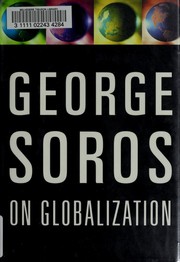
George Soros on Globalization

George Soros on Globalization

George Soros
2002
T4 200 pages · about 3h 20m to read Open Librarygoodreads

Summary

Soros wrote this short book arguing that global markets have developed far ahead of the institutions required to govern them, and proposing what should be built.

His diagnosis is an asymmetry. Capital moves freely across borders while labour does not, and while the institutions that provide public goods, social protection and regulation remain national. Capital therefore escapes taxation and regulation by moving, which constrains what states can do, while the costs of financial instability fall on national populations. He argues that this asymmetry rather than trade or markets themselves is what produces the political reaction against globalisation.

His criticism of the international institutions is specific. The International Monetary Fund lends to governments and imposes conditions, which means the costs of a crisis fall on populations while the creditors who lent recklessly are repaid, and this creates moral hazard among lenders rather than among borrowers. The World Trade Organization has strong enforcement for trade rules and none for labour or environmental standards, which is why trade rules advance and the others do not. The World Bank and the aid system channel money through governments, which are frequently the problem.

His proposals include using Special Drawing Rights as a mechanism for funding public goods in poor countries, with rich countries donating their allocations; strengthening the institutions that provide public goods rather than only those that liberalise markets; and reforming the international financial architecture to make creditors bear losses.

The book is short and written for a general audience. Soros's proposals have largely not been adopted, though the Special Drawing Rights allocation of 2021 during the pandemic used a mechanism resembling what he proposed. His diagnosis of the institutional asymmetry has become widely shared.

Key takeaways 7

  1. Capital moves freely across borders while labour, taxation, regulation and social protection remain national.
  2. That asymmetry rather than trade itself is what produces the political reaction against globalisation.
  3. International Monetary Fund lending places crisis costs on populations while repaying creditors who lent recklessly.
  4. Repaying creditors in full creates moral hazard among lenders rather than among the borrowing countries.
  5. Trade rules have strong enforcement while labour and environmental standards have none, which is why only trade rules advance.
  6. Aid channelled through governments funds the institutions that are frequently the obstacle to development.
  7. Special Drawing Rights could fund international public goods if rich countries donated their allocations.

Who should read it

Readers who want a concise statement of the institutional asymmetry argument about globalisation and a set of specific reform proposals.

About George Soros

Founder, Soros Fund Management and the Quantum Fund; founder, Open Society Foundations

The Alchemy of Finance introduced reflexivity, a primary-source framework macro traders and academics still build on.

Soros Fund Management, Open Society Foundations

Similar books 6

Chosen by shared topics, the entries that hold them, and the people who recommended both.

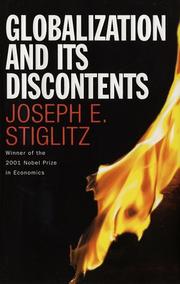
Joseph E. Stiglitz · 2002

An attack on the IMF's one-size-fits-all policies in the crises of the 1990s.

Recommended by: Patrick Collison

Dani Rodrik · 1997

The 1997 warning that the political backlash was coming.

Recommended by: Patrick Collison

Rana Foroohar · 2022

The case for localisation after the pandemic supply shocks.

Where it sits in the reference 2

Investors
Economics

Topics

EconomicsPolitics and GovernmentGlobalisation, development and offshore money