Updates

  1. Person pages list letters, writing, profiles and links as sortable tables with filters, and show each person's companies as links; Fund letters show each letter's description in its own column.
  2. Experts show a checked job title and a short description of each person; 30 more people have photographs.
  3. Every company, fund, university and publication the experts work for has a page listing the people there.
  4. Fund letters show each letter's thesis and filter by it; 225 person pages list the essays, columns and newsletter issues the person wrote.
  5. Person pages list every essay and newsletter issue a person wrote, and their own books as a table in List view.
  6. Recommends shows the five largest kinds of book and the rest under More; browse pictures load sooner.
  7. Podcasts and talks link the original episode, filter by Audio and video or Press, and list each publisher once.
  8. Pages are wider, Recommends has List and Grid, and a filter clicked again turns off.
  9. Book cards sit in a ruled grid with Open Library and Goodreads links and each book's one-line note.
  10. Funds is now Investors; each investor's styles are buttons that filter the table.
  11. Podcasts and talks on a person's page filter by year and publisher and show as a list or a grid of pictures.
  12. Quotes show only people's own words: 472 summaries written by list sites are gone.
  13. Country pages open from Browse again, and every link on the shelf lands on a page.
  14. Subject and person pages show their sections as tabs, and each book appears once on a person's page.
  15. Book cards show the quote, who said it and the source; grids show five cards to a row.
  16. On a phone, a menu holds the sections, search, Updates, Feedback and dark mode.
  17. Feedback takes a screenshot of the page with no browser prompt, opens a screenshot full size when you click it, and clears itself once sent.
  18. Book cards are centred, search names the topic each book sits in, and any text cut short shows whole on hover.
  19. Search groups its results by kind: people, companies, geographies, subjects, topics, books, funds, fund letters and papers.
  20. The Books table lists who recommended each book by name, and the browser tab names the section you are in.
  21. Feedback can take a screenshot of the page, or one you paste or choose, and opens in the corner beside Updates.
  22. Each rail button reopens its section where you left it, and Browse, Table and People show on every book and subject page.
  23. Filters grey out choices that hold nothing instead of hiding them, and Books › People filters by authors or recommenders.
  24. Feedback takes a subject line and up to three screenshots.
  25. Biographies are grouped by the person they are about: 41 new pages, from Abraham Lincoln to Lee Kuan Yew.
  26. Sport splits into 23 sports, and Religion into one topic per faith.
  27. Book lists show as cards: the cover, one recommendation quote and every recommender by name.
  28. Seventeen subjects that had two or three pages under different names now have one page each.
  29. Every page lists its Experts as authors and recommenders, with a link to them on the Experts tab.
  30. Economics, Financial history, Financial panics and Accounting are subjects of their own, with one page per financial crisis.
  31. Book, person and subject pages open inside the app, so the tabs stay in view.
  32. 996 more book covers, and photographs or logos for 227 more people and companies.
  33. Books › Browse shows every subject as cards, and the rail holds Fund letters, Papers, Experts, Books and Funds.
  34. Every topic over 150 books splits into narrower topics, each with a page of its own.

Send feedback

What is it?
Screenshots, up to 3 (optional)
or paste one with Ctrl+V

We use your email only to reply to you.

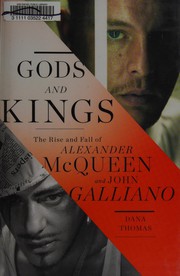
Gods and Kings

Gods and Kings

Dana Thomas
2015
T3 422 pages · about 7h 2m to read Open Librarygoodreads

Galliano and McQueen inside the LVMH and Kering machine.

Summary

Thomas, a fashion journalist, wrote a dual biography of Alexander McQueen and John Galliano, tracing both from art school in London through their appointments at French luxury houses to McQueen's suicide in 2010 and Galliano's dismissal from Dior in 2011.

The business content sits underneath the biography and is the part relevant to operators. Thomas documents how LVMH and Gucci Group acquired heritage houses and installed young British designers to generate the publicity that would sell handbags, fragrance and accessories, which is where the profit sits. The runway collections functioned as marketing for the licensed and accessory business rather than as products. She documents the schedule this required: designers producing six, eight or more collections a year including menswear, couture, resort and pre-fall, plus advertising campaigns and store openings, against fixed deadlines set by corporate owners.

Her argument is that the industrial logic of the conglomerates destroyed the designers it depended on. Both men were creatively exceptional and neither had the temperament or the support to sustain that output. Thomas connects the pace, the isolation, the substance use and the absence of institutional care to both collapses.

The book is reported from many interviews though not from the two principals, and it is a narrative account rather than an analysis of luxury economics. Readers wanting that should look at business histories of LVMH. Some of Thomas's characterisations have been disputed by people close to both designers, and the treatment of Galliano's antisemitic outburst and its aftermath is necessarily an outsider's reconstruction.

Key takeaways 7

  1. Luxury conglomerates acquired heritage houses to sell accessories and fragrance, and the fashion collections functioned as marketing for those products.
  2. Installing publicity-generating designers at old houses was a deliberate commercial strategy rather than an artistic decision.
  3. The collection calendar imposed by corporate owners required output that no designer in earlier eras had been asked to sustain.
  4. Creative talent was treated as a replaceable input by owners whose returns came from the accessory business it promoted.
  5. Both designers built their reputations through spectacle shows whose cost was justified entirely by press coverage.
  6. Licensing and accessories generate the profit in luxury fashion, while the clothing shown on runways generally does not.
  7. The industry provided no institutional support for the people whose personal instability was part of what made the work commercially valuable.

Who should read it

Operators in creative industries who want a documented case of how the commercial structure of luxury depends on and consumes individual creative talent.

Similar books 6

Chosen by shared topics, the entries that hold them, and the people who recommended both.

Dana Thomas · 2007

How family luxury houses became conglomerates selling to the mass affluent.

Teri Agins · 1999

How fashion became a branded consumer-goods business.
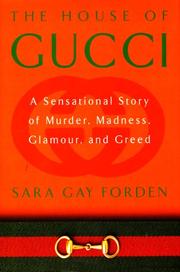
Sara Gay Forden · 2000

Gucci from a Florence leather shop through family collapse to its Tom Ford revival.
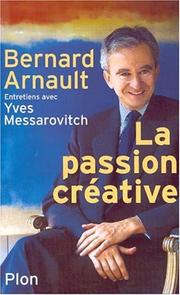
Bernard Arnault, Yves Messarovitch · 2000

Insider account: Arnault interview book; French only.
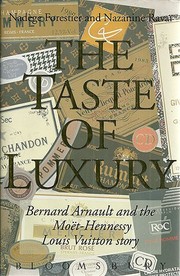
Nadège Forestier, Nazanine Ravaï · 1992

The takeover battles that assembled the group under Arnault.
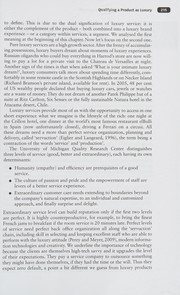
Jean-Noël Kapferer, Vincent Bastien · 2008

The standard analytical text on the LVMH-style brand model.

Where it sits in the reference 3

Companies
Biographies
Industries

Topics

Biography and MemoirArt and DesignProduct, Fashion and Car DesignArtists, Writers and Musicians