
Updates

  1. Person pages list letters, writing, profiles and links as sortable tables with filters, and show each person's companies as links; Fund letters show each letter's description in its own column.
  2. Experts show a checked job title and a short description of each person; 30 more people have photographs.
  3. Every company, fund, university and publication the experts work for has a page listing the people there.
  4. Fund letters show each letter's thesis and filter by it; 225 person pages list the essays, columns and newsletter issues the person wrote.
  5. Person pages list every essay and newsletter issue a person wrote, and their own books as a table in List view.
  6. Recommends shows the five largest kinds of book and the rest under More; browse pictures load sooner.
  7. Podcasts and talks link the original episode, filter by Audio and video or Press, and list each publisher once.
  8. Pages are wider, Recommends has List and Grid, and a filter clicked again turns off.
  9. Book cards sit in a ruled grid with Open Library and Goodreads links and each book's one-line note.
  10. Funds is now Investors; each investor's styles are buttons that filter the table.
  11. Podcasts and talks on a person's page filter by year and publisher and show as a list or a grid of pictures.
  12. Quotes show only people's own words: 472 summaries written by list sites are gone.
  13. Country pages open from Browse again, and every link on the shelf lands on a page.
  14. Subject and person pages show their sections as tabs, and each book appears once on a person's page.
  15. Book cards show the quote, who said it and the source; grids show five cards to a row.
  16. On a phone, a menu holds the sections, search, Updates, Feedback and dark mode.
  17. Feedback takes a screenshot of the page with no browser prompt, opens a screenshot full size when you click it, and clears itself once sent.
  18. Book cards are centred, search names the topic each book sits in, and any text cut short shows whole on hover.
  19. Search groups its results by kind: people, companies, geographies, subjects, topics, books, funds, fund letters and papers.
  20. The Books table lists who recommended each book by name, and the browser tab names the section you are in.
  21. Feedback can take a screenshot of the page, or one you paste or choose, and opens in the corner beside Updates.
  22. Each rail button reopens its section where you left it, and Browse, Table and People show on every book and subject page.
  23. Filters grey out choices that hold nothing instead of hiding them, and Books › People filters by authors or recommenders.
  24. Feedback takes a subject line and up to three screenshots.
  25. Biographies are grouped by the person they are about: 41 new pages, from Abraham Lincoln to Lee Kuan Yew.
  26. Sport splits into 23 sports, and Religion into one topic per faith.
  27. Book lists show as cards: the cover, one recommendation quote and every recommender by name.
  28. Seventeen subjects that had two or three pages under different names now have one page each.
  29. Every page lists its Experts as authors and recommenders, with a link to them on the Experts tab.
  30. Economics, Financial history, Financial panics and Accounting are subjects of their own, with one page per financial crisis.
  31. Book, person and subject pages open inside the app, so the tabs stay in view.
  32. 996 more book covers, and photographs or logos for 227 more people and companies.
  33. Books › Browse shows every subject as cards, and the rail holds Fund letters, Papers, Experts, Books and Funds.
  34. Every topic over 150 books splits into narrower topics, each with a page of its own.

Send feedback

What is it?
Screenshots, up to 3 (optional)
or paste one with Ctrl+V

We use your email only to reply to you.

The End of Fashion

The End of Fashion

Teri Agins
1999
T3 324 pages · about 5h 24m to read Open Librarygoodreads

How fashion became a branded consumer-goods business.

Summary

Agins, who covered the fashion industry for the Wall Street Journal, argues that the business changed fundamentally in the 1990s: designers stopped dictating trends, consumers stopped following them, and the industry reorganised around brand, marketing and licensing rather than around clothing design.

Her case studies carry the argument. She contrasts Isaac Mizrahi, a critically celebrated designer whose business failed because the clothes were not commercially viable, with Ralph Lauren, who built a licensing and lifestyle brand where the clothes were one product among many. She covers Emanuel Ungaro's sale, the transformation of Giorgio Armani into a global brand, the collapse of the old department store structure, the rise of Zara and the fast fashion model, and the shift of manufacturing offshore.

The structural claims are about power moving down the chain. Consumers gained access to information and to alternatives and stopped accepting seasonal dictation. Retailers consolidated and gained leverage over brands. Licensing let a designer name generate revenue from products the designer did not make, which changed what a fashion house was for. Marketing expenditure replaced design as the main determinant of a brand's success.

The book is from 1999 and predates e-commerce, social media, influencer marketing, the luxury conglomerates' consolidation and the current fast fashion scale. Its central thesis, that the industry became a marketing business, has been confirmed rather than dated. The specific company situations are historical.

Key takeaways 7

  1. Fashion designers lost the ability to dictate trends in the 1990s because consumers gained alternatives and information and stopped accepting seasonal direction.
  2. Licensing converted a designer's name into a revenue stream from products the designer did not make, which changed what a fashion house was.
  3. Marketing expenditure replaced design quality as the main determinant of a brand's commercial success.
  4. Critical acclaim and commercial viability are independent in fashion, and Mizrahi's failure alongside Lauren's success demonstrates the separation.
  5. Retail consolidation shifted power from brands to retailers, who then dictated terms, markdown funding and delivery schedules.
  6. Offshore manufacturing removed the production capability that had connected designers to what could actually be made and at what cost.
  7. Building a lifestyle brand across many product categories generates more durable revenue than excellence in any one category does.

Who should read it

Consumer brand operators and investors who want a documented account of an industry shifting from product to marketing as its basis of competition.

Similar books 6

Chosen by shared topics, the entries that hold them, and the people who recommended both.
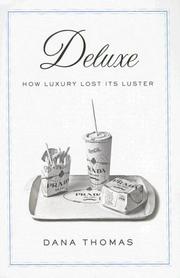
Dana Thomas · 2007

How family luxury houses became conglomerates selling to the mass affluent.
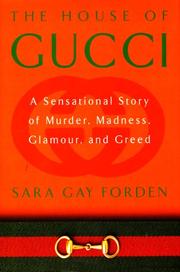
Sara Gay Forden · 2000

Gucci from a Florence leather shop through family collapse to its Tom Ford revival.
Jean-Noël Kapferer, Vincent Bastien · 2008

The standard analytical text on the LVMH-style brand model.
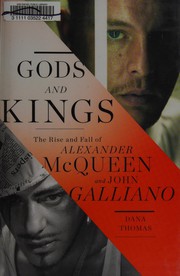
Dana Thomas · 2015

Galliano and McQueen inside the LVMH and Kering machine.
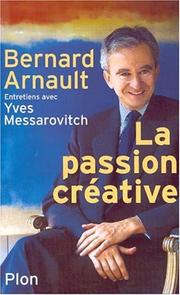
Bernard Arnault, Yves Messarovitch · 2000

Insider account: Arnault interview book; French only.
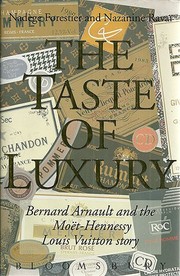
Nadège Forestier, Nazanine Ravaï · 1992

The takeover battles that assembled the group under Arnault.

Where it sits in the reference 5

Companies
Biographies
Business models
Industries
Industries

Topics

Sociology and CultureSales and MarketingConsumer culture and cultural criticismBrands, positioning and luxury