Updates

  1. Person pages list letters, writing, profiles and links as sortable tables with filters, and show each person's companies as links; Fund letters show each letter's description in its own column.
  2. Experts show a checked job title and a short description of each person; 30 more people have photographs.
  3. Every company, fund, university and publication the experts work for has a page listing the people there.
  4. Fund letters show each letter's thesis and filter by it; 225 person pages list the essays, columns and newsletter issues the person wrote.
  5. Person pages list every essay and newsletter issue a person wrote, and their own books as a table in List view.
  6. Recommends shows the five largest kinds of book and the rest under More; browse pictures load sooner.
  7. Podcasts and talks link the original episode, filter by Audio and video or Press, and list each publisher once.
  8. Pages are wider, Recommends has List and Grid, and a filter clicked again turns off.
  9. Book cards sit in a ruled grid with Open Library and Goodreads links and each book's one-line note.
  10. Funds is now Investors; each investor's styles are buttons that filter the table.
  11. Podcasts and talks on a person's page filter by year and publisher and show as a list or a grid of pictures.
  12. Quotes show only people's own words: 472 summaries written by list sites are gone.
  13. Country pages open from Browse again, and every link on the shelf lands on a page.
  14. Subject and person pages show their sections as tabs, and each book appears once on a person's page.
  15. Book cards show the quote, who said it and the source; grids show five cards to a row.
  16. On a phone, a menu holds the sections, search, Updates, Feedback and dark mode.
  17. Feedback takes a screenshot of the page with no browser prompt, opens a screenshot full size when you click it, and clears itself once sent.
  18. Book cards are centred, search names the topic each book sits in, and any text cut short shows whole on hover.
  19. Search groups its results by kind: people, companies, geographies, subjects, topics, books, funds, fund letters and papers.
  20. The Books table lists who recommended each book by name, and the browser tab names the section you are in.
  21. Feedback can take a screenshot of the page, or one you paste or choose, and opens in the corner beside Updates.
  22. Each rail button reopens its section where you left it, and Browse, Table and People show on every book and subject page.
  23. Filters grey out choices that hold nothing instead of hiding them, and Books › People filters by authors or recommenders.
  24. Feedback takes a subject line and up to three screenshots.
  25. Biographies are grouped by the person they are about: 41 new pages, from Abraham Lincoln to Lee Kuan Yew.
  26. Sport splits into 23 sports, and Religion into one topic per faith.
  27. Book lists show as cards: the cover, one recommendation quote and every recommender by name.
  28. Seventeen subjects that had two or three pages under different names now have one page each.
  29. Every page lists its Experts as authors and recommenders, with a link to them on the Experts tab.
  30. Economics, Financial history, Financial panics and Accounting are subjects of their own, with one page per financial crisis.
  31. Book, person and subject pages open inside the app, so the tabs stay in view.
  32. 996 more book covers, and photographs or logos for 227 more people and companies.
  33. Books › Browse shows every subject as cards, and the rail holds Fund letters, Papers, Experts, Books and Funds.
  34. Every topic over 150 books splits into narrower topics, each with a page of its own.

Send feedback

What is it?
Screenshots, up to 3 (optional)
or paste one with Ctrl+V

We use your email only to reply to you.

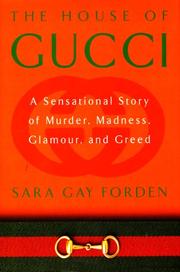
The House of Gucci

The House of Gucci

Sara Gay Forden
2000
T2 351 pages · about 5h 51m to read Open Librarygoodreads

The takeover battle in which LVMH was the aggressor.

Summary

Forden, a fashion trade journalist based in Milan, covers Gucci from Guccio Gucci's leather goods shop in Florence through the family's collapse, the takeover by Investcorp, the turnaround under Domenico De Sole and Tom Ford, and the takeover battle with LVMH that ended with Pinault's PPR taking control.

The business material is the useful part. Forden documents how the family destroyed the brand through licensing: by the 1980s the Gucci name appeared on thousands of products of declining quality, sold through duty-free and discount channels, which generated revenue and eliminated the exclusivity the brand was built on. The turnaround under De Sole consisted of cancelling licences, buying back distribution, closing stores, cutting the product range and rebuilding the wholesale relationships, before Ford's design work created demand for the restored product.

The takeover fight is covered in detail: Bernard Arnault's accumulation of a stake, Gucci's defensive issue of shares to an employee trust, the Dutch court proceedings, and the arrival of Francois Pinault as a white knight. It is a well-documented case of takeover defence in a jurisdiction whose rules the parties did not fully anticipate.

The family narrative, including Patrizia Reggiani's conviction for arranging Maurizio Gucci's murder, is the part the book is known for and the part later dramatised. Forden is a careful trade reporter and the business detail is reliable. The book ends in 2000 and does not cover Gucci Group's later development under Kering.

Key takeaways 7

  1. Uncontrolled licensing destroyed the Gucci brand by placing the name on thousands of low-quality products in discount and duty-free channels.
  2. The turnaround required cancelling licences, buying back distribution and cutting the product range before any design work could matter.
  3. Brand equity can be rebuilt after dilution, but only by removing the diluted product from the market first and accepting the revenue loss.
  4. Family ownership without a governance mechanism produced decisions driven by internal conflict rather than by the business.
  5. Controlling distribution directly rather than through wholesalers is what allows a luxury brand to set its own price and presentation.
  6. A takeover defence structured around issuing shares to an employee trust worked in Dutch law in ways the acquirer had not anticipated, which shows jurisdiction determines outcomes in contested control situations.
  7. Pairing a commercial operator with a creative director, each with clear authority in their own area, was the structure that made the turnaround work.

Who should read it

Brand operators and investors interested in how licensing destroys premium positioning and what recovering it requires.

Similar books 6

Chosen by shared topics, the entries that hold them, and the people who recommended both.

Dana Thomas · 2007

How family luxury houses became conglomerates selling to the mass affluent.

Teri Agins · 1999

How fashion became a branded consumer-goods business.
Jean-Noël Kapferer, Vincent Bastien · 2008

The standard analytical text on the LVMH-style brand model.
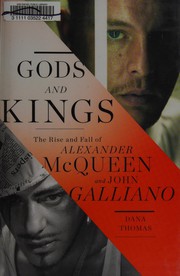
Dana Thomas · 2015

Galliano and McQueen inside the LVMH and Kering machine.
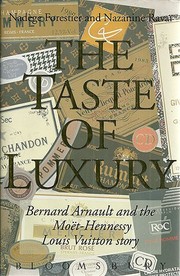
Nadège Forestier, Nazanine Ravaï · 1992

The takeover battles that assembled the group under Arnault.

Bernard Arnault, Yves Messarovitch · 2000

Insider account: Arnault interview book; French only.

Where it sits in the reference 5

Companies
Biographies
Assets
Business models
Industries

Topics

Company Histories