Updates

  1. Person pages list letters, writing, profiles and links as sortable tables with filters, and show each person's companies as links; Fund letters show each letter's description in its own column.
  2. Experts show a checked job title and a short description of each person; 30 more people have photographs.
  3. Every company, fund, university and publication the experts work for has a page listing the people there.
  4. Fund letters show each letter's thesis and filter by it; 225 person pages list the essays, columns and newsletter issues the person wrote.
  5. Person pages list every essay and newsletter issue a person wrote, and their own books as a table in List view.
  6. Recommends shows the five largest kinds of book and the rest under More; browse pictures load sooner.
  7. Podcasts and talks link the original episode, filter by Audio and video or Press, and list each publisher once.
  8. Pages are wider, Recommends has List and Grid, and a filter clicked again turns off.
  9. Book cards sit in a ruled grid with Open Library and Goodreads links and each book's one-line note.
  10. Funds is now Investors; each investor's styles are buttons that filter the table.
  11. Podcasts and talks on a person's page filter by year and publisher and show as a list or a grid of pictures.
  12. Quotes show only people's own words: 472 summaries written by list sites are gone.
  13. Country pages open from Browse again, and every link on the shelf lands on a page.
  14. Subject and person pages show their sections as tabs, and each book appears once on a person's page.
  15. Book cards show the quote, who said it and the source; grids show five cards to a row.
  16. On a phone, a menu holds the sections, search, Updates, Feedback and dark mode.
  17. Feedback takes a screenshot of the page with no browser prompt, opens a screenshot full size when you click it, and clears itself once sent.
  18. Book cards are centred, search names the topic each book sits in, and any text cut short shows whole on hover.
  19. Search groups its results by kind: people, companies, geographies, subjects, topics, books, funds, fund letters and papers.
  20. The Books table lists who recommended each book by name, and the browser tab names the section you are in.
  21. Feedback can take a screenshot of the page, or one you paste or choose, and opens in the corner beside Updates.
  22. Each rail button reopens its section where you left it, and Browse, Table and People show on every book and subject page.
  23. Filters grey out choices that hold nothing instead of hiding them, and Books › People filters by authors or recommenders.
  24. Feedback takes a subject line and up to three screenshots.
  25. Biographies are grouped by the person they are about: 41 new pages, from Abraham Lincoln to Lee Kuan Yew.
  26. Sport splits into 23 sports, and Religion into one topic per faith.
  27. Book lists show as cards: the cover, one recommendation quote and every recommender by name.
  28. Seventeen subjects that had two or three pages under different names now have one page each.
  29. Every page lists its Experts as authors and recommenders, with a link to them on the Experts tab.
  30. Economics, Financial history, Financial panics and Accounting are subjects of their own, with one page per financial crisis.
  31. Book, person and subject pages open inside the app, so the tabs stay in view.
  32. 996 more book covers, and photographs or logos for 227 more people and companies.
  33. Books › Browse shows every subject as cards, and the rail holds Fund letters, Papers, Experts, Books and Funds.
  34. Every topic over 150 books splits into narrower topics, each with a page of its own.

Send feedback

What is it?
Screenshots, up to 3 (optional)
or paste one with Ctrl+V

We use your email only to reply to you.

The Luxury Strategy

The Luxury Strategy

Jean-Noël Kapferer, Vincent Bastien
2008
T3 472 pages · about 7h 52m to read Open Librarygoodreads

The standard analytical text on the LVMH-style brand model.

Summary

Kapferer and Bastien argue that luxury is a distinct business category with its own operating rules, and that applying standard marketing practice to a luxury brand destroys it. They set out what they call the anti-laws of marketing: do not respond to rising demand by increasing supply, do not position against competitors, do not let customers dictate the product, raise prices over time rather than discounting, and make the purchase somewhat difficult.

The underlying theory distinguishes three categories that are frequently confused. Premium products compete on a price-to-quality ratio and can be benchmarked. Fashion sells novelty and is inherently short-cycle. Luxury sells social stratification and identity, is anchored in a specific heritage and place, and cannot be benchmarked because it does not compete on a comparable dimension. From this the authors derive concrete operating rules for pricing, distribution control, communication, brand extension, licensing and counterfeiting response.

The book is written for practitioners and draws on the authors' work with European houses, on Kapferer's academic brand research, and on case material from LVMH, Hermes, Cartier and the German car makers. It is the standard practitioner text on the subject. Its limits are real: the framework is largely deduced from European heritage houses and fits poorly with brands built recently, with Asian luxury consumption patterns, and with the shift to e-commerce and direct digital relationships that the 2008 text treats as a threat rather than a channel. The prescription against listening to customers also sits awkwardly with the amount of consumer research the same houses actually run.

Key takeaways 7

  1. Luxury, premium and fashion are three different businesses with incompatible operating rules, and most brand failures come from applying one set to another.
  2. A luxury brand should raise prices over time, because a rising price is part of what the customer is buying.
  3. Increasing production to meet demand destroys the scarcity that generates the demand.
  4. Luxury brands must control distribution completely, since the point of sale is part of the product experience rather than a channel to be optimised.
  5. A luxury brand cannot be positioned relative to competitors, because its identity comes from its own history and origin rather than from a comparative claim.
  6. Brand extension into cheaper categories generates near-term revenue and permanently lowers the ceiling on what the core brand can charge.
  7. Advertising for luxury should communicate the brand's world and myth rather than product attributes or reasons to buy.

Who should read it

Founders and brand operators building premium or luxury positioning who need explicit rules on pricing, distribution and extension.

Similar books 6

Chosen by shared topics, the entries that hold them, and the people who recommended both.

Hermann Simon · 2015

Price is the strongest profit lever and the least managed; how to set it well.

Recommended by: Michael Mauboussin

Dana Thomas · 2007

How family luxury houses became conglomerates selling to the mass affluent.
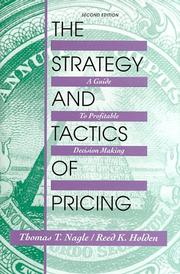
Thomas T. Nagle, Reed K. Holden · 1987

Set prices from the value customers get, not from cost or rivals' prices.
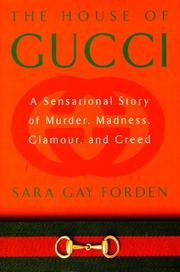
Sara Gay Forden · 2000

Gucci from a Florence leather shop through family collapse to its Tom Ford revival.

Teri Agins · 1999

How fashion became a branded consumer-goods business.

Hamilton Helmer · 2016

Seven sources of lasting advantage, each a benefit plus a barrier to rivals.

Where it sits in the reference 7

Companies
Assets
Business models
Business themes
Industries
Business themes
Business themes

Topics

Sales and MarketingBusiness and ManagementBrands, positioning and luxury