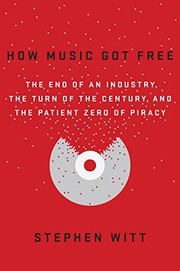
How Music Got Free
How the mp3, a CD-factory leaker and pirate websites broke the music business.
How the MP3 destroyed recorded-music revenue and set up the streaming rebuild.
Summary
Witt, a journalist, traces the secret history of digital music piracy and the moment when all the music ever recorded became available for free. His interwoven stories begin with the German audio engineers who invented the MP3. They move to a compact-disc plant in North Carolina where a factory worker, Dell Glover, leaked nearly two thousand albums over a decade, and to the Manhattan offices where the music executive Doug Morris cornered the global market for rap.
The narrative ends in the darkest corners of the internet, with an illegal website four times the size of the iTunes Music Store and the pirate Witt calls the greatest in history. His cast of inventors, executives, factory workers and smugglers changed a whole art form, and Witt reveals the underground of media pirates that reshaped digital life. He frames it as the story of what happens when a whole generation commits the same crime, and of the point at which ordinary life became bound up with the online world.
Key takeaways 4
- German engineers' invention of the MP3 made music easy to copy and share.
- A single factory worker leaked nearly two thousand albums over a decade.
- An illegal site grew to four times the size of the iTunes Music Store.
- Mass piracy by a whole generation broke the recorded-music business model.
Who should read it
Investors in media who want the history of how the MP3 and piracy destroyed recorded-music revenue.
Similar books 6
Chosen by shared topics, the entries that hold them, and the people who recommended both.

How monopoly intermediaries take the earnings of writers, musicians and artists.
How computers went from tools of the Cold War to symbols of the counterculture.
Recommended by: Patrick Collison

San Francisco's counterculture and its links to Silicon Valley.
Recommended by: Patrick Collison
Evidence that outside drugs and chemicals, patents fail to work as property.
How online platforms decline on purpose, and the term coined for it.
Recommended by: Brad Feld
The geography and licensing limits of streaming television around the world.