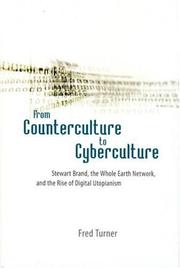
From Counterculture to Cyberculture
How computers went from tools of the Cold War to symbols of the counterculture.
Summary
Fred Turner explores how computers changed meaning in American culture. In the early 1960s they were bleak tools of the Cold War, embodying the rigid organisation and mechanical conformity of the military-industrial complex. By the 1990s and the arrival of the internet they stood for a collaborative digital utopia modelled on the communal ideals of the hippies who had rebelled against that establishment.
Turner tells the story through Stewart Brand and the Whole Earth network, a group of influential entrepreneurs in the San Francisco Bay Area. Between 1968 and 1998, through the Whole Earth Catalog, which won a National Book Award, the computer conferencing system the WELL, and finally the launch of Wired magazine, Brand and his colleagues brokered a long collaboration between the counterculture and the emerging technology hub of Silicon Valley. Countercultural figures and technologists together reimagined computers as tools for personal liberation, for building alternative virtual communities and for exploring new social frontiers. The distance between the Grateful Dead and Google, Turner argues, is smaller than it seems.
Key takeaways 4
- Computers went from symbols of Cold War conformity to symbols of personal liberation.
- Stewart Brand's Whole Earth network linked the counterculture with Silicon Valley.
- The Whole Earth Catalog, the WELL and Wired carried communal ideals into digital culture.
- Today's ideas about networked community have roots in the 1960s counterculture.
Who should read it
Readers interested in the history of Silicon Valley, the internet and American counterculture.
Who recommended it 1 · 1 direct
Similar books 6
Chosen by shared topics, the entries that hold them, and the people who recommended both.
San Francisco's counterculture and its links to Silicon Valley.
Recommended by: Patrick Collison
How the mp3, a CD-factory leaker and pirate websites broke the music business.
Douglas Engelbart and the origins of personal computing and its interfaces.
Recommended by: Patrick Collison
How the Bell Labs team of Shockley, Bardeen and Brattain invented the transistor.
Recommended by: Patrick Collison
The mathematicians whose logic led to the computer.
Recommended by: Patrick Collison
The history of software and the programmers who wrote it.
Recommended by: Patrick Collison, Keith Rabois