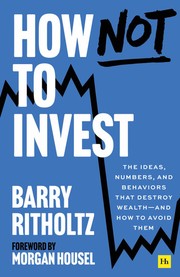
How Not to Invest
Why avoiding errors adds more to returns than picking winners.
Common investing mistakes catalogued by a working asset manager
Summary
Ritholtz, who runs an advisory firm and writes widely on markets, organises this around the argument that avoiding errors contributes more to investor returns than selecting good investments does. The structure follows bad ideas, bad numbers, bad behaviour and better outcomes.
The material covers the standard territory of the field: forecasting records that show market and economic predictions have no useful accuracy, the media and financial services incentives that generate a constant supply of confident predictions anyway, the cost drag from fees and taxes, the gap between fund returns and investor returns caused by buying and selling at the wrong times, the misuse of statistics in financial reporting, and the behavioural patterns that produce those decisions.
Ritholtz's contribution is compression and the accumulation of specific examples of confident predictions that failed, drawn from his long practice of collecting them. His prescription is conventional and he says so: hold a diversified low-cost portfolio, automate contributions, do not act on forecasts, and reduce the number of decisions you make.
The reference has not independently verified the specific studies and figures cited in this recent book. Readers should note that the argument and the conclusion are well established in the literature, that the book adds examples rather than evidence, and that anyone who has read Bogle, Malkiel or Housel will find the substance familiar. Its use is as a current and readable statement of a position that is correct and widely ignored.
Key takeaways 7
- Avoiding errors contributes more to long-run investor returns than selecting good investments does.
- Market and economic forecasts have no demonstrated accuracy, and the supply of them exists because media and financial services have an incentive to produce them.
- The gap between fund returns and investor returns is caused by buying and selling at the wrong times, and it is large enough to dominate manager selection.
- Fees and taxes compound against the investor and are the only reliably predictable component of future returns.
- Reducing the number of investment decisions made improves outcomes, because most discretionary decisions destroy value.
- Financial reporting systematically misuses statistics, particularly by presenting short-run performance and small samples as evidence.
- Automating contributions removes the decision points at which behavioural errors occur.
Who should read it
Individual investors who want a current readable statement of the avoid-errors position, though the underlying argument is available in several earlier books.
Who recommended it 1 · 1 direct
“Barry Ritholtz dreamed up the perfect concept and wrote the perfect book to suit it”
Similar books 6
Chosen by shared topics, the entries that hold them, and the people who recommended both.
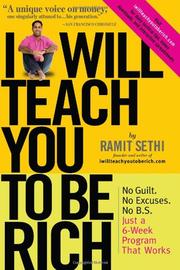
A six-week programme to automate banking, credit, saving and investing.
“An amazing book about consumer finance and a healthy approach to managing your money. If you are age 18-35, this is a must-read! My notes are scarce, so get the book. Even if over 35, you might find some good tips on lowering your fees on various services, and a good reminder of good savings practices.” — Derek Sivers
Source: Derek Sivers book notes (primary, rated list) · Rating: 7/10
Recommended by: Derek Sivers, Mohnish Pabrai, Nat Eliason and 3 others
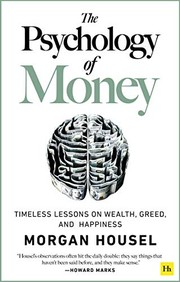
Twenty short essays on why behaviour matters more than knowledge with money.
“Example: Morgan Housel has sold 1M+ copies of "The Psychology of Money" with them (though he probably didn't need much help 😝 - if you haven't read this book yet, it's a MUST)” — Ana Fabrega
Source: Fab Fridays 96: Book Deal! - by Ana Lorena - Fab Fridays
Recommended by: Ana Fabrega, Andrew Wilkinson, Derek Sivers and 11 others

Why Wall Street grows rich on fees while its clients' results stay ordinary.
“First published in 1940, this is the funniest book ever written about investing - and one of the wisest. Schwed, a veteran of Wall Street who survived the Crash of 1929, knew exactly how the markets worked back then. Nothing has changed.” — Jason Zweig
Source: Best Books for Investors: A Short Shelf — jasonzweig.com
Recommended by: Jason Zweig, John C. Bogle, Mohnish Pabrai and 6 others
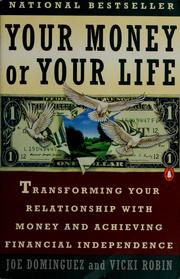
A nine-step programme that counts spending in hours of life energy.
Recommended by: Ali Abdaal, Graham Stephan and 1 other
The foundational papers of behavioural finance, collected.
A second collection of behavioural finance papers, more theoretical than the first.
Where it sits in the reference 2
Topics 2
As an Amazon Associate I earn from qualifying purchases.