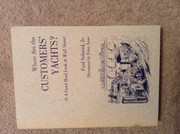
Where Are the Customers' Yachts?
Why Wall Street grows rich on fees while its clients' results stay ordinary.
Wall Street satire on fees and the gap between broker and client
Summary
Schwed was a Wall Street professional who left after losing money in the 1929 crash, and he wrote this in 1940 as a comic account of what the financial industry actually does for its customers. The title comes from an old story about a visitor shown the bankers' and brokers' yachts in Newport who asks where the customers' yachts are.
The central argument is that the industry sells activity, prediction and confidence, none of which it can deliver, and that the fees are certain while the returns are not. Schwed states that professional forecasters cannot forecast, that the customer wants to be told what will happen and will pay for the telling, and that this transaction is the industry's real product. He is equally hard on customers, arguing that they will not accept the honest answer and therefore create the demand for the dishonest one.
He covers short selling, margin trading, investment trusts, brokerage research, market timing and the psychology of a bull market. His account of how everyone in 1929 knew prices were high and bought anyway is the passage that has aged best, because it describes the mechanism rather than the event.
The book is short, funny and entirely without data. Schwed offers no method and explicitly says he has none. Its examples come from the 1920s and 1930s and the institutional detail is obsolete. Its durability comes from the fact that the incentive structure it describes is unchanged: intermediaries are paid for activity, forecasts are demanded because customers want certainty, and the fees compound against the client regardless of outcome.
Key takeaways 8
- The financial industry sells prediction and activity, and it is paid whether or not either produces anything for the customer.
- Professional forecasters cannot forecast, and the persistence of the forecasting business depends on customers wanting to be told rather than on accuracy.
- Fees are certain and returns are not, which means the intermediary's economics differ fundamentally from the client's.
- Customers create the demand for confident predictions by refusing to accept the honest answer that nobody knows.
- Everyone in a bubble knows that prices are high and buys anyway, because the alternative is watching others make money.
- Investment products are created to be sold rather than to be bought, and the distinction determines whose interest the product serves.
- A person who has never lost money in markets has not yet had the experience that would tell them what their real risk tolerance is.
- Speculation cannot be distinguished from investment by the security purchased, only by the reasoning and the time horizon behind the purchase.
Who should read it
Investors who want a short, funny and permanently accurate account of how intermediary incentives differ from client interests.
Who recommended it 9 · 5 direct
“First published in 1940, this is the funniest book ever written about investing - and one of the wisest. Schwed, a veteran of Wall Street who survived the Crash of 1929, knew exactly how the markets worked back then. Nothing has changed.”
“The title of a popular book of 1940 pungently summarized the idea: Where are the Customers’ Yachts?”
“This reminds us of “A Little Wonderful Advice” Fred Schwed gives in his book “Where are the customers yachts?” (recommended reading for those with a healthy disdain for Wall Street and its practices as well as an interest in post-boom psychology).”
“(In Fred Schwed’s wonderful book, Where Are the Customers’ Yachts?, a Peter Arno cartoon depicts a puzzled Adam looking at an eager Eve, while a caption says, “There are certain things that cannot be adequately explained to a virgin either by words or pictures.”
Similar books 6
Chosen by shared topics, the entries that hold them, and the people who recommended both.
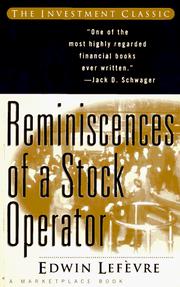
A speculator modelled on Jesse Livermore learns to read and trade the market.
“For a long time, I used to read Reminiscences of a Stock Operator almost every year.” — Bill Miller
Source: Bill Miller 2Q 2020 Market Letter
Recommended by: Barton Biggs, Bill Miller, Colm O'Shea and 7 others
A value investor's memoir from the 1950s to the dot-com crash, on market psychology.
Recommended by: Chris Mittleman, Li Lu
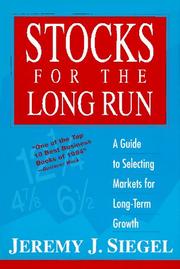
US returns since 1802 show stocks beat bonds and cash over every long period.
“his book "Stocks for the Long Run" contributed greatly to the bull market's middle years” — Howard Marks
Source: Oaktree memo 'Irrational Exuberance'
Recommended by: Howard Marks, John C. Bogle and 4 others
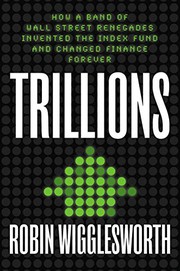
How index funds went from academic idea to owning much of the world's shares.
“Wigglesworth, Robin, Trillions: How a Band of Wall Street Renegades Invested the Index Fund and Changed Finance Forever (New York: Portfolio/Penguin, 2021)” — Michael Mauboussin
Source: Who Is On the Other Side? A Framework for Understanding Market (In)Efficiency
Recommended by: Michael Mauboussin
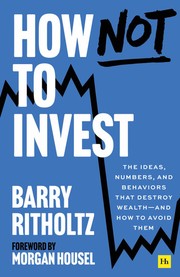
Why avoiding errors adds more to returns than picking winners.
“Barry Ritholtz dreamed up the perfect concept and wrote the perfect book to suit it” — Christopher Bloomstran
Source: Semper Augustus 2025 Letter to Clients, 'Books and Music', p. 88
Recommended by: Christopher Bloomstran
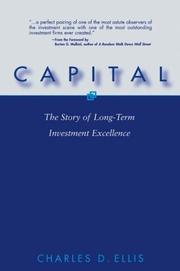
How Capital Group built its long-term investing culture.
“A fine new book (Capital, with the foregoing words in its subtitle) by respected analyst Charles D. Ellis drives this point home.” — John C. Bogle
Source: As The Index Fund Moves From Heresy to Dogma… What More Do We Need To Know, page 10
Recommended by: John C. Bogle, Mohnish Pabrai
Where it sits in the reference 3
Topics 2
As an Amazon Associate I earn from qualifying purchases.