How to Design Programs
An introduction to programming focused on the design process, not a language.
Summary
Matthias Felleisen's introduction to programming places computer science at the core of a liberal arts education. Unlike other introductory books, it concentrates on the process of designing programs, an approach meant to build critical reading, analytical thinking, creative synthesis and attention to detail, which matter for everyone and not only for future programmers.
The book introduces two new ideas. First, it gives program design guidelines that show readers how to analyse a problem statement, formulate concise goals, make up examples, outline a solution based on that analysis, finish the program and test it, each step producing a well-defined intermediate product. Second, it comes with a programming environment designed specifically for beginners, which grows with readers as they master the material until it supports a full language for the whole range of programming tasks. The environment, teacher guides, exercises, solutions and further projects are available free online, and a second edition exists.
Key takeaways 4
- Programming is taught as a systematic design process, step by step.
- Each design step produces a concrete intermediate result.
- A beginner's environment grows into a full language as students advance.
- Program design trains reasoning skills useful beyond computing.
Who should read it
Beginning programmers, teachers of introductory computer science and self-learners.
Who recommended it 1 · 1 direct
Similar books 6
Chosen by shared topics, the entries that hold them, and the people who recommended both.
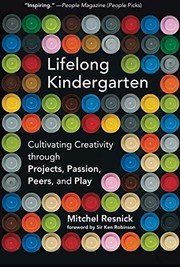
Why all schooling should be more like kindergarten: building, play and projects.
“Lifelong Kindergarten by Mitchel Resnick explores the why and how of creative thinking, why it's so important in today's world, and strategies to help kids develop as creative thinkers. Speaking of creative thinking...” — Ana Fabrega
Source: Fab Fridays 105: Fab Book Recs - by Ana Lorena
Recommended by: Ana Fabrega
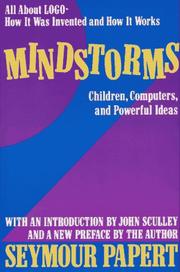
The case for teaching children computing, with LOGO, to learn mathematics.
Recommended by: Patrick Collison, Diana Kimball
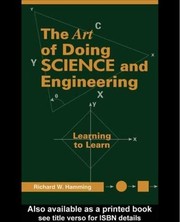
Lessons on doing science and engineering, and on thinking about their future.
Recommended by: Bret Victor, Patrick Collison, Keith Rabois
How computers could change schools, and why a decade of them changed so little.
Recommended by: Patrick Collison
Computer tools that help people, even children, explore how complex systems work.
“The first challenge to the centralized mindset comes from a delightful book by MIT Professor Mitchel Resnick, “Turtles, Termites, and Traffic Jams.” — Michael Mauboussin
Source: The Invisible Lead Steer: New Answers to Old Questions About the Stock Market, page 3
Recommended by: Michael Mauboussin
An introduction to Lisp for new programmers, with its programming and debug tools.
Recommended by: Paul Graham