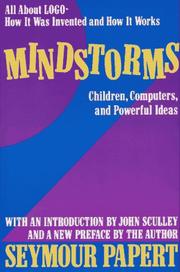
Mindstorms
The case for teaching children computing, with LOGO, to learn mathematics.
Summary
Seymour Papert, a computer scientist, argues for teaching computing in primary and secondary schools, using LOGO, the first programming language designed for children, as his example. Basic Books published Mindstorms: Children, Computers, and Powerful Ideas in 1980 and a new edition in 1993; in 2017 Papert's family made it freely available online.
Papert holds that children can master computers, and that teaching computational processes such as debugging changes the way they learn everything else. He describes the LOGO Turtle as an "object-to-think-with", walks through Turtle Graphics code, and shows learning environments in which children grasp mathematical ideas by programming. He also argues that schools full of technology can improve social contact among students and between students and teachers. Lego named its Mindstorms programmable construction kits after the book.
Key takeaways 4
- Children can master computers and learn mathematics by programming them.
- Debugging teaches a way of thinking that transfers to other subjects.
- The LOGO Turtle serves as an object for children to think with.
- Technology in schools can increase, not reduce, social interaction.
Who should read it
Teachers, parents and technologists interested in how children learn through programming.
Who recommended it 2 · 1 direct
Similar books 6
Chosen by shared topics, the entries that hold them, and the people who recommended both.
Lessons on doing science and engineering, and on thinking about their future.
Recommended by: Bret Victor, Patrick Collison, Keith Rabois
How computers could change schools, and why a decade of them changed so little.
Recommended by: Patrick Collison
An introduction to programming focused on the design process, not a language.
Recommended by: Paul Graham
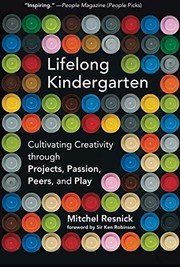
Why all schooling should be more like kindergarten: building, play and projects.
“Lifelong Kindergarten by Mitchel Resnick explores the why and how of creative thinking, why it's so important in today's world, and strategies to help kids develop as creative thinkers. Speaking of creative thinking...” — Ana Fabrega
Source: Fab Fridays 105: Fab Book Recs - by Ana Lorena
Recommended by: Ana Fabrega
Computer tools that help people, even children, explore how complex systems work.
“The first challenge to the centralized mindset comes from a delightful book by MIT Professor Mitchel Resnick, “Turtles, Termites, and Traffic Jams.” — Michael Mauboussin
Source: The Invisible Lead Steer: New Answers to Old Questions About the Stock Market, page 3
Recommended by: Michael Mauboussin
How non-programmers write their own software: end-user computing.
Recommended by: Patrick Collison