
Updates

  1. Person pages list letters, writing, profiles and links as sortable tables with filters, and show each person's companies as links; Fund letters show each letter's description in its own column.
  2. Experts show a checked job title and a short description of each person; 30 more people have photographs.
  3. Every company, fund, university and publication the experts work for has a page listing the people there.
  4. Fund letters show each letter's thesis and filter by it; 225 person pages list the essays, columns and newsletter issues the person wrote.
  5. Person pages list every essay and newsletter issue a person wrote, and their own books as a table in List view.
  6. Recommends shows the five largest kinds of book and the rest under More; browse pictures load sooner.
  7. Podcasts and talks link the original episode, filter by Audio and video or Press, and list each publisher once.
  8. Pages are wider, Recommends has List and Grid, and a filter clicked again turns off.
  9. Book cards sit in a ruled grid with Open Library and Goodreads links and each book's one-line note.
  10. Funds is now Investors; each investor's styles are buttons that filter the table.
  11. Podcasts and talks on a person's page filter by year and publisher and show as a list or a grid of pictures.
  12. Quotes show only people's own words: 472 summaries written by list sites are gone.
  13. Country pages open from Browse again, and every link on the shelf lands on a page.
  14. Subject and person pages show their sections as tabs, and each book appears once on a person's page.
  15. Book cards show the quote, who said it and the source; grids show five cards to a row.
  16. On a phone, a menu holds the sections, search, Updates, Feedback and dark mode.
  17. Feedback takes a screenshot of the page with no browser prompt, opens a screenshot full size when you click it, and clears itself once sent.
  18. Book cards are centred, search names the topic each book sits in, and any text cut short shows whole on hover.
  19. Search groups its results by kind: people, companies, geographies, subjects, topics, books, funds, fund letters and papers.
  20. The Books table lists who recommended each book by name, and the browser tab names the section you are in.
  21. Feedback can take a screenshot of the page, or one you paste or choose, and opens in the corner beside Updates.
  22. Each rail button reopens its section where you left it, and Browse, Table and People show on every book and subject page.
  23. Filters grey out choices that hold nothing instead of hiding them, and Books › People filters by authors or recommenders.
  24. Feedback takes a subject line and up to three screenshots.
  25. Biographies are grouped by the person they are about: 41 new pages, from Abraham Lincoln to Lee Kuan Yew.
  26. Sport splits into 23 sports, and Religion into one topic per faith.
  27. Book lists show as cards: the cover, one recommendation quote and every recommender by name.
  28. Seventeen subjects that had two or three pages under different names now have one page each.
  29. Every page lists its Experts as authors and recommenders, with a link to them on the Experts tab.
  30. Economics, Financial history, Financial panics and Accounting are subjects of their own, with one page per financial crisis.
  31. Book, person and subject pages open inside the app, so the tabs stay in view.
  32. 996 more book covers, and photographs or logos for 227 more people and companies.
  33. Books › Browse shows every subject as cards, and the rail holds Fund letters, Papers, Experts, Books and Funds.
  34. Every topic over 150 books splits into narrower topics, each with a page of its own.

Send feedback

What is it?
Screenshots, up to 3 (optional)
or paste one with Ctrl+V

We use your email only to reply to you.

India Unbound

India Unbound

Gurcharan Das
2000
T2 420 pages · about 7h to read Open Librarygoodreads

A Procter & Gamble insider on the 1991 liberalisation and what preceded it.

Summary

Gurcharan Das ran Procter and Gamble India and wrote this history of the Indian economy from independence to 2000, interleaving national policy with his own career. The structure moves through three periods: the Nehruvian planning years, the tightening controls of the 1960s and 1970s, and the liberalisation that began in 1991 under Narasimha Rao and Manmohan Singh.

Das's argument is that India's licence raj suppressed growth not primarily through public ownership but through the permit system governing private firms. He gives concrete detail from his own experience: the time required to obtain approval to expand capacity, the incentive to lobby rather than to compete, the protection of incumbents against entry, and the quality consequences of guaranteed markets. He contrasts this with the post-1991 period, when import liberalisation and the removal of industrial licensing exposed Indian firms to competition and, in his account, revealed entrepreneurial capacity that had been present all along.

The book is optimistic in a way that the subsequent twenty-five years have partly justified and partly not; India's growth accelerated, but the manufacturing employment Das expected did not materialise, and the reform agenda stalled in land, labour and financial markets. Das is also writing from a business perspective and gives limited attention to agricultural policy, to the distributional record, or to the argument that early state investment in heavy industry and technical education created capabilities the later boom used. It remains the most readable single-volume account of what the licence system did to firms.

Key takeaways 7

  1. The licence system damaged Indian growth chiefly by restricting private firms, not by expanding state ownership.
  2. Guaranteed domestic markets removed any incentive for Indian manufacturers to improve product quality.
  3. Firms under the permit regime competed for regulatory approvals rather than for customers, which shaped an entire generation of management.
  4. Das argues that Indian entrepreneurial capability existed throughout the planning period and was suppressed rather than absent.
  5. The 1991 reforms succeeded because a balance-of-payments crisis removed the political veto that had blocked them for a decade.
  6. India's growth came disproportionately from services because manufacturing remained constrained by labour law and infrastructure.
  7. Das claims India will grow at night while the government sleeps, meaning that private activity advances despite rather than because of the state.

Who should read it

Investors and operators working in India who want the history of the regulatory regime that still shapes how Indian firms and officials behave.

Similar books 6

Chosen by shared topics, the entries that hold them, and the people who recommended both.

Montek Singh Ahluwalia · 2019

Insider memoir by the architect of much of the reform programme.
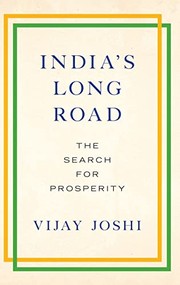
Vijay Joshi · 2016

The reform agenda India has still not executed.

Eun Mee Kim · 1997

The state-chaebol bargain and how it shifted over forty years.

Chalmers A. Johnson · 1982

How Japan's trade ministry steered industry from 1925 to 1975.
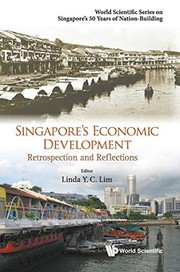
Linda Lim · 2015

Retrospective essays on the limits of the model and what comes next.

Tai-chun Kuo, Ramon H. Myers · 2011

The policies that moved Taiwan's economy from agriculture to electronics.

Where it sits in the reference 2

Geographies
Economics

Topics

EconomicsGeneral HistoryPolitics and GovernmentAsia, Africa, Latin America and the Middle EastAsia and the Pacific