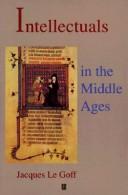
Intellectuals in the Middle Ages
The first medieval universities and the scholars who made a living teaching there.
Summary
Jacques Le Goff studies two linked developments: the founding of universities in the great cities of Europe in the High Middle Ages, and the rise of the intellectuals who taught in them. These were the first Europeans since classical times who made their living by teaching and by building up knowledge. The English version is a translation of the revised French edition of 1984.
Le Goff argues that these intellectuals, with Abelard the most typical, formed a new type of person. They were neither monks nor knights; their method was new, scholastic dialectic, and so was their goal, knowledge pursued for its own sake. In Spain, France, England and Germany, thought and study stopped, for the first time, being a privilege kept for the top ranks of the Church and the court. Le Goff shows that this change shifted European culture in a way that could not be undone.
Key takeaways 4
- Medieval universities produced a new social type, the professional intellectual.
- Abelard is Le Goff's most typical example of the figure who was neither monk nor knight.
- Scholastic dialectic was the new method, and knowledge for its own sake the new goal.
- Learning moved beyond the higher ranks of Church and court.
Who should read it
Readers of medieval and intellectual history interested in the origins of universities.
Who recommended it 1
Similar books 6
Chosen by shared topics, the entries that hold them, and the people who recommended both.
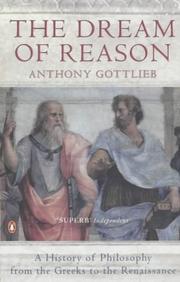
A history of Western philosophy from the Greeks to the Renaissance.
Recommended by: Mohnish Pabrai, Nassim Nicholas Taleb
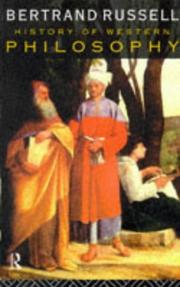
Western philosophy from the earliest times, tied to its political and social setting.
Recommended by: Patrick Collison
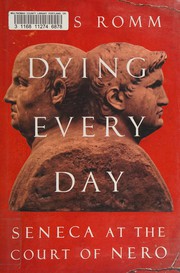
The philosopher Seneca's moral struggles at the court of Nero.
Recommended by: Nat Eliason

How existentialism took root in American thought.
Recommended by: Patrick Collison
Lectures on Proust that a Polish painter gave in a Soviet prison camp.
Recommended by: Susan J. Fowler