Updates

  1. Person pages list letters, writing, profiles and links as sortable tables with filters, and show each person's companies as links; Fund letters show each letter's description in its own column.
  2. Experts show a checked job title and a short description of each person; 30 more people have photographs.
  3. Every company, fund, university and publication the experts work for has a page listing the people there.
  4. Fund letters show each letter's thesis and filter by it; 225 person pages list the essays, columns and newsletter issues the person wrote.
  5. Person pages list every essay and newsletter issue a person wrote, and their own books as a table in List view.
  6. Recommends shows the five largest kinds of book and the rest under More; browse pictures load sooner.
  7. Podcasts and talks link the original episode, filter by Audio and video or Press, and list each publisher once.
  8. Pages are wider, Recommends has List and Grid, and a filter clicked again turns off.
  9. Book cards sit in a ruled grid with Open Library and Goodreads links and each book's one-line note.
  10. Funds is now Investors; each investor's styles are buttons that filter the table.
  11. Podcasts and talks on a person's page filter by year and publisher and show as a list or a grid of pictures.
  12. Quotes show only people's own words: 472 summaries written by list sites are gone.
  13. Country pages open from Browse again, and every link on the shelf lands on a page.
  14. Subject and person pages show their sections as tabs, and each book appears once on a person's page.
  15. Book cards show the quote, who said it and the source; grids show five cards to a row.
  16. On a phone, a menu holds the sections, search, Updates, Feedback and dark mode.
  17. Feedback takes a screenshot of the page with no browser prompt, opens a screenshot full size when you click it, and clears itself once sent.
  18. Book cards are centred, search names the topic each book sits in, and any text cut short shows whole on hover.
  19. Search groups its results by kind: people, companies, geographies, subjects, topics, books, funds, fund letters and papers.
  20. The Books table lists who recommended each book by name, and the browser tab names the section you are in.
  21. Feedback can take a screenshot of the page, or one you paste or choose, and opens in the corner beside Updates.
  22. Each rail button reopens its section where you left it, and Browse, Table and People show on every book and subject page.
  23. Filters grey out choices that hold nothing instead of hiding them, and Books › People filters by authors or recommenders.
  24. Feedback takes a subject line and up to three screenshots.
  25. Biographies are grouped by the person they are about: 41 new pages, from Abraham Lincoln to Lee Kuan Yew.
  26. Sport splits into 23 sports, and Religion into one topic per faith.
  27. Book lists show as cards: the cover, one recommendation quote and every recommender by name.
  28. Seventeen subjects that had two or three pages under different names now have one page each.
  29. Every page lists its Experts as authors and recommenders, with a link to them on the Experts tab.
  30. Economics, Financial history, Financial panics and Accounting are subjects of their own, with one page per financial crisis.
  31. Book, person and subject pages open inside the app, so the tabs stay in view.
  32. 996 more book covers, and photographs or logos for 227 more people and companies.
  33. Books › Browse shows every subject as cards, and the rail holds Fund letters, Papers, Experts, Books and Funds.
  34. Every topic over 150 books splits into narrower topics, each with a page of its own.

Send feedback

What is it?
Screenshots, up to 3 (optional)
or paste one with Ctrl+V

We use your email only to reply to you.

Mary Kay on People Management

Mary Kay on People Management

Mary Kay Ash
1984
T3 184 pages · about 3h 4m to read Open Librarygoodreads

Founder's own account of recruiting and holding a commissioned sales force.

Summary

Mary Kay Ash founded Mary Kay Cosmetics in 1963 and built it into a large direct-selling organisation staffed almost entirely by independent women contractors. This book sets out the management principles she used, written for managers generally rather than for her own sales force.

The principles are stated simply and repeated. She instructs managers to imagine an invisible sign around every person's neck reading make me feel important, and to act accordingly. She advocates praising people to success, on the argument that recognition produces more improvement than correction does. She sets out the sandwich technique for criticism, placing a specific correction between two genuine pieces of praise. She insists on an open-door policy and on the principle that people come before profit. She describes the recognition system that made the company famous, including the pink Cadillacs, and argues that public recognition motivates more durably than money because it cannot be spent and forgotten.

The context is important and the book does not examine it. Mary Kay's sales force were independent contractors who bought inventory, bore their own costs, and mostly earned little; the recognition system operated on a population where a small number succeeded conspicuously. Readers should treat the management advice as tested in a specific setting where the motivational structure had to substitute for wages and job security. The advice on recognition and on how to deliver criticism has been independently supported since.

Key takeaways 7

  1. Recognition motivates more durably than money because it cannot be spent and then forgotten.
  2. Public recognition of specific individuals for specific achievements works better than general appreciation of a group.
  3. Criticism should be delivered between two pieces of genuine praise and should address the act rather than the person.
  4. Ash argues that managers should treat every person as the most important person in the room, and that this is a discipline rather than a sentiment.
  5. An organisation of independent contractors must supply through recognition what an employer supplies through salary and security.
  6. People should be praised toward the behaviour wanted rather than corrected away from the behaviour observed.
  7. Ash held that family and faith should rank above work, and built company practices that made that ordering visible.

Who should read it

Managers of sales organisations and of volunteer or contractor workforces who need motivation systems that do not rest on compensation alone.

Similar books 6

Chosen by shared topics, the entries that hold them, and the people who recommended both.

Jack Stack, Bo Burlingham · 2002

Building an ownership culture in which employees think and act like owners.

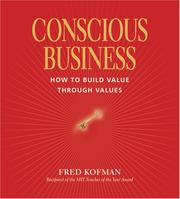
Fred Kofman · 2002

Seven qualities, such as unconditional responsibility, of people who make firms work.

Recommended by: Reid Hoffman, Sheryl Sandberg

Where it sits in the reference 3

Business models
Business themes
Business themes

Topics

Business and ManagementLeadership