Updates

  1. Fund letters lists 118 more letters, each with its own page: 44 weekly commentaries by Jeremy Siegel from 2026, 31 issues of Van Tharp's newsletter from 2018, 23 Pabrai Investment Funds letters from 2021 to Q3 2026, 13 Efficient Frontier essays by William Bernstein, Oakmark's three 3Q 2026 commentaries, two Lindsell Train reports, a John Hussman comment and Third Point's Q3 2026 letter.
  2. 2,027 more books carry a one-line description in the Books table and on their pages; 7,067 of 7,715 have one, every tier 1, 2 and 3 book among them.
  3. Fund letters lists 187 more letters from 19 firms, among them Permanent Equity, Social Capital, Lux Capital, Square Peg, Bestinver, Cobas, Sequoia Fund, Marketfield and EquityCompass; each shows on its investor's page and has a page of its own.
  4. 2,928 more books carry a one-line description in the Books table and on their pages, so every tier 1, 2 and 3 book has one; 5,040 in all.
  5. Every publication on Newsletters has its own page: its writing, its writers, its staff and who recommends it. Investor pages have a Management tab; a company's Experts tab now leaves out its own people, who list under Management. Tabs on a phone move sideways only.
  6. Every fund letter and research paper has its own page: the thesis, the PDF, the companies and books it names, and for 176 letters and 24 papers so far a summary, key insights and quotes with their page.
  7. 99 books that no page listed now sit under their topics in Books, among them Caste, American Prometheus and Pale Blue Dot.
  8. Newsletters lists every newspaper, magazine, investment newsletter, journal and blog the reference holds, 442 in all, with the people who write there. The search box keeps your last 20 searches. You can create an account.
  9. 283 books that fund managers recommend in their letters are on the shelf, each with the letter's own words and page; investor pages have a Recommends tab.
  10. Person, company, investor and show pages link their own accounts on X, Threads, Instagram, LinkedIn, YouTube and Substack: 275 people, 552 companies and organisations, 88 investors and 478 shows.
  11. 716 more book recommendations name their source: the person's own reading list, letter, blog post, speech or interview, or an article that reports it. 232 of them quote the person's own words about the book, on the book card and on the book's page.
  12. Every US-listed company has a page with its SEC filings. Company pages list their experts and their management, past and present. Fund managers sit under Investors. Each show has a page of its episodes, and an episode page names its guests and hosts. Biographies lists groups, then people. Breadcrumbs show where a page sits.
  13. Media lists every podcast episode, video, interview and talk, over 10,000, by person, company, publisher and event; each filter searches its own choices. Books opens on its table, then Browse, then Authors and Recommenders. A filter's count no longer covers its arrow.
  14. A book that no company, country or subject page lists shows its topics under Where it sits in the reference. On a phone, a page's tabs scroll sideways only. Descriptions read the same on every page. See them in the Experts tab lists every expert the page names.
  15. Every podcast episode, video and interview has its own page with a video or audio player and a link to the source. Investor pages show each company's sector and market cap; firms such as Berkshire Hathaway have one page that holds their letters and their company tabs. Letters tabs filter by company and search the theses. Companies filter by Public, Private and Defunct and link each company's website.
  16. Every tab, view and search has its own address, such as /books/table/asset or /letters/companies, so Back works and a link opens the same place. Page addresses no longer end in .html. Fund letters, Investors, Companies and Papers load about a fifth of the data they did.
  17. Fund letters has a Companies tab: every company the letters name, with its market cap, sector, country, and how many letters and investors name it. Investor pages link each investor's website. Lists in table cells end with “… and N more” at every width.
  18. 1,120 more book summaries; descriptions for 373 papers; pages for 137 more companies, each with the fund letters that discuss it; 215 official photographs; search has its own page.
  19. 411 more books have a summary; person pages list 930 more of the books they wrote; 147 people show their official photograph.
  20. Every investor has a page with its letters and the companies they discuss; company pages list the investors whose letters name them.
  21. A Companies section at the top of the rail lists every company the books, experts and fund letters name.
  22. Person pages list letters, writing, profiles and links as sortable tables with filters, and show each person's companies as links; Fund letters show each letter's description in its own column.
  23. Experts show a checked job title and a short description of each person; 30 more people have photographs.
  24. Every company, fund, university and publication the experts work for has a page listing the people there.
  25. Fund letters show each letter's thesis and filter by it; 225 person pages list the essays, columns and newsletter issues the person wrote.
  26. Person pages list every essay and newsletter issue a person wrote, and their own books as a table in List view.
  27. Recommends shows the five largest kinds of book and the rest under More; browse pictures load sooner.
  28. Podcasts and talks link the original episode, filter by Audio and video or Press, and list each publisher once.
  29. Pages are wider, Recommends has List and Grid, and a filter clicked again turns off.
  30. Book cards sit in a ruled grid with Open Library and Goodreads links and each book's one-line note.
  31. Funds is now Investors; each investor's styles are buttons that filter the table.
  32. Podcasts and talks on a person's page filter by year and publisher and show as a list or a grid of pictures.
  33. Quotes show only people's own words: 472 summaries written by list sites are gone.
  34. Country pages open from Browse again, and every link on the shelf lands on a page.
  35. Subject and person pages show their sections as tabs, and each book appears once on a person's page.
  36. Book cards show the quote, who said it and the source; grids show five cards to a row.
  37. On a phone, a menu holds the sections, search, Updates, Feedback and dark mode.
  38. Feedback takes a screenshot of the page with no browser prompt, opens a screenshot full size when you click it, and clears itself once sent.
  39. Book cards are centred, search names the topic each book sits in, and any text cut short shows whole on hover.
  40. Search groups its results by kind: people, companies, geographies, subjects, topics, books, funds, fund letters and papers.
  41. The Books table lists who recommended each book by name, and the browser tab names the section you are in.
  42. Feedback can take a screenshot of the page, or one you paste or choose, and opens in the corner beside Updates.
  43. Each rail button reopens its section where you left it, and Browse, Table and People show on every book and subject page.
  44. Filters grey out choices that hold nothing instead of hiding them, and Books › People filters by authors or recommenders.
  45. Feedback takes a subject line and up to three screenshots.
  46. Biographies are grouped by the person they are about: 41 new pages, from Abraham Lincoln to Lee Kuan Yew.
  47. Sport splits into 23 sports, and Religion into one topic per faith.
  48. Book lists show as cards: the cover, one recommendation quote and every recommender by name.
  49. Seventeen subjects that had two or three pages under different names now have one page each.
  50. Every page lists its Experts as authors and recommenders, with a link to them on the Experts tab.
  51. Economics, Financial history, Financial panics and Accounting are subjects of their own, with one page per financial crisis.
  52. Book, person and subject pages open inside the app, so the tabs stay in view.
  53. 996 more book covers, and photographs or logos for 227 more people and companies.
  54. Books › Browse shows every subject as cards, and the rail holds Fund letters, Papers, Experts, Books and Funds.
  55. Every topic over 150 books splits into narrower topics, each with a page of its own.

Send feedback

What is it?
Screenshots, up to 3 (optional)
or paste one with Ctrl+V

We use your email only to reply to you.

Mastering the Market Cycle: Getting the Odds

Mastering the Market Cycle: Getting the Odds on Your Side

Cycles can't be timed, but knowing where you stand in one lets you adjust risk.

Howard Marks
2018
T2 272 pages · about 4h 32m to read Open Librarygoodreads

Positioning credit risk against the cycle.

Summary

Marks argues that cycles are the most reliable feature of markets, that their timing cannot be predicted, and that an investor's current position within a cycle can be assessed well enough to adjust exposure. The book expands material from his Oaktree memos and overlaps considerably with The Most Important Thing.

He identifies multiple interacting cycles: the economic cycle, the profit cycle, the credit cycle, the distressed debt cycle, the real estate cycle and the psychological pendulum between greed and fear. He argues that the credit cycle is the most consequential because it amplifies everything else, since the availability of credit determines whether an ordinary downturn becomes a crisis.

His central practical claim is that an investor should be aggressive or defensive according to where the cycle currently stands, and that the assessment can be made from observable indicators rather than from forecasting. He gives a checklist of market conditions, including whether investors are worried about losing money or about missing out, whether covenants are being weakened, whether new entrants are receiving funding easily, and whether risky securities are being issued readily.

He distinguishes between calibrating exposure, which he argues is possible, and market timing, which he argues is not, and states that the objective is to be aggressive when the odds are favourable rather than to identify tops and bottoms. The book repeats itself substantially and quotes at length from Marks' own memos, which are freely available. It contains no method for measuring the cycle position numerically, and the checklist requires judgment. Readers who have read his first book will find much of the content familiar.

Key takeaways 8

  1. Cycles are the most reliable feature of markets and result from human behaviour rather than from anything that could be corrected.
  2. Cycle timing cannot be predicted, and an investor's current position within a cycle can be assessed from observable conditions.
  3. The credit cycle is the most consequential because credit availability determines whether a downturn becomes a crisis.
  4. Excesses in one direction produce corrections that overshoot in the other, so the cycle moves through extremes rather than around an average.
  5. Whether investors are worried about losing money or about missing out is the single most informative indicator of cycle position.
  6. Weakening covenants, easy financing for new entrants and ready issuance of risky securities together mark a late cycle position.
  7. Exposure should be calibrated to the assessed cycle position, which is different from attempting to time tops and bottoms.
  8. The best buying occurs when others must sell, which requires holding capital during periods when holding capital looks like a mistake.

Who should read it

Investors who want a framework for adjusting exposure by cycle position, though the material overlaps heavily with Marks' earlier book and free memos.

About Howard Marks

Co-founder and Co-Chairman, Oaktree Capital Management

His client memos, written continuously since 1990, are a primary source on risk, cycles and market psychology that other investors quote directly.

Who recommended it 2 · 1 direct

Similar books 6

Chosen by shared topics, the entries that hold them, and the people who recommended both.
Howard Marks · 2011

Second-level thinking, risk and market cycles, drawn from Oaktree's client memos.

Howard Marks · 2012

Second-level thinking on risk and cycles, with notes by Klarman and Greenblatt.

“…books I've recommended, highlighted to death, or forced on friends.” — Andrew Wilkinson

Source: Andrew Wilkinson's Bookshelf, neverenough.com

Recommended by: Andrew Wilkinson, Mohnish Pabrai and 3 others
Vitaliy N. Katsenelson · 2007

How to buy and sell stocks in the long range-bound markets that follow bull markets.
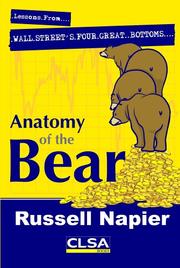
Russell Napier · 2005

What markets looked like at the US stock bottoms of 1921, 1932, 1949 and 1982.

Lars Tvede · 1997

The history of business cycle theory and how credit cycles drive asset prices.
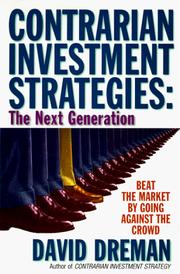
David Dreman · 1999

Data showing that low-expectation stocks beat popular ones over the long run.

“all these people really were helpful in forming and getting me involved in investing” — Joel Greenblatt

Source: Masters in Business transcript: Joel Greenblatt (2018)

Recommended by: Joel Greenblatt, Michael Mauboussin and 2 others

Where it sits in the reference 7

Investors
Assets
Portfolio & risk
Investment styles
Investment styles
Mental models
Mental models

Topics 1

Investing

As an Amazon Associate I earn from qualifying purchases.