Mastery
How masters from Leonardo to Faraday found a life's task and served apprenticeships.
Robert Greene's synthesis of mastery across domains applies directly to the musician's developmental arc: apprenticeship under someone further along, the creative-active phase of experimentation, and the intuitive mastery that eventually emerges. The profiles of Mozart and Coltrane anchor the abstract framework in musical specifics.
Summary
The reference has not verified this book in detail; the summary states only what the title, author and subject establish.
Greene, author of The 48 Laws of Power, argues that the highest form of power is mastery of a field, and that it comes from a long, demanding apprenticeship rather than from inborn genius. He builds the case from the lives of past masters, among them Charles Darwin, Benjamin Franklin, Albert Einstein and Leonardo da Vinci, and from interviews with nine living masters, including the technologist Paul Graham and the animal rights advocate Temple Grandin.
Greene sets out to take apart the common myths about genius. In his account the masters first learned the hidden rules of their fields, then changed those rules to express their own individuality. Darwin started as an underachieving schoolboy and Leonardo as an illegitimate outcast; what they shared was the apprenticeship, not early promise.
Key takeaways 4
- Greene treats mastery of a field as the highest form of power.
- Mastery follows a long apprenticeship in which a person learns a field's hidden rules.
- Masters change the rules of their field only after they have learned them.
- Genius, in Greene's account, is built through training rather than given at birth.
Who should read it
Readers planning a long career in one field who want Greene's account of how Darwin, Franklin, Einstein and living masters got good.
About Robert Greene
American author of books on power, strategy, mastery and human behaviour, built from historical case studies.
The 48 Laws of Power catalogues the tactics used in courts, armies and businesses, stated as rules with historical cases on both the observance and the violation of each. Mastery examines how practitioners across fields moved from apprenticeship to independent judgement over decades of deliberate work.
Who recommended it 9 · 4 direct
“Mostly detailed historical biographical tales of ”masters” like DaVinci, Darwin, Mozart, Proust, Goethe, Wright Brothers, Einstein, Coltrane, Martha Graham, etc. Lessons dissected from their successes, and categorized. Similar format to his great book “48 Laws of Power”, but a little less effective here. The biographies were interesting, but lessons were mostly conventional wisdom.”
Similar books 6
Chosen by shared topics, the entries that hold them, and the people who recommended both.
Forty-eight rules for gaining and keeping power, each shown by historical episodes.
“Warning: some think this book is pure evil. But power exists, so it can only help to understand it better, even if you choose not to wield it.” — Derek Sivers
Source: Derek Sivers book notes (primary, rated list) · Rating: 8/10
Recommended by: Derek Sivers, Nat Eliason, Ryan Holiday and 4 others
Cognitive science and learning theory applied to thinking and learning better.
“A great curated collection of facts about how to learn effectively and think clearly. Since it's written by a programmer, it makes many computer analogies that fellow programmers will appreciate. Non-programmers might feel a little left out.” — Derek Sivers
Source: Derek Sivers book notes (primary, rated list) · Rating: 5/10
Recommended by: Derek Sivers, Nat Eliason
366 daily lessons on power, seduction, mastery, strategy and human nature.
Recommended by: Ryan Holiday
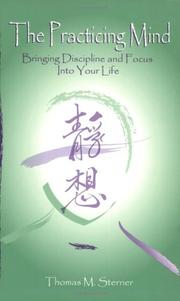
How present-moment awareness brings discipline and focus to everyday life.
“Great simple philosophy: Life itself is one long practice session. Everything in life worth achieving requires practice. Practice is not just for artistic or athletic skill, but practicing patience, practicing communication, practicing anything you do in life. The process/practice itself is the real goal, not the outcome.” — Derek Sivers
Source: Derek Sivers book notes (primary, rated list) · Rating: 8/10
Recommended by: Derek Sivers, Nat Eliason
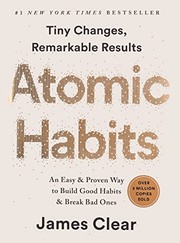
Build habits by making them obvious, attractive, easy and satisfying.
“Last October, my friend James Clear published the breakout hit book, Atomic Habits. As we both discovered in the months that followed, we have many readers in common.” — Cal Newport
Source: The Atomic Minimalist: My Conversation with James Clear
Recommended by: Ali Abdaal, Balaji S. Srinivasan and 22 others
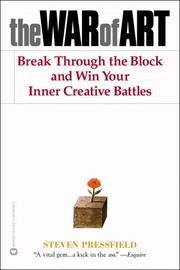
How to beat Resistance, the inner force that keeps people from creative work.
“This book is a must-read for creatives navigating the challenges of living a creative life. It came to me when I needed it the most, and pushed me to examine my internal obstacles and change my attitude towards creating.” — Ana Fabrega
Source: Fab Fridays 10: Silver Lining in this Crisis
Recommended by: Ana Fabrega, Derek Sivers, Mohnish Pabrai and 11 others