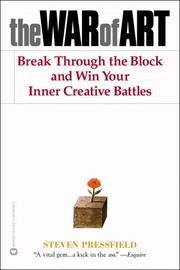
The War of Art
How to beat Resistance, the inner force that keeps people from creative work.
Pressfield's book on resistance applies with particular force to musicians, where the gap between technical facility and creative output is often enormous. The concept of 'turning pro' — treating creative work as a practice with professional discipline regardless of whether it pays — is the mental shift that separates hobbyists from people who actually finish records.
Summary
Pressfield names the internal force that prevents people from doing their creative work Resistance, and treats it as a predictable, universal and impersonal phenomenon with observable properties. The book is written in very short sections, most under a page, and divides into three parts: defining Resistance, opposing it through professionalism, and a final section on inspiration that turns metaphysical.
The first part catalogues how Resistance appears: procrastination, self-medication, drama, self-doubt, research that substitutes for writing, and the observation that Resistance is strongest immediately before completion and strongest in relation to the work that matters most. Pressfield states this last point as a navigational rule, arguing that the intensity of the aversion indicates the importance of the task.
The second part is the useful one for working people. Pressfield contrasts the amateur, who works when inspired and treats the work as identity, with the professional, who shows up daily, works on schedule, accepts payment, does not take failure personally, does not overidentify with the work, masters the technique and asks for help. He writes from his own experience of years of failure before publishing his first novel at fifty-two.
The third part, on muses, angels and the invocation of external creative forces, will not persuade most readers and Pressfield offers no argument for it beyond his own experience. The book contains no research and makes no attempt at evidence. It is short, blunt and repetitive by design. It works as a reminder rather than as an explanation, and readers who want to understand procrastination rather than be told to overcome it should look elsewhere.
Key takeaways 8
- An internal force reliably opposes any action that serves long-term growth, and it operates the same way for everyone.
- The strength of your aversion to a piece of work indicates how important that work is to you.
- The professional works to a schedule regardless of inspiration, while the amateur waits for the right conditions.
- A professional does not identify with the work, which is what allows them to accept criticism and continue after failure.
- Resistance intensifies as you approach completion, which is when most projects are abandoned.
- Activity that resembles the work, including research, planning and preparation, is the most effective form of avoidance because it feels productive.
- Turning professional is a decision made once rather than a state achieved gradually.
- Fear indicates the direction of the work that matters, so it should be used as a signal rather than removed.
Who should read it
Founders and writers who know what they should be working on and are not doing it, wanting a short direct push rather than an explanation.
Who recommended it 14 · 5 direct
“This book is a must-read for creatives navigating the challenges of living a creative life. It came to me when I needed it the most, and pushed me to examine my internal obstacles and change my attitude towards creating.”
“Have you experienced a vision of the person you might become, the work you could accomplish, the realized being you were meant to be? Are you a writer who doesn't write, a painter who doesn't paint, an entrepreneur who never starts a venture? Then you know what "Resistance" is.”
“So Steven Pressfield, incredible writer in his own right and has written The War of Art and many other books, talks about resistance.”
Similar books 6
Chosen by shared topics, the entries that hold them, and the people who recommended both.
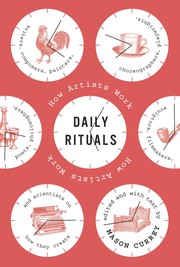
How artists, writers and composers structure their working days.
“Collections of the creative routines of famous writers, artists, musicians, and scientists. Some interesting insights, but mostly reinforcing proof that it's important to keep a daily routine to put aside time for your creative work.” — Derek Sivers
Source: Derek Sivers book notes (primary, rated list) · Rating: 5/10
Recommended by: Derek Sivers, Jim Collins, Nat Eliason and 2 others
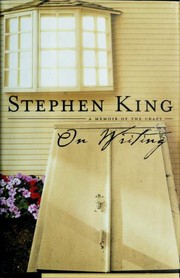
A memoir of the writing craft, and why story comes before plot.
“As Amy watched the Seahawks decimate the Broncos, I read Stephen King’s On Writing: A Memoir of the Craft. The result – Amy was sad while I was delighted.” — Brad Feld
Source: Book: On Writing — Feld Thoughts
Recommended by: Brad Feld, Derek Sivers, Nat Eliason and 3 others
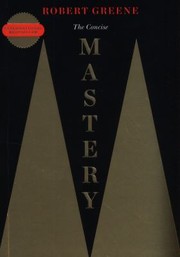
How masters from Leonardo to Faraday found a life's task and served apprenticeships.
“Mostly detailed historical biographical tales of ”masters” like DaVinci, Darwin, Mozart, Proust, Goethe, Wright Brothers, Einstein, Coltrane, Martha Graham, etc. Lessons dissected from their successes, and categorized. Similar format to his great book “48 Laws of Power”, but a little less effective here. The biographies were interesting, but lessons were mostly conventional wisdom.” — Derek Sivers
Source: Derek Sivers book notes (primary, rated list) · Rating: 5/10
Recommended by: Derek Sivers, Nat Eliason, Ryan Holiday and 6 others
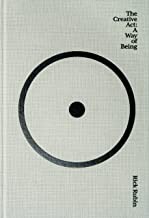
Reflections on creativity as a way of being rather than a process.
Recommended by: Eric Jorgenson
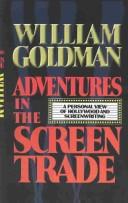
What it is like to write films for Hollywood, from a screenwriter's own career.
“William Goldman, Adventures in the Screen Trade: A Personal View of Hollywood and Screenwriting (New York: Warner Books, 1983), 39” — Michael Mauboussin
Source: Who Is On the Other Side? A Framework for Understanding Market (In)Efficiency
Recommended by: Michael Mauboussin, Tim Ferriss
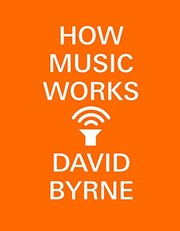
How the spaces it is made for, from cathedrals to earbuds, shape music.
“Some interesting historical perspectives I hadn't thought of, like how the venue's reverberation changed composition. Highlight for me was the Byrne/Eno creative thoughts on their approach to writing and recording music, which I've always loved.” — Derek Sivers
Source: Derek Sivers book notes (primary, rated list) · Rating: 5/10
Recommended by: Derek Sivers, Jim Collins, Eric Weinstein