Updates

  1. Person pages list letters, writing, profiles and links as sortable tables with filters, and show each person's companies as links; Fund letters show each letter's description in its own column.
  2. Experts show a checked job title and a short description of each person; 30 more people have photographs.
  3. Every company, fund, university and publication the experts work for has a page listing the people there.
  4. Fund letters show each letter's thesis and filter by it; 225 person pages list the essays, columns and newsletter issues the person wrote.
  5. Person pages list every essay and newsletter issue a person wrote, and their own books as a table in List view.
  6. Recommends shows the five largest kinds of book and the rest under More; browse pictures load sooner.
  7. Podcasts and talks link the original episode, filter by Audio and video or Press, and list each publisher once.
  8. Pages are wider, Recommends has List and Grid, and a filter clicked again turns off.
  9. Book cards sit in a ruled grid with Open Library and Goodreads links and each book's one-line note.
  10. Funds is now Investors; each investor's styles are buttons that filter the table.
  11. Podcasts and talks on a person's page filter by year and publisher and show as a list or a grid of pictures.
  12. Quotes show only people's own words: 472 summaries written by list sites are gone.
  13. Country pages open from Browse again, and every link on the shelf lands on a page.
  14. Subject and person pages show their sections as tabs, and each book appears once on a person's page.
  15. Book cards show the quote, who said it and the source; grids show five cards to a row.
  16. On a phone, a menu holds the sections, search, Updates, Feedback and dark mode.
  17. Feedback takes a screenshot of the page with no browser prompt, opens a screenshot full size when you click it, and clears itself once sent.
  18. Book cards are centred, search names the topic each book sits in, and any text cut short shows whole on hover.
  19. Search groups its results by kind: people, companies, geographies, subjects, topics, books, funds, fund letters and papers.
  20. The Books table lists who recommended each book by name, and the browser tab names the section you are in.
  21. Feedback can take a screenshot of the page, or one you paste or choose, and opens in the corner beside Updates.
  22. Each rail button reopens its section where you left it, and Browse, Table and People show on every book and subject page.
  23. Filters grey out choices that hold nothing instead of hiding them, and Books › People filters by authors or recommenders.
  24. Feedback takes a subject line and up to three screenshots.
  25. Biographies are grouped by the person they are about: 41 new pages, from Abraham Lincoln to Lee Kuan Yew.
  26. Sport splits into 23 sports, and Religion into one topic per faith.
  27. Book lists show as cards: the cover, one recommendation quote and every recommender by name.
  28. Seventeen subjects that had two or three pages under different names now have one page each.
  29. Every page lists its Experts as authors and recommenders, with a link to them on the Experts tab.
  30. Economics, Financial history, Financial panics and Accounting are subjects of their own, with one page per financial crisis.
  31. Book, person and subject pages open inside the app, so the tabs stay in view.
  32. 996 more book covers, and photographs or logos for 227 more people and companies.
  33. Books › Browse shows every subject as cards, and the rail holds Fund letters, Papers, Experts, Books and Funds.
  34. Every topic over 150 books splits into narrower topics, each with a page of its own.

Send feedback

What is it?
Screenshots, up to 3 (optional)
or paste one with Ctrl+V

We use your email only to reply to you.

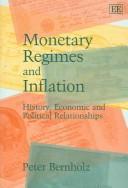
Monetary Regimes and Inflation

Monetary Regimes and Inflation

Peter Bernholz
2003
T2 224 pages · about 3h 44m to read Open Librarygoodreads

Comparative study of hyperinflations and the fiscal conditions behind them.

Summary

Peter Bernholz, a Swiss economist, examines inflation across recorded history and asks what monetary and political conditions produce it. His evidence base is unusually wide: metallic currencies and debasements from antiquity through the early modern period, paper money episodes, and the twentieth and twenty-first century inflations and hyperinflations.

His central empirical finding concerns the fiscal threshold. Bernholz identifies roughly thirty hyperinflations in recorded history and shows that in every case the government was financing a large share of its expenditure by creating money. He puts the threshold at around forty per cent of government expenditure covered by money creation, with hyperinflation becoming likely once deficits reach roughly twenty per cent of expenditure sustained over time. He also documents the behavioural regularities: real money balances collapse before the price level peaks, currency substitution accelerates, and the exchange rate leads domestic prices rather than following them.

The second theme is institutional. Bernholz argues that monetary regimes differ in how much inflation they permit, that metallic standards constrained governments more effectively than discretionary paper regimes, and that central bank independence works only when it is supported by a political consensus against inflation. He is explicit that independence written into statute fails when the government's fiscal position becomes untenable. The book is scholarly and data-dense. Its cross-historical comparison is its distinctive contribution and it is regularly cited in current debates about fiscal dominance.

Key takeaways 7

  1. Every recorded hyperinflation involved a government financing a large share of its spending through money creation.
  2. Hyperinflation becomes likely when money creation covers roughly forty per cent of government expenditure.
  3. Real money balances collapse before the price level peaks, because holders anticipate the currency's destruction.
  4. Exchange rates lead domestic prices during high inflation rather than following them, which reverses the normal causal assumption.
  5. Metallic standards constrained government finance more effectively than statutory central bank independence does.
  6. Central bank independence fails when the government's fiscal position leaves no alternative to monetary financing.
  7. Bernholz argues that inflation is always a political phenomenon expressed through monetary institutions rather than a technical monetary error.

Who should read it

Investors and policymakers who want the historical base rates on what fiscal conditions produce inflation and how currencies behave as they fail.

Similar books 6

Chosen by shared topics, the entries that hold them, and the people who recommended both.

Ben S. Bernanke · 2022

Insider account of the Fed from Burns through the QE era.

Charles P. Kindleberger · 1984

European finance from the Middle Ages on: money, banking, markets and public debt.

Murray N. Rothbard · 2002

US money from colonial paper to the Fed, read as bank-and-state booms and busts.

Allan H. Meltzer · 2003

The Fed from 1913 to 1951, told from its own minutes and internal memos.

Milton Friedman, Anna Jacobson Schwartz · 1963

The US money stock from 1867 to 1960, and how changes in it drove prices and income.

Where it sits in the reference 1

Financial history

Topics

EconomicsFinancial History