Updates

  1. Person pages list letters, writing, profiles and links as sortable tables with filters, and show each person's companies as links; Fund letters show each letter's description in its own column.
  2. Experts show a checked job title and a short description of each person; 30 more people have photographs.
  3. Every company, fund, university and publication the experts work for has a page listing the people there.
  4. Fund letters show each letter's thesis and filter by it; 225 person pages list the essays, columns and newsletter issues the person wrote.
  5. Person pages list every essay and newsletter issue a person wrote, and their own books as a table in List view.
  6. Recommends shows the five largest kinds of book and the rest under More; browse pictures load sooner.
  7. Podcasts and talks link the original episode, filter by Audio and video or Press, and list each publisher once.
  8. Pages are wider, Recommends has List and Grid, and a filter clicked again turns off.
  9. Book cards sit in a ruled grid with Open Library and Goodreads links and each book's one-line note.
  10. Funds is now Investors; each investor's styles are buttons that filter the table.
  11. Podcasts and talks on a person's page filter by year and publisher and show as a list or a grid of pictures.
  12. Quotes show only people's own words: 472 summaries written by list sites are gone.
  13. Country pages open from Browse again, and every link on the shelf lands on a page.
  14. Subject and person pages show their sections as tabs, and each book appears once on a person's page.
  15. Book cards show the quote, who said it and the source; grids show five cards to a row.
  16. On a phone, a menu holds the sections, search, Updates, Feedback and dark mode.
  17. Feedback takes a screenshot of the page with no browser prompt, opens a screenshot full size when you click it, and clears itself once sent.
  18. Book cards are centred, search names the topic each book sits in, and any text cut short shows whole on hover.
  19. Search groups its results by kind: people, companies, geographies, subjects, topics, books, funds, fund letters and papers.
  20. The Books table lists who recommended each book by name, and the browser tab names the section you are in.
  21. Feedback can take a screenshot of the page, or one you paste or choose, and opens in the corner beside Updates.
  22. Each rail button reopens its section where you left it, and Browse, Table and People show on every book and subject page.
  23. Filters grey out choices that hold nothing instead of hiding them, and Books › People filters by authors or recommenders.
  24. Feedback takes a subject line and up to three screenshots.
  25. Biographies are grouped by the person they are about: 41 new pages, from Abraham Lincoln to Lee Kuan Yew.
  26. Sport splits into 23 sports, and Religion into one topic per faith.
  27. Book lists show as cards: the cover, one recommendation quote and every recommender by name.
  28. Seventeen subjects that had two or three pages under different names now have one page each.
  29. Every page lists its Experts as authors and recommenders, with a link to them on the Experts tab.
  30. Economics, Financial history, Financial panics and Accounting are subjects of their own, with one page per financial crisis.
  31. Book, person and subject pages open inside the app, so the tabs stay in view.
  32. 996 more book covers, and photographs or logos for 227 more people and companies.
  33. Books › Browse shows every subject as cards, and the rail holds Fund letters, Papers, Experts, Books and Funds.
  34. Every topic over 150 books splits into narrower topics, each with a page of its own.

Send feedback

What is it?
Screenshots, up to 3 (optional)
or paste one with Ctrl+V

We use your email only to reply to you.

Money, Markets, and Monarchies

Money, Markets, and Monarchies

Adam Hanieh
2018
T2 314 pages · about 5h 14m to read Open Librarygoodreads

The GCC as an integrated capital bloc; conglomerates, real estate, finance.

Summary

Hanieh extends his earlier analysis of Gulf capitalism, examining how the Gulf Cooperation Council states have become central to the political economy of the wider Middle East since 2011.

The argument has several components. Gulf capital, accumulated during the oil price boom of the 2000s and 2010s, was deployed across the region through direct investment, aid and lending, particularly to Egypt after 2013, to Jordan, and through construction and real estate ventures. Hanieh argues that this investment shapes recipient countries' economic policy and political outcomes, supporting particular governments and particular forms of urban development, and that it should be understood as a form of regional power rather than as commercial activity alone.

He examines specific sectors where Gulf conglomerates hold regional positions, including agribusiness and food supply, retail and logistics, real estate and construction, telecommunications and finance. He argues that Gulf firms have become the intermediaries through which global capital and global commodity chains reach the Arab world.

His analysis of labour continues from the earlier book: temporary migrant workers without citizenship rights constitute the majority of the workforce in several states, and this arrangement is structural rather than incidental.

He also treats the Gulf's position in global oil markets, in petrochemicals and in sovereign wealth deployment, arguing that the states' international financial position gives them leverage disproportionate to their populations.

The framework is Marxist and the analysis is written against liberal and rentier-state accounts. Readers who do not share the theoretical commitments can still use the documentation of business group holdings and capital flows, which is the empirical contribution. The book predates the substantial changes since 2018, including the Saudi diversification programme, the Public Investment Fund's international expansion, the Qatar blockade's resolution and the shifting oil price environment.

Key takeaways 7

  1. Gulf capital deployed across the wider Arab region shapes recipient countries' economic policy and supports particular political outcomes.
  2. Gulf conglomerates function as the intermediaries through which global commodity chains and capital reach Arab markets.
  3. Regional food supply and agribusiness are concentrated in Gulf-controlled firms, which gives those states influence over food security elsewhere.
  4. Temporary migrant labour without citizenship rights is structural to Gulf capitalism rather than a policy that could easily be changed.
  5. Sovereign wealth deployment gives Gulf states international financial leverage disproportionate to their population and output.
  6. Real estate and construction investment exports a specific model of urban development to recipient countries.
  7. Distinguishing state from private capital in the Gulf is not analytically possible, because ruling family and state holdings interpenetrate.

Who should read it

Investors and analysts working across Middle Eastern markets who want a structural account of Gulf capital's regional reach and its political effects.

Similar books 6

Chosen by shared topics, the entries that hold them, and the people who recommended both.

Adam Hanieh · 2011

A class analysis of the Gulf states that rejects the standard rentier-state view.

Kristian Coates Ulrichsen · 2016

Sovereign funds, diversification plans and the limits of the rentier bargain.

Mahmoud A. El-Gamal, Amy Myers Jaffe · 2009

Petrodollar recycling and the boom-bust cycle Gulf investors keep repeating.
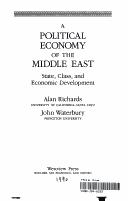
Alan Richards, John Waterbury · 1990

Egypt is the anchor case throughout; the standard textbook on regional state-business relations.
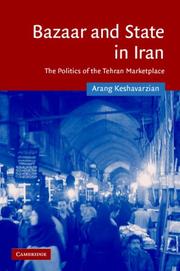
Arang Keshavarzian · 2003

How informal credit, trust networks and trade finance work when the banking system does not.

Steffen Hertog, Giacomo Luciani, Marc Valeri · 2015

How business associations and state elites actually bargain across the region.

Where it sits in the reference 3

Geographies
Geographies
Economics

Topics

Politics and GovernmentEconomicsMiddle East and North Africa