Updates

  1. Person pages list letters, writing, profiles and links as sortable tables with filters, and show each person's companies as links; Fund letters show each letter's description in its own column.
  2. Experts show a checked job title and a short description of each person; 30 more people have photographs.
  3. Every company, fund, university and publication the experts work for has a page listing the people there.
  4. Fund letters show each letter's thesis and filter by it; 225 person pages list the essays, columns and newsletter issues the person wrote.
  5. Person pages list every essay and newsletter issue a person wrote, and their own books as a table in List view.
  6. Recommends shows the five largest kinds of book and the rest under More; browse pictures load sooner.
  7. Podcasts and talks link the original episode, filter by Audio and video or Press, and list each publisher once.
  8. Pages are wider, Recommends has List and Grid, and a filter clicked again turns off.
  9. Book cards sit in a ruled grid with Open Library and Goodreads links and each book's one-line note.
  10. Funds is now Investors; each investor's styles are buttons that filter the table.
  11. Podcasts and talks on a person's page filter by year and publisher and show as a list or a grid of pictures.
  12. Quotes show only people's own words: 472 summaries written by list sites are gone.
  13. Country pages open from Browse again, and every link on the shelf lands on a page.
  14. Subject and person pages show their sections as tabs, and each book appears once on a person's page.
  15. Book cards show the quote, who said it and the source; grids show five cards to a row.
  16. On a phone, a menu holds the sections, search, Updates, Feedback and dark mode.
  17. Feedback takes a screenshot of the page with no browser prompt, opens a screenshot full size when you click it, and clears itself once sent.
  18. Book cards are centred, search names the topic each book sits in, and any text cut short shows whole on hover.
  19. Search groups its results by kind: people, companies, geographies, subjects, topics, books, funds, fund letters and papers.
  20. The Books table lists who recommended each book by name, and the browser tab names the section you are in.
  21. Feedback can take a screenshot of the page, or one you paste or choose, and opens in the corner beside Updates.
  22. Each rail button reopens its section where you left it, and Browse, Table and People show on every book and subject page.
  23. Filters grey out choices that hold nothing instead of hiding them, and Books › People filters by authors or recommenders.
  24. Feedback takes a subject line and up to three screenshots.
  25. Biographies are grouped by the person they are about: 41 new pages, from Abraham Lincoln to Lee Kuan Yew.
  26. Sport splits into 23 sports, and Religion into one topic per faith.
  27. Book lists show as cards: the cover, one recommendation quote and every recommender by name.
  28. Seventeen subjects that had two or three pages under different names now have one page each.
  29. Every page lists its Experts as authors and recommenders, with a link to them on the Experts tab.
  30. Economics, Financial history, Financial panics and Accounting are subjects of their own, with one page per financial crisis.
  31. Book, person and subject pages open inside the app, so the tabs stay in view.
  32. 996 more book covers, and photographs or logos for 227 more people and companies.
  33. Books › Browse shows every subject as cards, and the rail holds Fund letters, Papers, Experts, Books and Funds.
  34. Every topic over 150 books splits into narrower topics, each with a page of its own.

Send feedback

What is it?
Screenshots, up to 3 (optional)
or paste one with Ctrl+V

We use your email only to reply to you.

Oil, Dollars, Debt, and Crises

Oil, Dollars, Debt, and Crises

Mahmoud A. El-Gamal, Amy Myers Jaffe
2009
T3 Open Librarygoodreads

Petrodollar recycling and the boom-bust cycle Gulf investors keep repeating.

Summary

Mahmoud El-Gamal and Amy Myers Jaffe argue that oil markets, dollar dynamics and financial crises form a connected system, and that treating them separately misses the mechanism that has produced repeated instability since the 1970s.

Their account works as a cycle. Oil price increases transfer income to producers with high savings rates and low absorptive capacity. Those savings return to the dollar financial system as petrodollar recycling. The resulting liquidity funds credit expansion and asset price inflation in the recipient economies, which eventually produces a crisis. The crisis reduces demand and oil prices, and the cycle restarts. They trace this through the 1970s recycling into Latin American sovereign lending and the debt crisis that followed, through the 1990s and the Asian crisis, and through the 2000s into the American mortgage boom.

They add a geopolitical layer: oil producers' willingness to hold dollar assets depends on security relationships, and the two are negotiated together. Their policy proposals concern reducing the volatility of oil prices and developing financial instruments to smooth producer revenue. The book was published in 2009 and the shale revolution changed the supply picture substantially afterwards, weakening several of its projections about scarcity and about producer bargaining power. The recycling mechanism itself remains a useful lens.

Key takeaways 7

  1. Oil price increases transfer income to savers with limited domestic investment opportunities, which returns as capital flows into dollar assets.
  2. Petrodollar recycling has funded a sequence of credit booms that ended in crises, from Latin American sovereign debt to American mortgages.
  3. Oil producers' willingness to hold dollar assets is tied to security relationships rather than to financial considerations alone.
  4. The authors argue that oil price volatility, rather than the price level, does the economic damage.
  5. Financial crises reduce oil demand, which restarts the cycle rather than breaking it.
  6. Producers lack instruments to smooth revenue across the cycle, which forces procyclical fiscal policy in oil states.
  7. Analysing oil markets, currency movements and credit cycles separately conceals a mechanism that connects all three.

Who should read it

Macro investors who want a framework linking commodity price cycles, capital flows and credit crises rather than treating them as separate phenomena.

Similar books 6

Chosen by shared topics, the entries that hold them, and the people who recommended both.

Adam Hanieh · 2011

A class analysis of the Gulf states that rejects the standard rentier-state view.

Adam Hanieh · 2018

How the Gulf states became central to the Middle East's political economy after 2011.

Kristian Coates Ulrichsen · 2016

Sovereign funds, diversification plans and the limits of the rentier bargain.
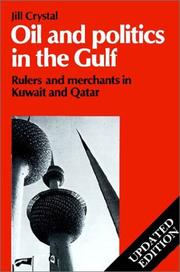
Jill Crystal · 1990

How oil revenue let rulers buy out the merchant families; the origin of the modern business elite.
Alan Richards, John Waterbury · 1990

Egypt is the anchor case throughout; the standard textbook on regional state-business relations.

Christopher Cramer, John Sender, Arkebe Oqubay · 2020

A challenge to donor orthodoxy on how African economies should develop.

Where it sits in the reference 2

Geographies
Economics

Topics

EconomicsEnvironment and EnergyFinancial HistoryOil, gas and coal