Updates

  1. Person pages list letters, writing, profiles and links as sortable tables with filters, and show each person's companies as links; Fund letters show each letter's description in its own column.
  2. Experts show a checked job title and a short description of each person; 30 more people have photographs.
  3. Every company, fund, university and publication the experts work for has a page listing the people there.
  4. Fund letters show each letter's thesis and filter by it; 225 person pages list the essays, columns and newsletter issues the person wrote.
  5. Person pages list every essay and newsletter issue a person wrote, and their own books as a table in List view.
  6. Recommends shows the five largest kinds of book and the rest under More; browse pictures load sooner.
  7. Podcasts and talks link the original episode, filter by Audio and video or Press, and list each publisher once.
  8. Pages are wider, Recommends has List and Grid, and a filter clicked again turns off.
  9. Book cards sit in a ruled grid with Open Library and Goodreads links and each book's one-line note.
  10. Funds is now Investors; each investor's styles are buttons that filter the table.
  11. Podcasts and talks on a person's page filter by year and publisher and show as a list or a grid of pictures.
  12. Quotes show only people's own words: 472 summaries written by list sites are gone.
  13. Country pages open from Browse again, and every link on the shelf lands on a page.
  14. Subject and person pages show their sections as tabs, and each book appears once on a person's page.
  15. Book cards show the quote, who said it and the source; grids show five cards to a row.
  16. On a phone, a menu holds the sections, search, Updates, Feedback and dark mode.
  17. Feedback takes a screenshot of the page with no browser prompt, opens a screenshot full size when you click it, and clears itself once sent.
  18. Book cards are centred, search names the topic each book sits in, and any text cut short shows whole on hover.
  19. Search groups its results by kind: people, companies, geographies, subjects, topics, books, funds, fund letters and papers.
  20. The Books table lists who recommended each book by name, and the browser tab names the section you are in.
  21. Feedback can take a screenshot of the page, or one you paste or choose, and opens in the corner beside Updates.
  22. Each rail button reopens its section where you left it, and Browse, Table and People show on every book and subject page.
  23. Filters grey out choices that hold nothing instead of hiding them, and Books › People filters by authors or recommenders.
  24. Feedback takes a subject line and up to three screenshots.
  25. Biographies are grouped by the person they are about: 41 new pages, from Abraham Lincoln to Lee Kuan Yew.
  26. Sport splits into 23 sports, and Religion into one topic per faith.
  27. Book lists show as cards: the cover, one recommendation quote and every recommender by name.
  28. Seventeen subjects that had two or three pages under different names now have one page each.
  29. Every page lists its Experts as authors and recommenders, with a link to them on the Experts tab.
  30. Economics, Financial history, Financial panics and Accounting are subjects of their own, with one page per financial crisis.
  31. Book, person and subject pages open inside the app, so the tabs stay in view.
  32. 996 more book covers, and photographs or logos for 227 more people and companies.
  33. Books › Browse shows every subject as cards, and the rail holds Fund letters, Papers, Experts, Books and Funds.
  34. Every topic over 150 books splits into narrower topics, each with a page of its own.

Send feedback

What is it?
Screenshots, up to 3 (optional)
or paste one with Ctrl+V

We use your email only to reply to you.

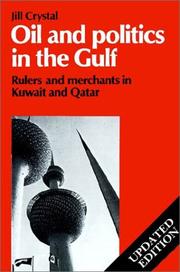
Oil and Politics in the Gulf: Rulers and Mer

Oil and Politics in the Gulf: Rulers and Merchants in Kuwait and Qatar

Jill Crystal
1990
T3 226 pages · about 3h 46m to read Open Librarygoodreads

How oil revenue let rulers buy out the merchant families; the origin of the modern business elite.

Summary

Jill Crystal examines how oil revenue changed the relationship between rulers and merchants in Kuwait and Qatar. Before oil, both ruling families depended on the merchant community for revenue, through taxes on pearling and trade, and that dependence gave merchants political leverage that constrained the rulers.

Oil revenue accrued directly to the ruler and severed that dependence. Crystal's argument is that what followed was a negotiated settlement rather than simple exclusion: merchants were removed from political decision-making and compensated with economic privileges, including exclusive import agencies, requirements that foreign firms take local partners, land purchases by the state at inflated prices, and access to state contracts. The merchants accepted the trade. The ruling families then used the revenue to build state bureaucracies and distribute welfare, which created a new constituency of nationals dependent on the state.

The comparison between the two countries is the analytical device. Kuwait's merchant community was older, larger and better organised, and it obtained the National Assembly and a somewhat more constrained monarchy; Qatar's was weaker and obtained less. Crystal's work is one of the foundational studies of the rentier state, and its argument that oil produces a specific political bargain rather than simply enriching rulers has shaped the field. The book covers the period to the late 1980s, and the enormous changes in Qatar since, including its gas development and its state investment activity, fall outside it.

Key takeaways 7

  1. Before oil, Gulf rulers depended on merchant taxation, and that dependence gave merchants effective political leverage.
  2. Oil revenue accruing directly to rulers ended the fiscal basis of merchant political power.
  3. Merchants were bought out rather than suppressed, receiving import monopolies, partnership requirements and state contracts in exchange for political withdrawal.
  4. Ruling families used oil revenue to build bureaucracies whose employees became a new dependent constituency.
  5. Kuwait's older and better-organised merchant community secured more political concession than Qatar's did.
  6. Crystal argues that the rentier bargain is a negotiated settlement whose terms depend on the pre-oil balance of power.
  7. State purchase of merchant land at inflated prices was a specific and deliberate mechanism for transferring oil revenue to the former elite.

Who should read it

Investors and analysts working in the Gulf who need the historical origin of the ruler-merchant bargain that still structures business there.

Similar books 6

Chosen by shared topics, the entries that hold them, and the people who recommended both.
Kristian Coates Ulrichsen · 2016

Sovereign funds, diversification plans and the limits of the rentier bargain.
Ellen R. Wald · 2018

Saudi Arabia told through its oil business, from the 1930s concession to Aramco.
Alan Richards, John Waterbury · 1990

Egypt is the anchor case throughout; the standard textbook on regional state-business relations.
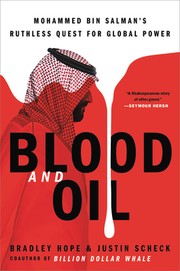
Bradley Hope, Justin Scheck · 2020

Mohammed bin Salman's rise to power in Saudi Arabia and the decisions that followed.
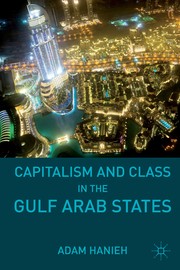
Adam Hanieh · 2011

A class analysis of the Gulf states that rejects the standard rentier-state view.
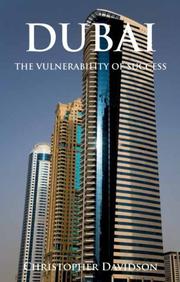
Christopher M. Davidson · 2008

The emirate's development model and its structural dependencies.

Where it sits in the reference 2

Geographies
Geographies

Topics

Politics and GovernmentEnvironment and EnergyMiddle East and North AfricaOil, gas and coal