Updates

  1. Person pages list letters, writing, profiles and links as sortable tables with filters, and show each person's companies as links; Fund letters show each letter's description in its own column.
  2. Experts show a checked job title and a short description of each person; 30 more people have photographs.
  3. Every company, fund, university and publication the experts work for has a page listing the people there.
  4. Fund letters show each letter's thesis and filter by it; 225 person pages list the essays, columns and newsletter issues the person wrote.
  5. Person pages list every essay and newsletter issue a person wrote, and their own books as a table in List view.
  6. Recommends shows the five largest kinds of book and the rest under More; browse pictures load sooner.
  7. Podcasts and talks link the original episode, filter by Audio and video or Press, and list each publisher once.
  8. Pages are wider, Recommends has List and Grid, and a filter clicked again turns off.
  9. Book cards sit in a ruled grid with Open Library and Goodreads links and each book's one-line note.
  10. Funds is now Investors; each investor's styles are buttons that filter the table.
  11. Podcasts and talks on a person's page filter by year and publisher and show as a list or a grid of pictures.
  12. Quotes show only people's own words: 472 summaries written by list sites are gone.
  13. Country pages open from Browse again, and every link on the shelf lands on a page.
  14. Subject and person pages show their sections as tabs, and each book appears once on a person's page.
  15. Book cards show the quote, who said it and the source; grids show five cards to a row.
  16. On a phone, a menu holds the sections, search, Updates, Feedback and dark mode.
  17. Feedback takes a screenshot of the page with no browser prompt, opens a screenshot full size when you click it, and clears itself once sent.
  18. Book cards are centred, search names the topic each book sits in, and any text cut short shows whole on hover.
  19. Search groups its results by kind: people, companies, geographies, subjects, topics, books, funds, fund letters and papers.
  20. The Books table lists who recommended each book by name, and the browser tab names the section you are in.
  21. Feedback can take a screenshot of the page, or one you paste or choose, and opens in the corner beside Updates.
  22. Each rail button reopens its section where you left it, and Browse, Table and People show on every book and subject page.
  23. Filters grey out choices that hold nothing instead of hiding them, and Books › People filters by authors or recommenders.
  24. Feedback takes a subject line and up to three screenshots.
  25. Biographies are grouped by the person they are about: 41 new pages, from Abraham Lincoln to Lee Kuan Yew.
  26. Sport splits into 23 sports, and Religion into one topic per faith.
  27. Book lists show as cards: the cover, one recommendation quote and every recommender by name.
  28. Seventeen subjects that had two or three pages under different names now have one page each.
  29. Every page lists its Experts as authors and recommenders, with a link to them on the Experts tab.
  30. Economics, Financial history, Financial panics and Accounting are subjects of their own, with one page per financial crisis.
  31. Book, person and subject pages open inside the app, so the tabs stay in view.
  32. 996 more book covers, and photographs or logos for 227 more people and companies.
  33. Books › Browse shows every subject as cards, and the rail holds Fund letters, Papers, Experts, Books and Funds.
  34. Every topic over 150 books splits into narrower topics, each with a page of its own.

Send feedback

What is it?
Screenshots, up to 3 (optional)
or paste one with Ctrl+V

We use your email only to reply to you.

Net Positive

Net Positive

Paul Polman, Andrew Winston
2021
T3 378 pages · about 6h 18m to read Open Librarygoodreads

Insider account: Polman on the Sustainable Living Plan years.

Summary

Paul Polman was chief executive of Unilever from 2009 to 2019 and wrote this with Andrew Winston as an argument that companies should return more to the world than they take from it. The book combines a case for the position with an account of what Polman did at Unilever.

The Unilever material is the substance. Polman stopped issuing quarterly earnings guidance in his first weeks, which he presents as a deliberate move to change the shareholder base toward longer-horizon holders. He introduced the Sustainable Living Plan with targets covering emissions, water, sourcing and health, and set them for 2020 at the outset. He describes defending the company against Kraft Heinz's takeover approach in 2017 and treats the episode as a test of whether the long-horizon position could survive.

The argument is that companies must take responsibility for effects outside their legal boundary, must work with competitors and governments on problems no single firm can solve, and must accept lower short-term returns where necessary. The weaknesses are the ones common to executive advocacy: the counterfactual is never tested, Unilever's financial performance during the period was adequate rather than exceptional, and the company missed several of the plan's own targets. Polman's successor scaled back the approach under investor pressure, and Terry Smith's public criticism that Unilever had lost focus on its business is part of the record. Read it as the strongest available statement of the position from someone who ran a large company on it.

Key takeaways 7

  1. Polman ended quarterly earnings guidance to change Unilever's shareholder base toward investors with longer horizons.
  2. Companies should account for effects outside their legal boundary, including in supply chains they do not own.
  3. Setting public long-dated targets creates external accountability that internal commitments do not.
  4. Problems affecting a whole industry require collaboration with competitors, since no single firm can bear the cost of moving alone.
  5. Polman argues that a sustainability position is a defence against activist takeover only if the financial performance supports it.
  6. Companies should take positions on public policy in favour of regulation that raises standards for everyone in their industry.
  7. The authors hold that businesses which impose costs on society will eventually be made to pay them, so acting early is a financial decision.

Who should read it

Executives and boards weighing long-horizon sustainability commitments against investor pressure, who want the case argued by someone who tested it.

Similar books 6

Chosen by shared topics, the entries that hold them, and the people who recommended both.

John Elkington · 1997

The triple bottom line: report on economic, environmental and social results.

John Elkington · 2020

The author's own recall of the triple bottom line.

Acha Leke, Mutsa Chironga, Georges Desvaux · 2018

McKinsey survey of operating companies; Ghana appears among the consumer-market cases.
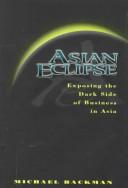
Michael Backman · 1999

Written straight after the 1997 crisis on opacity, related-party dealing and family control.

Geoffrey Jones · 2010

Harvard business historian; sets her brand-building against the whole industry.

Tyler Cowen · 2019

A defence of American business on fraud, CEO pay, monopoly and tech, issue by issue.

Where it sits in the reference 3

Companies
Business themes
Business themes

Topics

Business and ManagementEnvironment and EnergyLeadershipClimate change and sustainability