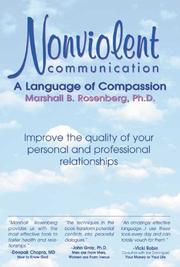
Nonviolent Communication
Four steps to speak without blame: observations, feelings, needs and requests.
Summary
Rosenberg, a clinical psychologist who worked in civil rights mediation and in international conflict, presents a four-step communication process: state an observation without evaluation, state the feeling it produced, state the unmet need behind the feeling, and make a specific and doable request rather than a demand.
The distinctions he draws are the substance. Observation separates what actually occurred from the interpretation placed on it, and he argues that most conflict statements combine the two so that the other party defends against the judgment rather than addressing the event. Feelings are distinguished from thoughts disguised as feelings, so that saying you feel ignored is a judgment about someone else's behaviour rather than a report of your state. Needs are distinguished from strategies, so that a need for reassurance can be met many ways while a demand for a specific action cannot. Requests are distinguished from demands by whether refusal carries a penalty.
He also covers empathic listening, which he defines as reflecting the other person's feelings and needs rather than offering advice, sympathy or explanation, and he argues that people cannot hear anything until they feel heard. Rosenberg holds that anger comes from unmet needs combined with a judgment about someone else, and that the judgment is what converts the need into blame.
The language of the method is distinctive and many people find it artificial, which limits adoption in professional settings. The evidence is Rosenberg's own practice rather than research, and the empirical literature on the method is thin. The observation and evaluation distinction, and the identification of needs behind positions, transfer directly to difficult conversations without requiring the full vocabulary.
Key takeaways 8
- Most conflict statements combine an observation with an evaluation, which makes the other party defend against the judgment rather than address the event.
- Statements such as feeling ignored or feeling manipulated are judgments about another person's behaviour rather than reports of your own state.
- Feelings arise from unmet needs, so identifying the need is what makes a resolution possible rather than restating the complaint.
- A need can be met in many ways while a demand for one specific action can only be granted or refused.
- A request differs from a demand by whether refusal carries a penalty, and people can detect the difference regardless of how it is phrased.
- People cannot hear anything said to them until they feel heard, which makes reflecting the other person's position the precondition for being understood.
- Advice, sympathy and explanation all fail as responses to distress, because each redirects attention from the other person's experience.
- Anger comes from an unmet need combined with a judgment about someone, and removing the judgment leaves the need available to be addressed.
Who should read it
Managers and founders who have difficult conversations that keep escalating, wanting the observation and needs distinctions even if the vocabulary is left aside.
Who recommended it 6 · 3 direct
“After years of so many people telling how much this book has helped them, I finally read it. And yeah, it’s impressive. Very compassionate and actively empathetic. Everyone who communicates should read this and take it to heart.”
Similar books 6
Chosen by shared topics, the entries that hold them, and the people who recommended both.
Where you direct attention just before a message shapes how it is received.
“An interesting look at a single topic: what someone encounters beforehand greatly affects the influence of what comes after. Priming.” — Derek Sivers
Source: Derek Sivers book notes (primary, rated list) · Rating: 6/10
Recommended by: Derek Sivers, Michael Mauboussin and 1 other
Forty-eight rules for gaining and keeping power, each shown by historical episodes.
“Warning: some think this book is pure evil. But power exists, so it can only help to understand it better, even if you choose not to wield it.” — Derek Sivers
Source: Derek Sivers book notes (primary, rated list) · Rating: 8/10
Recommended by: Derek Sivers, Nat Eliason, Ryan Holiday and 4 others

Charisma broken into its components, and how it works.
Recommended by: Derek Sivers, Patrick Collison and 1 other

Eighteen patterns of human behaviour, from irrationality on, and how to handle them.
“If you've ever been curious about psychology or human behavior, it is by far the most comprehensive and memorable book I've found.” — Andrew Wilkinson
Source: Newsletter
Recommended by: Andrew Wilkinson, Library Mindset

How persuasion and propaganda work through advertising, television and opinion.
Recommended by: Ramit Sethi, Tim Ferriss

A step-by-step approach to business negotiation from Wharton's negotiation workshop.