Updates

  1. Person pages list letters, writing, profiles and links as sortable tables with filters, and show each person's companies as links; Fund letters show each letter's description in its own column.
  2. Experts show a checked job title and a short description of each person; 30 more people have photographs.
  3. Every company, fund, university and publication the experts work for has a page listing the people there.
  4. Fund letters show each letter's thesis and filter by it; 225 person pages list the essays, columns and newsletter issues the person wrote.
  5. Person pages list every essay and newsletter issue a person wrote, and their own books as a table in List view.
  6. Recommends shows the five largest kinds of book and the rest under More; browse pictures load sooner.
  7. Podcasts and talks link the original episode, filter by Audio and video or Press, and list each publisher once.
  8. Pages are wider, Recommends has List and Grid, and a filter clicked again turns off.
  9. Book cards sit in a ruled grid with Open Library and Goodreads links and each book's one-line note.
  10. Funds is now Investors; each investor's styles are buttons that filter the table.
  11. Podcasts and talks on a person's page filter by year and publisher and show as a list or a grid of pictures.
  12. Quotes show only people's own words: 472 summaries written by list sites are gone.
  13. Country pages open from Browse again, and every link on the shelf lands on a page.
  14. Subject and person pages show their sections as tabs, and each book appears once on a person's page.
  15. Book cards show the quote, who said it and the source; grids show five cards to a row.
  16. On a phone, a menu holds the sections, search, Updates, Feedback and dark mode.
  17. Feedback takes a screenshot of the page with no browser prompt, opens a screenshot full size when you click it, and clears itself once sent.
  18. Book cards are centred, search names the topic each book sits in, and any text cut short shows whole on hover.
  19. Search groups its results by kind: people, companies, geographies, subjects, topics, books, funds, fund letters and papers.
  20. The Books table lists who recommended each book by name, and the browser tab names the section you are in.
  21. Feedback can take a screenshot of the page, or one you paste or choose, and opens in the corner beside Updates.
  22. Each rail button reopens its section where you left it, and Browse, Table and People show on every book and subject page.
  23. Filters grey out choices that hold nothing instead of hiding them, and Books › People filters by authors or recommenders.
  24. Feedback takes a subject line and up to three screenshots.
  25. Biographies are grouped by the person they are about: 41 new pages, from Abraham Lincoln to Lee Kuan Yew.
  26. Sport splits into 23 sports, and Religion into one topic per faith.
  27. Book lists show as cards: the cover, one recommendation quote and every recommender by name.
  28. Seventeen subjects that had two or three pages under different names now have one page each.
  29. Every page lists its Experts as authors and recommenders, with a link to them on the Experts tab.
  30. Economics, Financial history, Financial panics and Accounting are subjects of their own, with one page per financial crisis.
  31. Book, person and subject pages open inside the app, so the tabs stay in view.
  32. 996 more book covers, and photographs or logos for 227 more people and companies.
  33. Books › Browse shows every subject as cards, and the rail holds Fund letters, Papers, Experts, Books and Funds.
  34. Every topic over 150 books splits into narrower topics, each with a page of its own.

Send feedback

What is it?
Screenshots, up to 3 (optional)
or paste one with Ctrl+V

We use your email only to reply to you.

Not in Narrow Seas

Not in Narrow Seas

Brian Easton
2020
T2 683 pages · about 11h 23m to read Open Librarygoodreads

The definitive economic history; the long context for the 1984 rupture.

Summary

The reference has not verified this book in detail; the summary states only what the title, author and subject establish.

Brian Easton wrote this as a long economic history of New Zealand, covering the period from Maori settlement and European contact through the colonial economy, the refrigeration revolution that created the pastoral export economy, the twentieth-century regulated economy, the loss of preferential British market access, the reforms after 1984, and the present.

Easton's approach is to treat economic structure as the driver of social and political development rather than as a separate subject. The organising claim is that New Zealand's economy has been shaped throughout by its dependence on a small number of commodity exports to distant markets, and that the country's politics have repeatedly been about how to manage that exposure.

The reference has not verified this book in detail, and this entry reflects its established scope and Easton's known positions as a critic of the post-1984 reform programme rather than a close reading. The book is long and aimed at readers with an interest in New Zealand specifically.

Key takeaways 5

  1. New Zealand's economic history has been determined by dependence on a small number of commodity exports to distant markets.
  2. Refrigerated shipping from the 1880s created the pastoral export economy on which the country's prosperity was built.
  3. Britain's entry into the European Economic Community removed the preferential market access that had underpinned New Zealand's terms of trade.
  4. Easton treats the post-1984 liberalisation as more radical than the country's problems required.
  5. Economic structure rather than political ideology has driven New Zealand's policy shifts across its history.

Who should read it

Readers wanting a long-run economic history of New Zealand from a critic of its reform period, with the caveat that this entry is not verified in detail.

Similar books 6

Chosen by shared topics, the entries that hold them, and the people who recommended both.
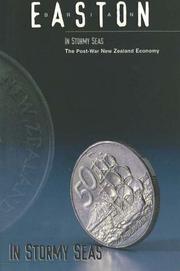
Brian Easton · 1996

The post-war economy through the liberalisation, by its best chronicler.

Jane Kelsey · 1995

New Zealand's 1984-95 reforms: deregulation, privatisation and inflation targeting.

Leonor Freire Costa, Pedro Lains, Susana Münch Miranda · 2016

Portugal's economy over nine centuries, from imperial trade to EU convergence.

Leandro Prados de la Escosura · 2017

The long-run reconstruction of Spanish output and productivity.

Marquis W. Childs · 1936

The book that made the Swedish model an international reference point.

Horst Siebert · 2005

A structural account of the social market model and its rigidities.

Where it sits in the reference 2

Geographies
Economics

Topics

General HistoryEconomicsAsia, Africa, Latin America and the Middle East