Updates

  1. Person pages list letters, writing, profiles and links as sortable tables with filters, and show each person's companies as links; Fund letters show each letter's description in its own column.
  2. Experts show a checked job title and a short description of each person; 30 more people have photographs.
  3. Every company, fund, university and publication the experts work for has a page listing the people there.
  4. Fund letters show each letter's thesis and filter by it; 225 person pages list the essays, columns and newsletter issues the person wrote.
  5. Person pages list every essay and newsletter issue a person wrote, and their own books as a table in List view.
  6. Recommends shows the five largest kinds of book and the rest under More; browse pictures load sooner.
  7. Podcasts and talks link the original episode, filter by Audio and video or Press, and list each publisher once.
  8. Pages are wider, Recommends has List and Grid, and a filter clicked again turns off.
  9. Book cards sit in a ruled grid with Open Library and Goodreads links and each book's one-line note.
  10. Funds is now Investors; each investor's styles are buttons that filter the table.
  11. Podcasts and talks on a person's page filter by year and publisher and show as a list or a grid of pictures.
  12. Quotes show only people's own words: 472 summaries written by list sites are gone.
  13. Country pages open from Browse again, and every link on the shelf lands on a page.
  14. Subject and person pages show their sections as tabs, and each book appears once on a person's page.
  15. Book cards show the quote, who said it and the source; grids show five cards to a row.
  16. On a phone, a menu holds the sections, search, Updates, Feedback and dark mode.
  17. Feedback takes a screenshot of the page with no browser prompt, opens a screenshot full size when you click it, and clears itself once sent.
  18. Book cards are centred, search names the topic each book sits in, and any text cut short shows whole on hover.
  19. Search groups its results by kind: people, companies, geographies, subjects, topics, books, funds, fund letters and papers.
  20. The Books table lists who recommended each book by name, and the browser tab names the section you are in.
  21. Feedback can take a screenshot of the page, or one you paste or choose, and opens in the corner beside Updates.
  22. Each rail button reopens its section where you left it, and Browse, Table and People show on every book and subject page.
  23. Filters grey out choices that hold nothing instead of hiding them, and Books › People filters by authors or recommenders.
  24. Feedback takes a subject line and up to three screenshots.
  25. Biographies are grouped by the person they are about: 41 new pages, from Abraham Lincoln to Lee Kuan Yew.
  26. Sport splits into 23 sports, and Religion into one topic per faith.
  27. Book lists show as cards: the cover, one recommendation quote and every recommender by name.
  28. Seventeen subjects that had two or three pages under different names now have one page each.
  29. Every page lists its Experts as authors and recommenders, with a link to them on the Experts tab.
  30. Economics, Financial history, Financial panics and Accounting are subjects of their own, with one page per financial crisis.
  31. Book, person and subject pages open inside the app, so the tabs stay in view.
  32. 996 more book covers, and photographs or logos for 227 more people and companies.
  33. Books › Browse shows every subject as cards, and the rail holds Fund letters, Papers, Experts, Books and Funds.
  34. Every topic over 150 books splits into narrower topics, each with a page of its own.

Send feedback

What is it?
Screenshots, up to 3 (optional)
or paste one with Ctrl+V

We use your email only to reply to you.

The New Zealand Experiment: A World Model fo

The New Zealand Experiment: A World Model for Structural Adjustment?

Jane Kelsey
1995
T4 420 pages · about 7h to read Open Librarygoodreads

Hostile to the reforms but the fullest record of what was actually done and in what order.

Summary

Jane Kelsey, a law professor at the University of Auckland, wrote the principal critical account of New Zealand's structural adjustment programme between 1984 and the mid-1990s.

Her analysis covers the whole programme: financial deregulation and the floating of the dollar, removal of agricultural subsidies and import protection, corporatisation and privatisation of state trading enterprises including telecommunications, rail, forestry and banking, the Reserve Bank Act establishing a single inflation target, the Employment Contracts Act of 1991 that ended national awards and collective bargaining, the State Sector and Public Finance Acts restructuring the public service, and benefit cuts in 1991.

Kelsey's argument is that the programme was imposed by a small group of officials and ministers without electoral mandate, that it was driven by a coherent ideology rather than by pragmatic problem-solving, that it transferred public assets at low prices to buyers including former officials, and that its social costs, measured in unemployment, inequality, child poverty and Maori outcomes, were severe and have been excluded from the standard assessments. She is a critic and the book is an argument, not a balanced assessment. It should be read against Boston and colleagues on public management and against the reform advocates. Its documentation of the privatisation transactions and of the distributional outcomes is the material other accounts omit.

Key takeaways 7

  1. New Zealand's reform programme was designed and implemented by a small group of officials without any electoral mandate for its content.
  2. State assets were transferred at prices Kelsey argues were far below their value, in several cases to buyers connected to the officials involved.
  3. The Employment Contracts Act ended national awards and collective bargaining, which shifted bargaining power decisively toward employers.
  4. Unemployment, inequality and child poverty rose substantially during the reform period and are excluded from most assessments.
  5. Kelsey argues that the programme was driven by coherent ideology rather than by pragmatic response to specific problems.
  6. Maori economic and social outcomes deteriorated relative to the rest of the population during the period.
  7. The book is advocacy from a critic and should be read against the reform advocates and the public management literature.

Who should read it

Readers assessing the New Zealand reforms who need the critical account and the distributional evidence that the standard assessments omit.

Similar books 6

Chosen by shared topics, the entries that hold them, and the people who recommended both.
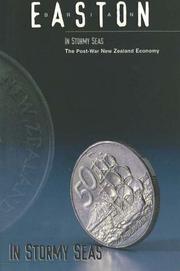
Brian Easton · 1996

The post-war economy through the liberalisation, by its best chronicler.

Brian Easton · 2020

New Zealand's economic history from the Maori gift economy to climate policy.

Yanis Varoufakis · 2016

The euro's design flaws traced back through the postwar monetary system.

Costas Meghir, Christopher A. Pissarides, Dimitri Vayanos, Nikolaos Vettas · 2017

How the Greek economy actually works: its product markets, courts and firms.

Michael E. Porter · 1991

Study of Canadian competitiveness with the Monitor Company

Peadar Kirby · 2010

Structural reading of why the growth model was fragile from the start.

Where it sits in the reference 2

Geographies
Economics

Topics

EconomicsPolitics and GovernmentAsia and the Pacific