Updates

  1. Person pages list letters, writing, profiles and links as sortable tables with filters, and show each person's companies as links; Fund letters show each letter's description in its own column.
  2. Experts show a checked job title and a short description of each person; 30 more people have photographs.
  3. Every company, fund, university and publication the experts work for has a page listing the people there.
  4. Fund letters show each letter's thesis and filter by it; 225 person pages list the essays, columns and newsletter issues the person wrote.
  5. Person pages list every essay and newsletter issue a person wrote, and their own books as a table in List view.
  6. Recommends shows the five largest kinds of book and the rest under More; browse pictures load sooner.
  7. Podcasts and talks link the original episode, filter by Audio and video or Press, and list each publisher once.
  8. Pages are wider, Recommends has List and Grid, and a filter clicked again turns off.
  9. Book cards sit in a ruled grid with Open Library and Goodreads links and each book's one-line note.
  10. Funds is now Investors; each investor's styles are buttons that filter the table.
  11. Podcasts and talks on a person's page filter by year and publisher and show as a list or a grid of pictures.
  12. Quotes show only people's own words: 472 summaries written by list sites are gone.
  13. Country pages open from Browse again, and every link on the shelf lands on a page.
  14. Subject and person pages show their sections as tabs, and each book appears once on a person's page.
  15. Book cards show the quote, who said it and the source; grids show five cards to a row.
  16. On a phone, a menu holds the sections, search, Updates, Feedback and dark mode.
  17. Feedback takes a screenshot of the page with no browser prompt, opens a screenshot full size when you click it, and clears itself once sent.
  18. Book cards are centred, search names the topic each book sits in, and any text cut short shows whole on hover.
  19. Search groups its results by kind: people, companies, geographies, subjects, topics, books, funds, fund letters and papers.
  20. The Books table lists who recommended each book by name, and the browser tab names the section you are in.
  21. Feedback can take a screenshot of the page, or one you paste or choose, and opens in the corner beside Updates.
  22. Each rail button reopens its section where you left it, and Browse, Table and People show on every book and subject page.
  23. Filters grey out choices that hold nothing instead of hiding them, and Books › People filters by authors or recommenders.
  24. Feedback takes a subject line and up to three screenshots.
  25. Biographies are grouped by the person they are about: 41 new pages, from Abraham Lincoln to Lee Kuan Yew.
  26. Sport splits into 23 sports, and Religion into one topic per faith.
  27. Book lists show as cards: the cover, one recommendation quote and every recommender by name.
  28. Seventeen subjects that had two or three pages under different names now have one page each.
  29. Every page lists its Experts as authors and recommenders, with a link to them on the Experts tab.
  30. Economics, Financial history, Financial panics and Accounting are subjects of their own, with one page per financial crisis.
  31. Book, person and subject pages open inside the app, so the tabs stay in view.
  32. 996 more book covers, and photographs or logos for 227 more people and companies.
  33. Books › Browse shows every subject as cards, and the rail holds Fund letters, Papers, Experts, Books and Funds.
  34. Every topic over 150 books splits into narrower topics, each with a page of its own.

Send feedback

What is it?
Screenshots, up to 3 (optional)
or paste one with Ctrl+V

We use your email only to reply to you.

Nvidia Way

Nvidia Way

Tae Kim
2024
T2 352 pages · about 5h 52m to read Open Librarygoodreads

Company history and Jensen Huang's management system.

Summary

Kim, a Barron's writer and former semiconductor analyst, wrote a history of Nvidia based on interviews with Jensen Huang, the co-founders and many current and former employees.

The corporate history covers the 1993 founding, the near-failure with the NV1 which used an unconventional rendering approach the market rejected, the RIVA 128 that saved the company, the GeForce line and the invention of the graphics processing unit category, the acquisition of 3dfx's assets, the Xbox contract dispute with Microsoft, the failed ATI merger and AMD's acquisition of it instead, the years of losses in mobile with Tegra, and the CUDA decision.

CUDA is the strategic centre. Nvidia spent roughly a decade from 2006 investing heavily in a software platform that let general-purpose computation run on graphics processors, with no clear market and against consistent investor objection to the expense. Kim argues that this was a bet on a capability rather than on an application, that the scientific computing users who adopted it early supplied the ecosystem, and that when deep learning researchers found that neural network training mapped onto the same hardware, Nvidia held a software position competitors could not replicate quickly.

The management material covers Huang's practices: a very flat structure with dozens of direct reports, the requirement that information be shared with everyone rather than filtered up a hierarchy, written status updates sent directly to him, no formal one-to-one meetings, criticism delivered publicly, and the stated principle of intellectual honesty about mistakes.

The book is written with company cooperation during a period of extraordinary success, which shapes it. It does not seriously examine the competitive risks, the customer concentration, the concentration of manufacturing at TSMC, or the questions about whether current demand levels persist. Later events in this sector move faster than publication.

Key takeaways 7

  1. Nvidia invested in CUDA for roughly a decade with no clear market, against consistent investor objection to the cost.
  2. The company's advantage in artificial intelligence comes from a software platform and developer ecosystem rather than from the chips alone.
  3. Nvidia nearly failed with its first product because it chose a rendering approach the industry did not adopt.
  4. Huang operates with dozens of direct reports and no formal one-to-one meetings, which pushes information sharing to the whole organisation.
  5. Requiring status updates to be written and sent to everyone removes the hierarchy's ability to filter information upward.
  6. Building a capability before the application exists is a different bet from building a product for a known market, and it requires a different justification to investors.
  7. Losing the Xbox contract dispute and the ATI merger reshaped the industry structure in ways that later favoured Nvidia.

Who should read it

Founders and investors in technology who want a documented case of long-horizon platform investment and an unusual management structure.

Similar books 6

Chosen by shared topics, the entries that hold them, and the people who recommended both.
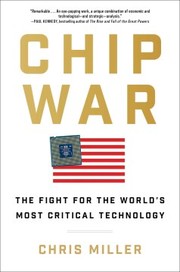
Chris Miller · 2022

How chips became the key to economic and military power, made in a few chokepoints.

Recommended by: Andrew Wilkinson
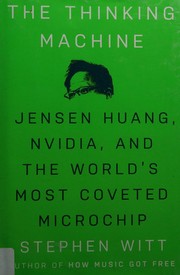
Stephen Witt · 2024

Jensen Huang and how Nvidia came to power the move to artificial intelligence.
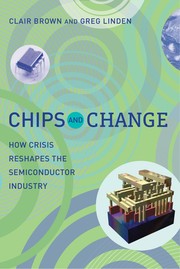
Clair Brown, Greg Linden · 2009

How the chip industry moved to contract manufacturing, and what changed with it.
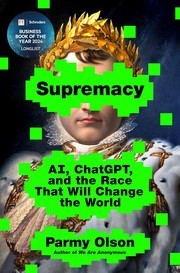
Parmy Olson · 2024

The OpenAI-DeepMind race that set the shape of Nvidia's customer base.

Recommended by: Andrew Wilkinson
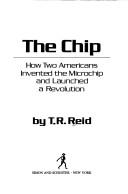
T. R. Reid · 1984

How Kilby and Noyce each invented the integrated circuit in 1958 and 1959.

Recommended by: Patrick Collison
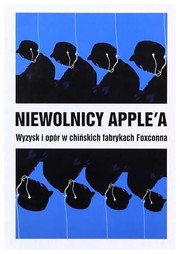
Jenny Chan, Mark Selden, Pun Ngai · 2020

Foxconn from the inside; the labour cost of the contract model.

Where it sits in the reference 3

Companies
Biographies
Business models

Topics

Company HistoriesTechnology and ComputingHistory of computing and semiconductors