Updates

  1. Person pages list letters, writing, profiles and links as sortable tables with filters, and show each person's companies as links; Fund letters show each letter's description in its own column.
  2. Experts show a checked job title and a short description of each person; 30 more people have photographs.
  3. Every company, fund, university and publication the experts work for has a page listing the people there.
  4. Fund letters show each letter's thesis and filter by it; 225 person pages list the essays, columns and newsletter issues the person wrote.
  5. Person pages list every essay and newsletter issue a person wrote, and their own books as a table in List view.
  6. Recommends shows the five largest kinds of book and the rest under More; browse pictures load sooner.
  7. Podcasts and talks link the original episode, filter by Audio and video or Press, and list each publisher once.
  8. Pages are wider, Recommends has List and Grid, and a filter clicked again turns off.
  9. Book cards sit in a ruled grid with Open Library and Goodreads links and each book's one-line note.
  10. Funds is now Investors; each investor's styles are buttons that filter the table.
  11. Podcasts and talks on a person's page filter by year and publisher and show as a list or a grid of pictures.
  12. Quotes show only people's own words: 472 summaries written by list sites are gone.
  13. Country pages open from Browse again, and every link on the shelf lands on a page.
  14. Subject and person pages show their sections as tabs, and each book appears once on a person's page.
  15. Book cards show the quote, who said it and the source; grids show five cards to a row.
  16. On a phone, a menu holds the sections, search, Updates, Feedback and dark mode.
  17. Feedback takes a screenshot of the page with no browser prompt, opens a screenshot full size when you click it, and clears itself once sent.
  18. Book cards are centred, search names the topic each book sits in, and any text cut short shows whole on hover.
  19. Search groups its results by kind: people, companies, geographies, subjects, topics, books, funds, fund letters and papers.
  20. The Books table lists who recommended each book by name, and the browser tab names the section you are in.
  21. Feedback can take a screenshot of the page, or one you paste or choose, and opens in the corner beside Updates.
  22. Each rail button reopens its section where you left it, and Browse, Table and People show on every book and subject page.
  23. Filters grey out choices that hold nothing instead of hiding them, and Books › People filters by authors or recommenders.
  24. Feedback takes a subject line and up to three screenshots.
  25. Biographies are grouped by the person they are about: 41 new pages, from Abraham Lincoln to Lee Kuan Yew.
  26. Sport splits into 23 sports, and Religion into one topic per faith.
  27. Book lists show as cards: the cover, one recommendation quote and every recommender by name.
  28. Seventeen subjects that had two or three pages under different names now have one page each.
  29. Every page lists its Experts as authors and recommenders, with a link to them on the Experts tab.
  30. Economics, Financial history, Financial panics and Accounting are subjects of their own, with one page per financial crisis.
  31. Book, person and subject pages open inside the app, so the tabs stay in view.
  32. 996 more book covers, and photographs or logos for 227 more people and companies.
  33. Books › Browse shows every subject as cards, and the rail holds Fund letters, Papers, Experts, Books and Funds.
  34. Every topic over 150 books splits into narrower topics, each with a page of its own.

Send feedback

What is it?
Screenshots, up to 3 (optional)
or paste one with Ctrl+V

We use your email only to reply to you.

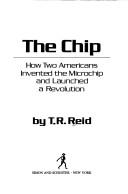
The Chip

The Chip

T. R. Reid
1984
T2 243 pages · about 4h 3m to read Open Librarygoodreads

Origins of the integrated circuit and the industry structure it created.

Summary

Reid tells the story of the integrated circuit's invention by Jack Kilby at Texas Instruments and Robert Noyce at Fairchild Semiconductor, working independently within months of each other in 1958 and 1959.

The technical problem both solved is what he calls the tyranny of numbers: as circuits became more complex, the number of individual components and the soldered connections between them grew until reliability collapsed, and the industry could see no way past it. Kilby's insight was that all the components could be made from a single material, silicon, and therefore could be made in a single piece. Noyce arrived at the same conclusion and added the planar process, which allowed the connections to be deposited as metal on the surface rather than wired, which is what made mass production possible.

Reid covers the patent dispute between the two companies, which ran for a decade and was resolved by cross-licensing, and he is even-handed about the priority question. He also covers the early markets, particularly the military and the Apollo programme, which bought integrated circuits at prices no commercial customer would pay and thereby funded the manufacturing learning that brought costs down.

The book is from 1984 and Reid wrote it for a general audience. The industry has changed beyond recognition since, but the account of the invention and of how a government customer funded the cost reduction that created the commercial market is accurate and remains the best short treatment.

Key takeaways 7

  1. The tyranny of numbers, meaning that soldered connections between components made complex circuits unreliable, was the constraint the integrated circuit removed.
  2. Kilby and Noyce solved the same problem independently within months, which indicates the solution was available to anyone who framed the problem correctly.
  3. Noyce's planar process allowed connections to be deposited on the surface rather than wired, which is what made mass production possible.
  4. Military and space programme purchases at prices no commercial customer would pay funded the manufacturing learning that brought costs down.
  5. A government customer buying early at high prices can create a commercial market by funding the descent down the cost curve.
  6. The patent dispute ran for a decade and was resolved by cross-licensing, which allowed the industry to develop while the priority question remained unsettled.
  7. Making all components from a single material was the conceptual move, and everything else followed from it.

Who should read it

Readers wanting the accessible account of the integrated circuit's invention and of how early government purchasing created the commercial market.

Who recommended it 1

Similar books 6

Chosen by shared topics, the entries that hold them, and the people who recommended both.
Chris Miller · 2022

How chips became the key to economic and military power, made in a few chokepoints.

Recommended by: Andrew Wilkinson
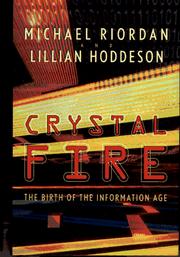
Michael Riordan, Lillian Hoddeson · 1997

How the Bell Labs team of Shockley, Bardeen and Brattain invented the transistor.

Recommended by: Patrick Collison
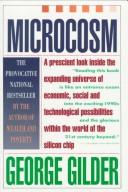
George Gilder · 1989

Portraits of the scientists, engineers and founders behind new technology.
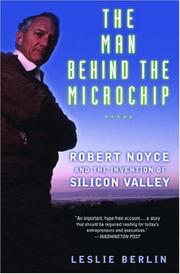
Leslie Berlin · 2005

Robert Noyce, Fairchild Semiconductor and the founding of Intel.

Joel N. Shurkin · 2006

Shockley and the accidental seeding of Silicon Valley.

Recommended by: Bill Gates

Where it sits in the reference 2

Business models
Industries

Topics

Technology and ComputingGeneral HistoryScience, Technology and MedicineHistory of computing and semiconductors