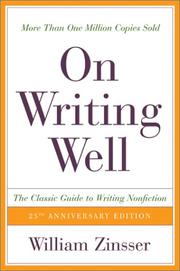
On Writing Well
A manual for non-fiction: clear writing comes from clear thinking.
Summary
Zinsser wrote a manual for non-fiction writing based on the course he taught at Yale, and it has been revised through seven editions. Its central instruction is that clear writing follows from clear thinking, and that the practical work is the removal of everything that does not do work.
The principles section covers simplicity, clutter, style, the audience, words and usage. Zinsser argues that most sentences contain words that serve no purpose, that qualifiers weaken rather than protect a statement, that the passive voice conceals who did what, and that jargon exists to signal membership rather than to communicate. He instructs writers to strip every sentence to its cleanest components and to distrust any construction that appeared easily.
The methods section covers unity of tense, person and mood; the lead, which must persuade the reader to continue and which he treats as the most important sentence; the ending, which should stop rather than summarise; the use of quotation; and the discipline of rewriting, which he says is where writing actually happens.
The forms section covers specific types including interviews, travel, memoir, science and technical writing, business writing, sport and criticism. The final section on attitudes covers voice, enjoyment and the argument that writers should write for themselves rather than for an imagined audience. The book is directed at general non-fiction and is less useful for technical or argumentative writing where structure matters more than sentence craft. Strunk and White covers the mechanics more compactly. Zinsser's advice on the lead, on cutting, and on rewriting as the actual work is what most readers take from it.
Key takeaways 8
- Clear writing follows from clear thinking, so a muddled sentence usually indicates that the thought behind it was not resolved.
- Most sentences contain words doing no work, and the practical task is removing them rather than adding anything.
- Qualifiers weaken a statement rather than protecting it, and a writer who hedges every claim persuades nobody.
- The passive voice conceals who performed an action, which is why institutions use it and why writers should not.
- Jargon signals membership of a group rather than communicating anything to a reader outside it.
- The first sentence must persuade the reader to read the second, which makes the lead the most consequential decision in a piece.
- An ending should stop rather than summarise, and the best endings arrive earlier than the writer expects.
- Rewriting is where writing happens, and the belief that good writers produce clean first drafts prevents people from doing the actual work.
Who should read it
Anyone writing non-fiction regularly who wants sentence-level discipline and a method for cutting.
Who recommended it 6 · 5 direct
“Great blunt advice about writing better non-fiction. So inspiring.”
“If you'd like to go further on this, the best book I've read on the subject is On Writing Well by William Zinsser.”
“There are many books on this, certainly On Writing Well by Zinsser. Verbal comms, it's going to sound so antiquated, but join a local Toastmasters or something like that.”
Similar books 6
Chosen by shared topics, the entries that hold them, and the people who recommended both.
Writing advice focused on the fears and habits that stop people writing.
“So many people love this book, but it just wasn't my style. Aiming to be funny and describing a crazy mindset, but I couldn't relate to either. Mostly about writing novels.” — Derek Sivers
Source: Derek Sivers book notes (primary, rated list) · Rating: 1/10
Recommended by: Derek Sivers, Jim Collins, Nat Eliason and 10 others
Why some words persuade and others fail, from a political pollster.
Recommended by: Nat Eliason, Tristan Harris, Matt Mullenweg and 1 other
Why some things gain from volatility and disorder, and how to build them.
“Antifragile. Loved the first 1/3 and last 1/3 of this book.” — Andrew Chen
Source: Books I’m reading (2013)
Recommended by: Ana Fabrega, Andrew Chen, Derek Sivers and 24 others
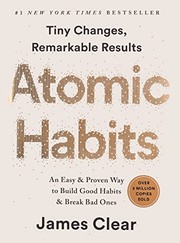
Build habits by making them obvious, attractive, easy and satisfying.
“Last October, my friend James Clear published the breakout hit book, Atomic Habits. As we both discovered in the months that followed, we have many readers in common.” — Cal Newport
Source: The Atomic Minimalist: My Conversation with James Clear
Recommended by: Ali Abdaal, Balaji S. Srinivasan and 22 others
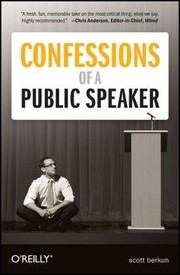
Practical advice on public speaking from a professional speaker's own talks.
“Best book on public speaking. A must-read if you do this at all. Great concrete advice and personal tales.” — Derek Sivers
Source: Derek Sivers book notes (primary, rated list) · Rating: 4/10
Recommended by: Derek Sivers, Nat Eliason
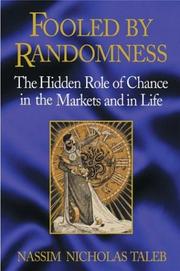
Why people mistake luck for skill, above all in markets.
“Fooled By Randomness was unquestionably the best non-fiction book I read in 2005.” — Brad Feld
Source: Book Review: Fooled By Randomness — Feld Thoughts
Recommended by: Barton Biggs, Brad Feld, Derek Sivers and 15 others