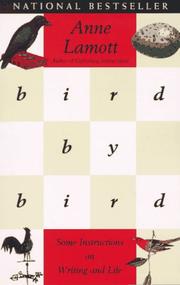
Bird by Bird
Writing advice focused on the fears and habits that stop people writing.
Summary
Lamott wrote a book about writing that spends most of its length on the psychological conditions that prevent it. The title comes from her brother's school report on birds, left until the night before, and her father's advice to take it bird by bird. Her practical instruction reduces to two rules: write short assignments, meaning only as much as you can see through a one-inch picture frame, and accept that first drafts will be bad.
The chapter on what she calls shitty first drafts is the one most cited. Lamott argues that all writers produce bad first drafts, that the belief in fluent first-pass writing is what stops people, and that the draft exists only to produce material for the second pass. She writes about the internal voices that criticise during composition and the necessity of writing anyway.
The craft material covers character, plot, dialogue and setting in conventional terms, and her advice on plot is that character produces it rather than the reverse. She writes about index cards for capturing observations, about jealousy of other writers, about writing groups, and about publication being far less satisfying than writers expect, which she states repeatedly.
The book is specific to literary fiction and personal essay rather than to business or technical writing, though the psychological material applies to any writing task. It is not a style manual and offers nothing on structure at the sentence level, for which Zinsser or Strunk and White serve better. Lamott's religious and recovery framing is present throughout and some readers find it intrusive. The humour is heavy and the digressions are frequent.
Key takeaways 8
- All first drafts are bad, and the belief that competent writers produce good first drafts is what prevents most people from writing.
- A writer should attempt only as much as fits inside a one-inch frame at a time, because the size of the whole project is what causes paralysis.
- Perfectionism prevents completion and should be treated as an obstacle rather than as a standard.
- Characters produce plot through what they do, so plot constructed in advance and imposed on characters produces dead writing.
- Writing every day at a set time matters more than inspiration or conditions.
- Publication does not deliver the satisfaction writers expect, so the work itself has to be the reason for doing it.
- Listening carefully to how people actually speak is the source of usable dialogue, which cannot be invented.
- Jealousy of other writers is universal and corrosive, and pretending otherwise makes it worse.
Who should read it
Anyone who needs to write regularly and is stopped by their own standards rather than by lack of technique.
Who recommended it 11 · 4 direct
“Yeah, Anne Lamott, of course, Bird by Bird.”
Similar books 6
Chosen by shared topics, the entries that hold them, and the people who recommended both.
A manual for non-fiction: clear writing comes from clear thinking.
“Great blunt advice about writing better non-fiction. So inspiring.” — Derek Sivers
Source: Book notes by Derek Sivers
Recommended by: Derek Sivers, Matt Mullenweg, Nat Eliason and 2 others
Why some words persuade and others fail, from a political pollster.
Recommended by: Nat Eliason, Tristan Harris, Matt Mullenweg and 1 other
Shackleton's men survive after the ice crushes their ship Endurance in Antarctica.
Recommended by: Andrew Wilkinson, Morgan Housel, Nat Eliason and 7 others
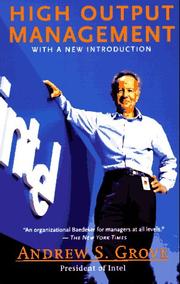
Management as production: a manager's output is the output of the team they lead.
“Also read and re-read High Output Management by Andy Grove.” — Andrew Chen
Source: What do you look for an investment? How long should a founder be without salary? And other Q&A
Recommended by: Andrew Chen, Ben Horowitz, David Cancel and 24 others
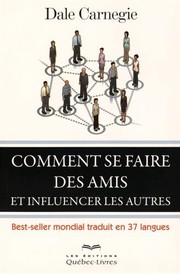
Techniques for handling people, being liked and winning others to your view.
“If you want to learn what people want, read Dale Carnegie's How to Win Friends and Influence People.” — Paul Graham
Source: Why Smart People Have Bad Ideas
Recommended by: Mohnish Pabrai, Patrick Collison and 14 others
Life in Nazi concentration camps, and logotherapy: finding meaning to survive.
“What's more certain to me is that we all need a why, as Viktor Frankl told us in Man's Search for Meaning.” — David Heinemeier Hansson
Source: Universal Basic Dead End
Recommended by: David Heinemeier Hansson, Frank Martin and 25 others
Where it sits in the reference 1
As an Amazon Associate I earn from qualifying purchases.