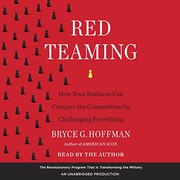
Red Teaming
Red teaming, a contrarian method from the military, applied to business planning.
Summary
Bryce Hoffman, the first civilian to graduate from the US Army's red team leaders course, adapts red teaming for business. The military and intelligence agencies developed the method to stress-test strategies, expose unseen threats and missed chances, and carry out plans more reliably under uncertainty.
Red teaming builds critical and contrarian thinking into planning. It makes a company examine its assumptions, work out how its plans could fail, and consider other explanations and perspectives. Drawing on research in cognitive psychology, it is designed to counter the blind spots and biases that affect people and organisations making big decisions or solving complex problems. Hoffman says it can help companies avoid mistakes from badly timed product launches to ill-judged acquisitions, and notes that it features in decision-making at Amazon, Google, Ford and Toyota. He gives a set of tools and techniques for any company, department or team to adopt.
Key takeaways 4
- Red teaming tests a plan by deliberately arguing against it.
- The method came from the military and intelligence agencies.
- It targets the cognitive biases that distort big decisions.
- Companies can use it to catch flawed launches and acquisitions before they happen.
Who should read it
Executives and planners who want a structured method for challenging their own strategies.
Who recommended it 2 · 1 direct
“For a good summary of techniques, see Bryce G. Hoffman, Red Teaming: How Your Business Can Conquer the Competition by Challenging Everything (New York: Crown Business, 2017)”
Similar books 6
Chosen by shared topics, the entries that hold them, and the people who recommended both.
Game theory applied to business, which is cooperative and competitive at once.
“Adam M. Brandenburger and Barry J. Nalebuff, Co-opetition (New York: Currency Doubleday, 1996)” — Michael Mauboussin
Source: The Ecosystem Edge, page 10
Recommended by: Michael Mauboussin, Mohnish Pabrai
What 16,000 projects show about why big ones overrun, and how to plan them.
“Bent Flyvbjerg and Dan Gardner, How Big Things Get Done: The Surprising Factors That Determine the Fate of Every Project, from Home Renovations to Space Exploration and Everything In Between (New York: Crown Currency, 2023)” — Michael Mauboussin
Source: Pattern Recognition: Opportunities and Limits, page 14
Recommended by: Michael Mauboussin

The biases that distort managers' decisions, with exercises that show them.
“Max Bazerman, Judgment in Managerial Decision Making, 4th ed. (New York: John Wiley & Son, 1998), 6-17” — Michael Mauboussin
Source: The Janitor’s Dream: Why Listening to Individuals Can be Hazardous to Your Wealth, page 3
Recommended by: Michael Mauboussin, Mohnish Pabrai and 1 other
Complex problems yield to trial and error, not expert plans, and how to run it.
“There is a book I recently ran into by Tim Hartford called Adapt. That’s another kind of fun read; I thought that was pretty good.” — Mohnish Pabrai
Source: Pabrai Investment Funds Annual Meeting Transcript 2011, page 48
Recommended by: Mohnish Pabrai, Patrick O'Shaughnessy
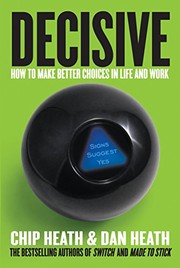
Four traps that ruin decisions, such as narrow framing, and a process to beat each.
“Interesting and insightful dive into the subject of how to make big decisions. Specific useful advice.” — Derek Sivers
Source: Derek Sivers book notes (primary, rated list) · Rating: 8/10
Recommended by: Andrew Wilkinson, Derek Sivers and 6 others
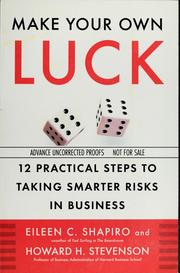
Twelve steps for taking smarter risks and decisions in business.
Recommended by: Mohnish Pabrai