Same as Ever
Twenty-three short essays on the parts of human behaviour that never change.
Summary
Housel's second book collects twenty-three short essays about aspects of human behaviour that do not change, on the argument that forecasting what will change is unproductive while understanding what will not is both possible and useful.
The recurring themes include: risk is what you do not see coming, since the risks you have identified are already managed; people underestimate how much of any outcome is chance; expectations rise with circumstances, which is why rising prosperity does not produce satisfaction; good stories beat good statistics in determining what people believe and do; calm periods generate the confidence that produces the next crisis, which is Minsky's argument restated; the biggest events in history are unpredictable and their consequences compound in ways nobody traces; small changes compound into enormous outcomes over long periods; and progress requires optimism about the long run combined with pessimism about the short run.
Housel writes in short chapters with historical anecdotes drawn widely, from military history, medicine, business and natural disasters. The prose is deliberately plain and the structure allows any chapter to be read alone.
The book has no argument beyond the accumulation of observations, and it is not research. The anecdotes are chosen to illustrate conclusions rather than to test them, and several are familiar from other popular books. Its value is as compressed and well-written statements of ideas that investors know and do not act on, and readers who want the underlying material should go to Kahneman, Minsky, Taleb and the original sources Housel draws on.
Key takeaways 7
- The risks that matter are the ones nobody has identified, because identified risks are already being managed by someone.
- Expectations rise with circumstances, which is why improving conditions do not produce increased satisfaction.
- Stories determine what people believe and do more reliably than evidence, so the better story wins regardless of which is accurate.
- Extended periods of calm generate the confidence and leverage that produce the next crisis, which makes stability self-defeating.
- The largest historical events were unpredictable, and their consequences compound through chains that nobody traces at the time.
- Small advantages compounded over long periods produce outcomes that appear inexplicable when examined at a single moment.
- Long-run optimism and short-run pessimism are compatible and both necessary, since progress requires surviving the setbacks that occur along the way.
Who should read it
Investors who want compressed and readable statements of durable behavioural patterns, understood as synthesis rather than original work.
About Morgan Housel
Partner, Collaborative Fund; former columnist at The Motley Fool and The Wall Street Journal
The Psychology of Money reframed personal finance around behaviour rather than arithmetic and has outlived its news cycle as the standard modern introduction to the subject.
Who recommended it 1 · 1 direct
“There are many things that never change”
Similar books 6
Chosen by shared topics, the entries that hold them, and the people who recommended both.
Essays on investing philosophy, psychology, competition and science.
“My colleague Michael Mauboussin applied some of Gould’s analysis to investing in Chapter 6 of his book More Than You Know.” — Bill Miller
Source: 2006 Q4 Market Commentary
Recommended by: Bill Miller and 1 other
Why people misjudge, with thinking tools from Munger, Buffett, Darwin and Feynman.
“…books I've recommended, highlighted to death, or forced on friends.” — Andrew Wilkinson
Source: Andrew Wilkinson's Bookshelf, neverenough.com
Recommended by: Andrew Wilkinson, David Perell, Derek Sivers and 9 others
Why people who make decisions for others must share in the downside.
“Skin in the Game by @nntaleb is one of my all-time favorite books.” — Ana Fabrega
Source: Fab Fridays 88: How to Pick a Good Book - by Ana Lorena
Recommended by: Ana Fabrega, David Perell, Derek Sivers and 14 others

Rare, unforeseen, high-impact events drive history, explained only after the fact.
“The Black Swan U The best-known bird around today is The Black Swan, the second book from Nassim Nicolas Taleb.” — Howard Marks
Source: The Complete Collection, page 530
Recommended by: David Perell, Howard Marks, Marc Andreessen and 20 others
Munger's and Buffett's ideas on avoiding error, as a dialogue built from their words.
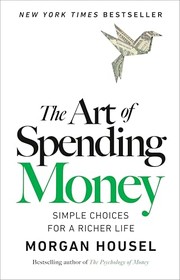
Why most people spend money badly, and how to spend it well.
“Philosophical thoughts on what to do with your money, which then relates to happiness, independence, envy, scarcity, and more. Putting money into savings is like buying independence. Imagine a 5-star chef cooks the most amazing meals for you 3× a day, every day. You’d lose the joy of a great meal since it’s no longer scarce. Implications for life?” — Derek Sivers
Source: Derek Sivers book notes (primary, rated list) · Rating: 7/10
Recommended by: Derek Sivers