Updates

  1. Fund letters lists 118 more letters, each with its own page: 44 weekly commentaries by Jeremy Siegel from 2026, 31 issues of Van Tharp's newsletter from 2018, 23 Pabrai Investment Funds letters from 2021 to Q3 2026, 13 Efficient Frontier essays by William Bernstein, Oakmark's three 3Q 2026 commentaries, two Lindsell Train reports, a John Hussman comment and Third Point's Q3 2026 letter.
  2. 2,027 more books carry a one-line description in the Books table and on their pages; 7,067 of 7,715 have one, every tier 1, 2 and 3 book among them.
  3. Fund letters lists 187 more letters from 19 firms, among them Permanent Equity, Social Capital, Lux Capital, Square Peg, Bestinver, Cobas, Sequoia Fund, Marketfield and EquityCompass; each shows on its investor's page and has a page of its own.
  4. 2,928 more books carry a one-line description in the Books table and on their pages, so every tier 1, 2 and 3 book has one; 5,040 in all.
  5. Every publication on Newsletters has its own page: its writing, its writers, its staff and who recommends it. Investor pages have a Management tab; a company's Experts tab now leaves out its own people, who list under Management. Tabs on a phone move sideways only.
  6. Every fund letter and research paper has its own page: the thesis, the PDF, the companies and books it names, and for 176 letters and 24 papers so far a summary, key insights and quotes with their page.
  7. 99 books that no page listed now sit under their topics in Books, among them Caste, American Prometheus and Pale Blue Dot.
  8. Newsletters lists every newspaper, magazine, investment newsletter, journal and blog the reference holds, 442 in all, with the people who write there. The search box keeps your last 20 searches. You can create an account.
  9. 283 books that fund managers recommend in their letters are on the shelf, each with the letter's own words and page; investor pages have a Recommends tab.
  10. Person, company, investor and show pages link their own accounts on X, Threads, Instagram, LinkedIn, YouTube and Substack: 275 people, 552 companies and organisations, 88 investors and 478 shows.
  11. 716 more book recommendations name their source: the person's own reading list, letter, blog post, speech or interview, or an article that reports it. 232 of them quote the person's own words about the book, on the book card and on the book's page.
  12. Every US-listed company has a page with its SEC filings. Company pages list their experts and their management, past and present. Fund managers sit under Investors. Each show has a page of its episodes, and an episode page names its guests and hosts. Biographies lists groups, then people. Breadcrumbs show where a page sits.
  13. Media lists every podcast episode, video, interview and talk, over 10,000, by person, company, publisher and event; each filter searches its own choices. Books opens on its table, then Browse, then Authors and Recommenders. A filter's count no longer covers its arrow.
  14. A book that no company, country or subject page lists shows its topics under Where it sits in the reference. On a phone, a page's tabs scroll sideways only. Descriptions read the same on every page. See them in the Experts tab lists every expert the page names.
  15. Every podcast episode, video and interview has its own page with a video or audio player and a link to the source. Investor pages show each company's sector and market cap; firms such as Berkshire Hathaway have one page that holds their letters and their company tabs. Letters tabs filter by company and search the theses. Companies filter by Public, Private and Defunct and link each company's website.
  16. Every tab, view and search has its own address, such as /books/table/asset or /letters/companies, so Back works and a link opens the same place. Page addresses no longer end in .html. Fund letters, Investors, Companies and Papers load about a fifth of the data they did.
  17. Fund letters has a Companies tab: every company the letters name, with its market cap, sector, country, and how many letters and investors name it. Investor pages link each investor's website. Lists in table cells end with “… and N more” at every width.
  18. 1,120 more book summaries; descriptions for 373 papers; pages for 137 more companies, each with the fund letters that discuss it; 215 official photographs; search has its own page.
  19. 411 more books have a summary; person pages list 930 more of the books they wrote; 147 people show their official photograph.
  20. Every investor has a page with its letters and the companies they discuss; company pages list the investors whose letters name them.
  21. A Companies section at the top of the rail lists every company the books, experts and fund letters name.
  22. Person pages list letters, writing, profiles and links as sortable tables with filters, and show each person's companies as links; Fund letters show each letter's description in its own column.
  23. Experts show a checked job title and a short description of each person; 30 more people have photographs.
  24. Every company, fund, university and publication the experts work for has a page listing the people there.
  25. Fund letters show each letter's thesis and filter by it; 225 person pages list the essays, columns and newsletter issues the person wrote.
  26. Person pages list every essay and newsletter issue a person wrote, and their own books as a table in List view.
  27. Recommends shows the five largest kinds of book and the rest under More; browse pictures load sooner.
  28. Podcasts and talks link the original episode, filter by Audio and video or Press, and list each publisher once.
  29. Pages are wider, Recommends has List and Grid, and a filter clicked again turns off.
  30. Book cards sit in a ruled grid with Open Library and Goodreads links and each book's one-line note.
  31. Funds is now Investors; each investor's styles are buttons that filter the table.
  32. Podcasts and talks on a person's page filter by year and publisher and show as a list or a grid of pictures.
  33. Quotes show only people's own words: 472 summaries written by list sites are gone.
  34. Country pages open from Browse again, and every link on the shelf lands on a page.
  35. Subject and person pages show their sections as tabs, and each book appears once on a person's page.
  36. Book cards show the quote, who said it and the source; grids show five cards to a row.
  37. On a phone, a menu holds the sections, search, Updates, Feedback and dark mode.
  38. Feedback takes a screenshot of the page with no browser prompt, opens a screenshot full size when you click it, and clears itself once sent.
  39. Book cards are centred, search names the topic each book sits in, and any text cut short shows whole on hover.
  40. Search groups its results by kind: people, companies, geographies, subjects, topics, books, funds, fund letters and papers.
  41. The Books table lists who recommended each book by name, and the browser tab names the section you are in.
  42. Feedback can take a screenshot of the page, or one you paste or choose, and opens in the corner beside Updates.
  43. Each rail button reopens its section where you left it, and Browse, Table and People show on every book and subject page.
  44. Filters grey out choices that hold nothing instead of hiding them, and Books › People filters by authors or recommenders.
  45. Feedback takes a subject line and up to three screenshots.
  46. Biographies are grouped by the person they are about: 41 new pages, from Abraham Lincoln to Lee Kuan Yew.
  47. Sport splits into 23 sports, and Religion into one topic per faith.
  48. Book lists show as cards: the cover, one recommendation quote and every recommender by name.
  49. Seventeen subjects that had two or three pages under different names now have one page each.
  50. Every page lists its Experts as authors and recommenders, with a link to them on the Experts tab.
  51. Economics, Financial history, Financial panics and Accounting are subjects of their own, with one page per financial crisis.
  52. Book, person and subject pages open inside the app, so the tabs stay in view.
  53. 996 more book covers, and photographs or logos for 227 more people and companies.
  54. Books › Browse shows every subject as cards, and the rail holds Fund letters, Papers, Experts, Books and Funds.
  55. Every topic over 150 books splits into narrower topics, each with a page of its own.

Send feedback

What is it?
Screenshots, up to 3 (optional)
or paste one with Ctrl+V

We use your email only to reply to you.

Seeking Wisdom: From Darwin to Munger

Seeking Wisdom: From Darwin to Munger

Why people misjudge, with thinking tools from Munger, Buffett, Darwin and Feynman.

Peter Bevelin
2007
T3 328 pages · about 5h 28m to read Open Librarygoodreads

Builds out Munger's latticework idea from primary sources.

Summary

Bevelin assembles a structured treatment of human misjudgment and of thinking tools, built largely from Munger, Buffett, Darwin and Feynman, with heavy quotation throughout. The book has four parts: what influences our thinking, the psychology of misjudgment, the physics and mathematics of misjudgment, and guidelines for better thinking.

The psychology section expands Munger's list of misjudgment causes into a longer catalogue with supporting research and examples, covering bias from incentives, self-interest, association, liking, consistency, deprival, envy, contrast, authority, social proof and stress. The physics and mathematics section covers systems thinking, scale effects, the difference between correlation and causation, base rates, regression to the mean, compound interest arithmetic and probability errors.

The final section is the practical one. Bevelin gives guidelines including inversion, working out the base rate before assessing a specific case, using checklists, defining the circle of competence, simplifying by avoiding problems rather than solving them, and thinking about second-order consequences by asking what happens next.

The book is essentially a well-organised compilation rather than an original work, and Bevelin says so. Readers who have read Munger's Psychology of Human Misjudgment and Kahneman will find much of it familiar. The quotation density makes it read as a commonplace book, which suits reference use better than sequential reading. Some of the psychology citations date from before the replication crisis and should be checked. Its value is the organisation, which is better than the sources it draws on.

Key takeaways 8

  1. Human misjudgment follows a limited number of recurring causes, and a person can learn them as a list and check against it.
  2. Incentives explain more behaviour than any other single factor, so the first question about any decision should be who benefits.
  3. Inverting a problem, by asking what would produce failure and then avoiding it, is more reliable than pursuing success directly.
  4. Base rates should be established before any specific case is assessed, because case detail crowds out statistical information.
  5. Avoiding difficult problems produces better results than solving them, because the returns to avoiding error exceed the returns to brilliance.
  6. Second-order consequences matter more than first-order ones and are systematically ignored because they require the additional question of what happens next.
  7. Checklists compensate for the fact that knowing about an error does not prevent committing it.
  8. A person should stay inside a clearly defined circle of competence and treat the boundary as more important than the size of the circle.

Who should read it

Investors building a personal checklist of recurring errors, who want Munger's framework organised and expanded with sources.

About Peter Bevelin

Swedish investor and author who assembles the psychology, physics and biology behind Charlie Munger's approach to thinking.

Seeking Wisdom collects the misjudgement patterns, cross-disciplinary principles and checklists underlying Munger's method, sourced back to Darwin, Feynman, Munger and Buffett with citations throughout. The Sherlock Holmes volume drills the same procedure as observation and inference practice.

Who recommended it 10 · 5 direct

“…books I've recommended, highlighted to death, or forced on friends.”

“Among them are Seeking Wisdom: From Darwin to Munger by Peter Bevelin, a long-time Swedish shareholder of Berkshire, and Fred Schwed’s classic, Where are the Customers’ Yachts?”

David Cancelreported

Similar books 6

Chosen by shared topics, the entries that hold them, and the people who recommended both.
Charlie Munger · 2005

Speeches making the case for a latticework of mental models from many fields.

“…books I've recommended, highlighted to death, or forced on friends.” — Andrew Wilkinson

Source: Andrew Wilkinson's Bookshelf, neverenough.com

Recommended by: Andrew Wilkinson, Charlie Munger and 26 others
Daniel Kahneman · 2011

How fast, automatic thought and slow, deliberate thought shape judgment and error.

“…books I've recommended, highlighted to death, or forced on friends.” — Andrew Wilkinson

Source: Andrew Wilkinson's Bookshelf, neverenough.com

Recommended by: Andrew Wilkinson, Charles de Vaulx and 33 others

Peter Bevelin · 2016

Munger's and Buffett's ideas on avoiding error, as a dialogue built from their words.

Peter Bevelin · 2013

Principles of observation, inference and avoiding error, from the Holmes stories.

Carol Tavris, Elliot Aronson · 2007

How cognitive dissonance drives people to justify their mistakes, not admit them.

“This summer, at the suggestion of my son Andrew, I read an extremely interesting book: Mistakes Were Made (but Not by Me): Why We Justify Foolish Beliefs, Bad Decisions, and Hurtful Acts, written by psychologists Carol Tavris and Elliot Aronson.” — Howard Marks

Source: The Illusion of Knowledge

Recommended by: Howard Marks, Mohnish Pabrai, Nat Eliason and 2 others
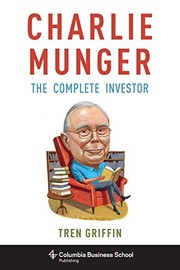
Tren Griffin · 2015

Charlie Munger's stated views, arranged as a system of value investing.

“…books I've recommended, highlighted to death, or forced on friends.” — Andrew Wilkinson

Source: Andrew Wilkinson's Bookshelf, neverenough.com

Recommended by: Andrew Wilkinson, Christopher Bloomstran and 8 others

Where it sits in the reference 9

Journalists
Biographies
Investment philosophy
Mental models
Mental models
Mental models
Mental models
Mental models
Mental models

Topics 4

Decision MakingInvestingPsychology and BehaviourCognitive biases, judgement and decisions

As an Amazon Associate I earn from qualifying purchases.