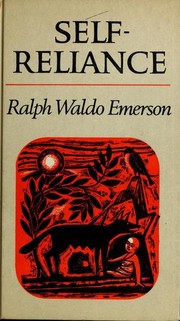
Self Reliance
An essay on avoiding conformity and following one's own instincts and ideas.
Summary
"Self-Reliance" is an essay by Ralph Waldo Emerson, the American transcendentalist, first published in his Essays: First Series of 1841. It gives his fullest statement of a recurring theme: each person should avoid conformity and false consistency and follow his or her own instincts and ideas. It contains his famous line "A foolish consistency is the hobgoblin of little minds, adored by little statesmen and philosophers and divines."
Emerson examines the nature of the "aboriginal self on which a universal reliance may be grounded" and stresses individualism and personal responsibility as sources of satisfaction in life, which he describes as "learning and forgetting and learning again". "Man is timid and apologetic," he writes; "he dares not say 'I think,' 'I am,' but quotes some saint or sage." Many of the essay's ideas came from his 1836 to 1837 lectures on the philosophy of history at Boston's Masonic Temple, and its defence of individualism may have answered the public censure of his radical views after "The American Scholar" and the Divinity School Address.
Key takeaways 4
- Emerson urges each person to trust his or her own judgement over authority.
- Conformity and false consistency stifle the self.
- Quoting saints and sages is no substitute for speaking for oneself.
- Individualism, for Emerson, carries personal responsibility.
Who should read it
Readers who want the classic American statement of individualism and nonconformity.
Who recommended it 3 · 3 direct
“Pow! This punched me in the gut from page one. Takes a tiny effort to read the English of the 1840s, but what a reward. A masterpiece essay (manifesto?) on independence, non-conformity, and trusting oneself.”
Similar books 6
Chosen by shared topics, the entries that hold them, and the people who recommended both.

Essays on the will, the blind desire that drives human action more than reason.
“Classic philosophy. I strongly disagreed with his thoughts on the meaning of life, on women, and some on religion. But the rest were fascinating and worthy of deeper reflection. Too much to summarize. See notes.” — Derek Sivers
Source: Derek Sivers book notes (primary, rated list) · Rating: 7/10
Recommended by: Derek Sivers, Patrick O'Shaughnessy and 1 other
How Western punishment changed and the prison became its main form.
Recommended by: Nat Eliason

Why people flee from freedom into totalitarianism: a psychoanalyst's account.
Recommended by: Nat Eliason
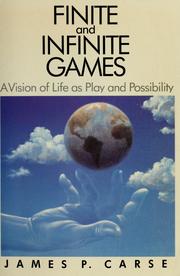
Finite games are played to win; infinite games are played to keep playing.
“So abstract. Maybe the most abstract book you'll ever read. Compares "finite" games with rules and winners, versus "infinite" games without winners where we can play with the game itself.” — Derek Sivers
Source: Book notes by Derek Sivers
Recommended by: Derek Sivers, Graham Duncan, Mohnish Pabrai and 9 others

Montaigne's life and essays, read as answers to the question of how to live.
“I also recommend Derek's other books (How To Live is especially good).” — Andrew Wilkinson
Source: Newsletter
Recommended by: Andrew Wilkinson, Derek Sivers and 3 others
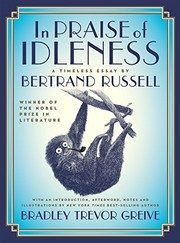
Essays for reflection and free enquiry, from fascism's roots to "useless" knowledge.
Recommended by: Nat Eliason, Patrick Collison, Ed Cooke