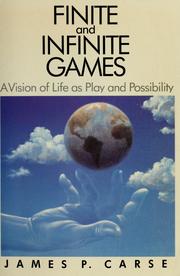
Finite and Infinite Games
Finite games are played to win; infinite games are played to keep playing.
Games played to win against games played to continue play
Summary
Carse, a professor of religion at New York University, distinguishes two kinds of game. A finite game is played for the purpose of winning, has fixed rules, defined boundaries and known players, and ends. An infinite game is played for the purpose of continuing the play, its rules change to prevent anyone from winning, its boundaries move, and it does not end.
The book proceeds through numbered aphoristic sections rather than through argument. Carse applies the distinction to war, sexuality, culture, religion, property, nature and death. His claim is that finite players play inside boundaries while infinite players play with boundaries, and that finite play is always contained within an infinite game because someone must choose to keep playing.
Some of his specific arguments are sharp. He treats titles and property as the mechanism by which finite victories are made permanent, and argues that property requires public recognition and therefore that wealth must be displayed and defended. He argues that a finite player plays to be powerful while an infinite player is strong, distinguishing power exercised within a bounded contest from strength that does not require an opponent. He treats theatricality against drama, where finite play follows a script toward a known outcome and infinite play remains genuinely open.
The book is deliberately obscure. Carse defines terms in ways that shift, and the aphoristic form prevents the reader from checking any claim. Its business readership comes largely through Simon Sinek's The Infinite Game, which simplifies the framework considerably and applies it to strategy in ways Carse did not. Read the original for the distinction itself, and expect philosophy rather than application.
Key takeaways 8
- A finite game is played to win and ends, while an infinite game is played to continue playing and its rules change to prevent an ending.
- Finite players play within boundaries and infinite players play with boundaries, which is the difference between competing and changing the terms of competition.
- Every finite game is contained within an infinite game, because someone must choose to start and to keep playing.
- A finite player seeks power, which exists only within a bounded contest, while strength does not require an opponent to be demonstrated.
- Titles and property exist to make the results of finite games permanent, which requires continuous public recognition to sustain.
- Whoever must play cannot play, since a game entered under compulsion is not a game.
- Finite play is theatrical, following a script toward a known ending, while infinite play remains genuinely undetermined.
- Culture is an infinite game and society is a finite one, and the two are permanently in tension.
Who should read it
Readers wanting the philosophical source of the finite and infinite game distinction, prepared for an aphoristic text that resists application.
Who recommended it 12 · 6 direct
“So abstract. Maybe the most abstract book you'll ever read. Compares "finite" games with rules and winners, versus "infinite" games without winners where we can play with the game itself.”
“I like Finite and Infinite Games which has been going around a lot. His other book, Breakfast at the Victory -”
“It’s a book called Finite and Infinite Games and it’s got nothing to do with game theory, it’s got to do with how to live your life.”
Similar books 6
Chosen by shared topics, the entries that hold them, and the people who recommended both.
Life in Nazi concentration camps, and logotherapy: finding meaning to survive.
“What's more certain to me is that we all need a why, as Viktor Frankl told us in Man's Search for Meaning.” — David Heinemeier Hansson
Source: Universal Basic Dead End
Recommended by: David Heinemeier Hansson, David Perell and 29 others
History as a growing web of non-zero-sum games, in which both sides can gain.
“His book Nonzero is among my five favorite books of all time. So, that book came out recently, and I gave that to my closest friend and my family.” — Nick Thompson
Source: The Tim Ferriss Show Transcripts: Nick Thompson (#311)
Recommended by: Mohnish Pabrai, Nick Thompson, Ev Williams and 1 other
Twelve rules for living, each drawn from clinical practice, biology and myth.
“A unique thinker with strong opinions presented as indisputable fact. More surprisingly interesting ideas than almost any book I've ever read. Extremely thoughtful, but occasionally abruptly concludes with an unsupported point. It has a conservative “this is how it is” certainty. It’s a broad collection of thoughtful insights on life, mixed with a lot of Bible interpretation.” — Derek Sivers
Source: Derek Sivers book notes (primary, rated list) · Rating: 9/10
Recommended by: Derek Sivers, Guy Spier, Nat Eliason and 8 others

Why Eurasian societies conquered others: the role of geography, crops and animals.
“This is an insightful read on the pace at which societies develop and why.” — Christopher Bloomstran
Source: Semper Augustus 2023 Letter to Clients, 'Worldly Wisdom', p. 81
Recommended by: Charlie Munger, Christopher Bloomstran and 17 others
How a person can live the life they want despite the constraints around them.
“Some fun "fist in the air" thoughts on freedom, from 1973. Includes related thoughts on parenting and honesty.” — Derek Sivers
Source: Derek Sivers book notes (primary, rated list) · Rating: 3/10
Recommended by: Derek Sivers, Nat Eliason
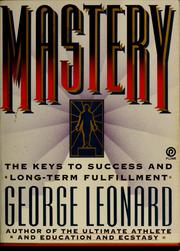
Mastery as long practice on the plateau, with a reward that comes late.
“Mostly detailed historical biographical tales of ”masters” like DaVinci, Darwin, Mozart, Proust, Goethe, Wright Brothers, Einstein, Coltrane, Martha Graham, etc. Lessons dissected from their successes, and categorized. Similar format to his great book “48 Laws of Power”, but a little less effective here. The biographies were interesting, but lessons were mostly conventional wisdom.” — Derek Sivers
Source: Derek Sivers book notes (primary, rated list) · Rating: 8/10
Recommended by: Derek Sivers, Patrick O'Shaughnessy and 2 others