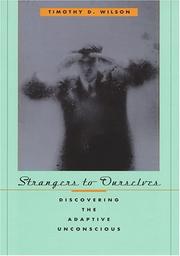
Strangers to Ourselves: Discovering the Adaptive Unconscious
The adaptive unconscious, and why introspection is a poor path to self-knowledge.
Summary
Timothy D. Wilson, a social psychologist, asks whether introspection is the best path to self-knowledge. He describes the adaptive unconscious that empirical psychology has revealed: not the psychoanalyst's store of primitive drives and conflicted memories, but a set of sophisticated mental processes that size up the world, set goals and start action while conscious thought is busy elsewhere. Many of our judgements, feelings and motives sit there, out of reach of introspection.
Wilson argues that people fail to know their own potential, feelings or motives mostly because they have built a plausible story about themselves that does not match their adaptive unconscious. He cites evidence that too much introspection can do harm, and makes the case for better ways of discovering the unconscious self than looking inward.
Key takeaways 5
- Much of the mind's judging and goal-setting runs outside conscious awareness.
- The unconscious described by modern psychology differs from Freud's.
- People's stories about themselves often fail to match what their unconscious actually does.
- Too much introspection can make self-knowledge worse rather than better.
- Better routes to self-knowledge exist than introspection alone.
Who should read it
Readers interested in psychology and self-knowledge who want the research on how little introspection reveals.
Who recommended it 2 · 1 direct
Similar books 6
Chosen by shared topics, the entries that hold them, and the people who recommended both.
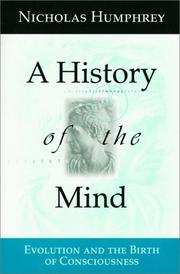
How consciousness and the senses evolved, and the history of the mind.
Recommended by: Mohnish Pabrai, Nassim Nicholas Taleb
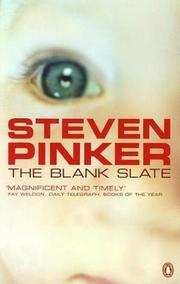
Why the mind is not a blank slate, and the moral and political stakes of that.
Recommended by: Mohnish Pabrai, Marc Andreessen and 1 other
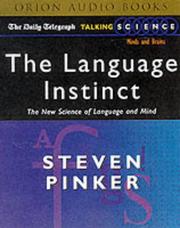
Language as a human instinct, and what science knows of grammar and learning.
“He gave me this book called The Language Instinct, written by Steven Pinker... And Pinker proves his point pretty well.” — Charlie Munger
Source: Poor Charlie's Almanack, Talk Two: A Lesson on Elementary, Worldly Wisdom
Recommended by: Charlie Munger, Michael Mauboussin and 3 others
How the mind can stay sharp, and grow wiser, as the brain ages.
Recommended by: Mohnish Pabrai, Nassim Nicholas Taleb
Why IQ scores have risen from one generation to the next, the Flynn effect.
Recommended by: Mohnish Pabrai
What brain science says about learning, sleep, stress, memory and multitasking.
“New scientific insights into why our brains work this way, and how to use what we now know to learn or work better.” — Derek Sivers
Source: Derek Sivers book notes (primary, rated list) · Rating: 8/10
Recommended by: Derek Sivers, Mohnish Pabrai, Nat Eliason and 2 others