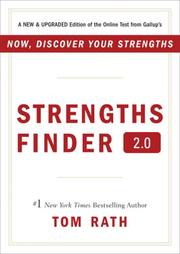
StrengthsFinder 2.0
Gallup's assessment of a person's talents across 34 themes, and how to use them.
Summary
Tom Rath's book, published by Gallup in 2007, accompanies the new version of Gallup's online assessment, now called CliftonStrengths. The assessment, invented by Don Clifton, ranks a person's talents across 34 themes, which Gallup describes as the ways a person most naturally thinks, feels and behaves. Each copy of the book carries an access code for taking the assessment; the code included with the book reports the reader's top five themes, while Gallup sells a separate code for the full ranking of all 34.
The book sets out the language of the 34 themes, so that readers can interpret their results and use them at work and elsewhere. Gallup claims that people who know and use their strengths are more engaged at work, more productive, and happier and healthier.
Key takeaways 4
- Gallup treats a person's themes as their natural ways of thinking, feeling and behaving.
- The assessment ranks 34 themes of talent, and the book's code reveals the top five.
- The book supplies a shared vocabulary of 34 themes for discussing talent at work.
- Gallup links knowing one's strengths to higher engagement and productivity.
Who should read it
Employees and managers who want to take the Gallup strengths assessment and use the results in their work.
Who recommended it 1
Similar books 6
Chosen by shared topics, the entries that hold them, and the people who recommended both.
Finding success, happiness and purpose in the second half of life.
Recommended by: Andrew Wilkinson

How masters from Leonardo to Faraday found a life's task and served apprenticeships.
“Mostly detailed historical biographical tales of ”masters” like DaVinci, Darwin, Mozart, Proust, Goethe, Wright Brothers, Einstein, Coltrane, Martha Graham, etc. Lessons dissected from their successes, and categorized. Similar format to his great book “48 Laws of Power”, but a little less effective here. The biographies were interesting, but lessons were mostly conventional wisdom.” — Derek Sivers
Source: Derek Sivers book notes (primary, rated list) · Rating: 5/10
Recommended by: Derek Sivers, Nat Eliason, Ryan Holiday and 6 others
The benefits of disorder at home, at work and in the classroom.
Recommended by: Zoë Foster Blake
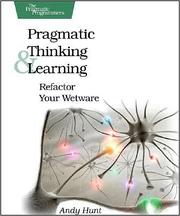
Cognitive science and learning theory applied to thinking and learning better.
“A great curated collection of facts about how to learn effectively and think clearly. Since it's written by a programmer, it makes many computer analogies that fellow programmers will appreciate. Non-programmers might feel a little left out.” — Derek Sivers
Source: Derek Sivers book notes (primary, rated list) · Rating: 5/10
Recommended by: Derek Sivers, Nat Eliason
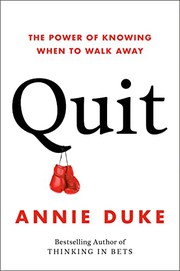
Why people stick too long with failing projects and careers, and how to quit well.
“Annie Duke, Quit: The Power of Knowing When to Walk Away (New York: Portfolio, 2022)” — Michael Mauboussin
Source: Capital Allocation: Results, Analysis, and Assessment, page 66
Recommended by: Ev Williams, Michael Mauboussin