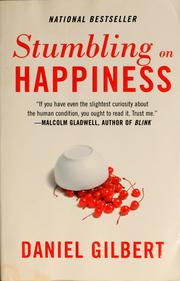
Stumbling on Happiness
Why people are bad at predicting what will make them happy, and how the errors arise.
Daniel Gilbert's accessible account of affective forecasting — our poor ability to predict what will make us happy. His research on immune neglect and focalism is less cited than Kahneman's work but equally well-evidenced.
Summary
Gilbert, a Harvard psychologist, argues that people are systematically bad at predicting what will make them happy, and explains the specific mechanisms that produce the error. The book is about prospection, meaning the mental simulation of future experiences, rather than about happiness itself.
His argument has three parts. Imagination fills in details that are not there, so a simulated future contains invented specifics the person treats as given. Imagination leaves out details that will be there, particularly the ordinary context surrounding any imagined event, which is why people imagine a promotion or a move without imagining the daily conditions around it. And imagination fails to account for how the mind will reinterpret events once they occur, which Gilbert calls the psychological immune system.
The evidence includes work on affective forecasting showing that people overestimate both the intensity and the duration of their emotional responses to events, both positive and negative. Lottery winners and people who become paraplegic converge toward their prior baseline faster than anyone predicts. He also covers the finding that people rationalise outcomes they cannot change, which means the events people most fear are frequently ones they would adapt to.
His practical recommendation is surrogation, meaning asking people who are currently in the situation you are considering how they feel, which he shows outperforms imagining it yourself. He notes that people reject this advice because they believe they are unique. Some of the studies have replicated poorly, particularly in the affective forecasting literature where effect sizes are smaller than reported. Gilbert's writing style is heavily comic and some readers find it wearing. The core finding about impact bias holds.
Key takeaways 8
- People systematically overestimate both the intensity and the duration of their emotional responses to future events, positive and negative alike.
- Imagination fills in details that are not specified and omits the ordinary context that will surround any actual experience.
- The mind rationalises outcomes that cannot be changed, which means feared events are frequently adapted to faster than anyone predicts.
- Because adaptation is invisible in advance, people work to avoid outcomes they would have adjusted to and to obtain outcomes that will not change their state.
- Asking someone currently in a situation how they feel predicts your own future feeling better than imagining it does.
- People reject the advice to ask others because they believe their own case is unique, which it usually is not in the relevant respects.
- Memory of past emotional states is reconstructed rather than retrieved, so learning from your own experience is less reliable than it appears.
- Events that are impossible to escape produce faster adaptation than events that remain reversible, because rationalisation requires the absence of an alternative.
Who should read it
Anyone making a large life or career decision on the basis of how they expect to feel afterwards.
Who recommended it 6 · 4 direct
“Not at all new-agey, as the title might suggest. Harvard professor of psychology has studied happiness for years, and shares factual findings that will change the way you look at the world.”
“Daniel Gilbert, Stumbling on Happiness (New York: Alfred A. Knopf, 2006)”
Similar books 6
Chosen by shared topics, the entries that hold them, and the people who recommended both.
Why some things gain from volatility and disorder, and how to build them.
“Antifragile. Loved the first 1/3 and last 1/3 of this book.” — Andrew Chen
Source: Books I’m reading (2013)
Recommended by: Ana Fabrega, Andrew Chen, Mohnish Pabrai and 23 others

Why people mistake luck for skill, above all in markets.
“Fooled By Randomness was unquestionably the best non-fiction book I read in 2005.” — Brad Feld
Source: Book Review: Fooled By Randomness — Feld Thoughts
Recommended by: Barton Biggs, Brad Feld, Howard Marks and 12 others
How choice architecture can steer people to better choices without removing options.
Recommended by: Tristan Harris
Experiments showing that people depart from rational choice in repeatable ways.
“Exhibit 1: Subscription to the Economist Magazine—Options Offered Affect Choices 16% 68% 0% 84% 32% Source: Dan Ariely, Predictably Irrational: The Hidden Forces That Shape Our Decisions (New York: Harper, 2008), 1” — Michael Mauboussin
Source: How Well Do You Compare?, page 3
Recommended by: Michael Mauboussin, Mohnish Pabrai and 8 others
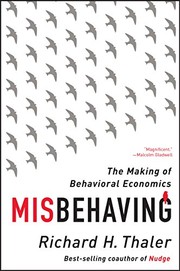
How behavioural economics was built against economists who assumed rational agents.
“He opens his new book, Misbehaving, with Vilfredo Pareto’s assertion that “the foundation of political economy and, in general, of every social science, is evidently psychology.” — Howard Marks
Source: On the Couch, page 1
Recommended by: Howard Marks, Michael Mauboussin and 2 others
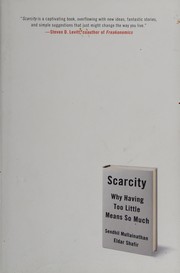
How a shortage of money or time narrows attention and weakens decisions.
Recommended by: Mohnish Pabrai, Daniel Kahneman and 1 other