Updates

  1. Person pages list letters, writing, profiles and links as sortable tables with filters, and show each person's companies as links; Fund letters show each letter's description in its own column.
  2. Experts show a checked job title and a short description of each person; 30 more people have photographs.
  3. Every company, fund, university and publication the experts work for has a page listing the people there.
  4. Fund letters show each letter's thesis and filter by it; 225 person pages list the essays, columns and newsletter issues the person wrote.
  5. Person pages list every essay and newsletter issue a person wrote, and their own books as a table in List view.
  6. Recommends shows the five largest kinds of book and the rest under More; browse pictures load sooner.
  7. Podcasts and talks link the original episode, filter by Audio and video or Press, and list each publisher once.
  8. Pages are wider, Recommends has List and Grid, and a filter clicked again turns off.
  9. Book cards sit in a ruled grid with Open Library and Goodreads links and each book's one-line note.
  10. Funds is now Investors; each investor's styles are buttons that filter the table.
  11. Podcasts and talks on a person's page filter by year and publisher and show as a list or a grid of pictures.
  12. Quotes show only people's own words: 472 summaries written by list sites are gone.
  13. Country pages open from Browse again, and every link on the shelf lands on a page.
  14. Subject and person pages show their sections as tabs, and each book appears once on a person's page.
  15. Book cards show the quote, who said it and the source; grids show five cards to a row.
  16. On a phone, a menu holds the sections, search, Updates, Feedback and dark mode.
  17. Feedback takes a screenshot of the page with no browser prompt, opens a screenshot full size when you click it, and clears itself once sent.
  18. Book cards are centred, search names the topic each book sits in, and any text cut short shows whole on hover.
  19. Search groups its results by kind: people, companies, geographies, subjects, topics, books, funds, fund letters and papers.
  20. The Books table lists who recommended each book by name, and the browser tab names the section you are in.
  21. Feedback can take a screenshot of the page, or one you paste or choose, and opens in the corner beside Updates.
  22. Each rail button reopens its section where you left it, and Browse, Table and People show on every book and subject page.
  23. Filters grey out choices that hold nothing instead of hiding them, and Books › People filters by authors or recommenders.
  24. Feedback takes a subject line and up to three screenshots.
  25. Biographies are grouped by the person they are about: 41 new pages, from Abraham Lincoln to Lee Kuan Yew.
  26. Sport splits into 23 sports, and Religion into one topic per faith.
  27. Book lists show as cards: the cover, one recommendation quote and every recommender by name.
  28. Seventeen subjects that had two or three pages under different names now have one page each.
  29. Every page lists its Experts as authors and recommenders, with a link to them on the Experts tab.
  30. Economics, Financial history, Financial panics and Accounting are subjects of their own, with one page per financial crisis.
  31. Book, person and subject pages open inside the app, so the tabs stay in view.
  32. 996 more book covers, and photographs or logos for 227 more people and companies.
  33. Books › Browse shows every subject as cards, and the rail holds Fund letters, Papers, Experts, Books and Funds.
  34. Every topic over 150 books splits into narrower topics, each with a page of its own.

Send feedback

What is it?
Screenshots, up to 3 (optional)
or paste one with Ctrl+V

We use your email only to reply to you.

That Will Never Work

That Will Never Work

Marc Randolph
2019
T3 328 pages · about 5h 28m to read Open Librarygoodreads

Insider account: Netflix co-founder, including the Blockbuster pitch.

Summary

Randolph co-founded Netflix with Reed Hastings and was its first chief executive, and this is his account of the founding and the early years through his departure from an operating role. It is a corrective to the standard origin story.

The substantive content is about how the business model was found. Randolph describes testing the mail-order concept by posting a CD to himself to see whether a disc would survive; launching in April 1998 as a per-rental store with late fees, which is what everyone else did; and discovering through repeated experiments that the subscription with no due dates and no late fees was what worked. He is explicit that the founding insight was not an insight, that the late fee story Hastings told is not what happened, and that the model emerged from a sequence of tests most of which failed.

He also covers the near-death moments: the attempt to sell to Amazon in 1998, the meeting where Blockbuster declined to buy the company for fifty million dollars, the collapse of funding after the dot-com crash, the decision to lay off a third of the staff, and his own replacement as chief executive by Hastings, which he describes candidly.

The book is a founder's memoir and its lessons are stated more than demonstrated. It is useful for the honest account of how long the model took to find and of how much of the story was constructed afterward. It stops before streaming, so it is not a history of the company as it exists.

Key takeaways 7

  1. Netflix's subscription model with no due dates emerged from a sequence of failed experiments rather than from a founding insight.
  2. The late fee origin story that Hastings told publicly for years does not describe what actually happened.
  3. Testing the physical assumption cheaply, by posting a disc to see whether it survived, resolved the central feasibility question in a day.
  4. Blockbuster declined to buy Netflix for fifty million dollars, and the meeting is evidence that incumbents cannot value a threat whose economics they do not yet share.
  5. A founder should assume that no one, including themselves, knows which idea will work, which means the organisation must be built to run tests rather than to execute a plan.
  6. The founder who starts a company is frequently not the right person to run it at scale, and Randolph's replacement by Hastings was correct.
  7. Company culture in the early period is set by what the founders actually do under pressure rather than by any statement of values.

Who should read it

Founders who want an honest account of how long a working business model takes to find and how founding stories get constructed afterward.

Who recommended it 1

Similar books 6

Chosen by shared topics, the entries that hold them, and the people who recommended both.
Gina Keating · 2012

Netflix from its 1997 founding to Qwikster in 2011, and its war with Blockbuster.

Recommended by: Balaji S. Srinivasan
Sumner Redstone, Peter Knobler · 2001

Redstone's memoir and his own case for buying and then shedding Blockbuster.
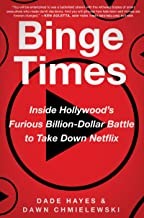
Dade Hayes, Dawn Chmielewski · 2022

The streaming wars Netflix started, from the studios' side.
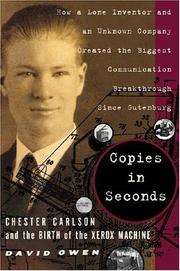
David Owen · 2004

Chester Carlson and xerography, the invention that funded PARC.
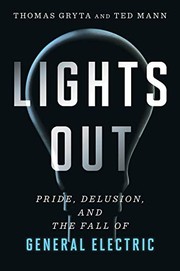
Thomas Gryta, Ted Mann · 2020

How GE fell from the world's most valuable company to a conglomerate split in three.

Recommended by: Andrew Wilkinson, Bill Gates

Where it sits in the reference 3

Companies
Companies
Business models

Topics

Company HistoriesEntrepreneurship and StartupsFounder Memoirs