Updates

  1. Person pages list letters, writing, profiles and links as sortable tables with filters, and show each person's companies as links; Fund letters show each letter's description in its own column.
  2. Experts show a checked job title and a short description of each person; 30 more people have photographs.
  3. Every company, fund, university and publication the experts work for has a page listing the people there.
  4. Fund letters show each letter's thesis and filter by it; 225 person pages list the essays, columns and newsletter issues the person wrote.
  5. Person pages list every essay and newsletter issue a person wrote, and their own books as a table in List view.
  6. Recommends shows the five largest kinds of book and the rest under More; browse pictures load sooner.
  7. Podcasts and talks link the original episode, filter by Audio and video or Press, and list each publisher once.
  8. Pages are wider, Recommends has List and Grid, and a filter clicked again turns off.
  9. Book cards sit in a ruled grid with Open Library and Goodreads links and each book's one-line note.
  10. Funds is now Investors; each investor's styles are buttons that filter the table.
  11. Podcasts and talks on a person's page filter by year and publisher and show as a list or a grid of pictures.
  12. Quotes show only people's own words: 472 summaries written by list sites are gone.
  13. Country pages open from Browse again, and every link on the shelf lands on a page.
  14. Subject and person pages show their sections as tabs, and each book appears once on a person's page.
  15. Book cards show the quote, who said it and the source; grids show five cards to a row.
  16. On a phone, a menu holds the sections, search, Updates, Feedback and dark mode.
  17. Feedback takes a screenshot of the page with no browser prompt, opens a screenshot full size when you click it, and clears itself once sent.
  18. Book cards are centred, search names the topic each book sits in, and any text cut short shows whole on hover.
  19. Search groups its results by kind: people, companies, geographies, subjects, topics, books, funds, fund letters and papers.
  20. The Books table lists who recommended each book by name, and the browser tab names the section you are in.
  21. Feedback can take a screenshot of the page, or one you paste or choose, and opens in the corner beside Updates.
  22. Each rail button reopens its section where you left it, and Browse, Table and People show on every book and subject page.
  23. Filters grey out choices that hold nothing instead of hiding them, and Books › People filters by authors or recommenders.
  24. Feedback takes a subject line and up to three screenshots.
  25. Biographies are grouped by the person they are about: 41 new pages, from Abraham Lincoln to Lee Kuan Yew.
  26. Sport splits into 23 sports, and Religion into one topic per faith.
  27. Book lists show as cards: the cover, one recommendation quote and every recommender by name.
  28. Seventeen subjects that had two or three pages under different names now have one page each.
  29. Every page lists its Experts as authors and recommenders, with a link to them on the Experts tab.
  30. Economics, Financial history, Financial panics and Accounting are subjects of their own, with one page per financial crisis.
  31. Book, person and subject pages open inside the app, so the tabs stay in view.
  32. 996 more book covers, and photographs or logos for 227 more people and companies.
  33. Books › Browse shows every subject as cards, and the rail holds Fund letters, Papers, Experts, Books and Funds.
  34. Every topic over 150 books splits into narrower topics, each with a page of its own.

Send feedback

What is it?
Screenshots, up to 3 (optional)
or paste one with Ctrl+V

We use your email only to reply to you.

The Making of a Blockbuster: How Wayne Huize

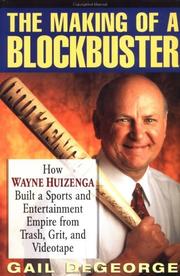
The Making of a Blockbuster: How Wayne Huizenga Built a Sports and Entertainment Empire from Trash, Grit, and Videotape

Gail DeGeorge
1996
T3 354 pages · about 5h 54m to read Open Librarygoodreads

The one dedicated book: Huizenga's roll-up and the sale to Viacom.

Summary

DeGeorge, a Business Week correspondent, traces Wayne Huizenga's career across three consolidations: Waste Management, built from a single garbage truck route into the largest waste company in the world; Blockbuster Entertainment, expanded from a handful of stores into the dominant video rental chain and sold to Viacom in 1994; and the Florida sports and entertainment holdings including the Miami Dolphins, the Florida Marlins and the Florida Panthers.

The recurring method is the point. Huizenga identified fragmented industries with many small operators, recurring revenue and no national brand. He bought operators rapidly using stock as currency, standardised operations, and used the resulting scale to negotiate better terms with suppliers and to raise more capital. In waste, the recurring revenue came from contracts; in video rental it came from repeat visits and late fees. DeGeorge documents the pace, which at Blockbuster reached a store opening roughly every day, and the accounting questions that followed, particularly the treatment of tape amortisation and of acquisition costs, which short sellers attacked at the time.

The book was published in 1996, shortly after the Viacom sale, so it treats Blockbuster as a success. The subsequent destruction of the video rental business by mail-order and streaming is not in it, and Huizenga's later roll-up at AutoNation gets no treatment.

It is useful as a study of roll-up mechanics and of how consolidation-driven growth can look like operating growth in reported figures.

Key takeaways 7

  1. Fragmented service industries with recurring revenue and no national brand are the natural targets for a roll-up.
  2. A high share price is the enabling asset in a roll-up because acquisitions are paid for in stock.
  3. Huizenga created value in waste hauling by winning long-term contracts and routing density, not by improving the underlying service.
  4. Blockbuster's economics depended on repeat visits and late fees rather than on the rental transaction itself.
  5. Rapid acquisition accounting makes it difficult for outsiders to separate acquired growth from organic growth.
  6. Selling Blockbuster to Viacom at the peak of the video rental business was the single most consequential decision in Huizenga's career.
  7. Standardising store format and inventory across acquired operators was what turned a collection of shops into a brand.

Who should read it

Operators and investors pursuing or underwriting consolidation strategies in fragmented industries, and anyone analysing acquisitive companies' reported growth.

Who recommended it 1 · 1 direct

“The Wayne Huizenga Story. On my Top Ten List. Awesome. An inspiration.”

Similar books 6

Chosen by shared topics, the entries that hold them, and the people who recommended both.

Gina Keating · 2012

Netflix from its 1997 founding to Qwikster in 2011, and its war with Blockbuster.

Recommended by: Balaji S. Srinivasan

Marc Randolph · 2019

Insider account: Netflix co-founder, including the Blockbuster pitch.

Recommended by: Reed Hastings

Sam Wyly · 2008

Entrepreneur's memoir of building and selling successive companies

Recommended by: Mohnish Pabrai
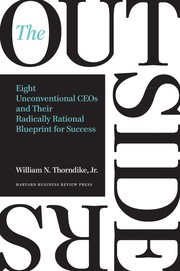
William N. Thorndike Jr. · 2012

Eight CEOs who beat the market by allocating capital, not by running operations.

“…books I've recommended, highlighted to death, or forced on friends.” — Andrew Wilkinson

Source: Andrew Wilkinson's Bookshelf, neverenough.com

Recommended by: Andrew Wilkinson, Dan Loeb, Francois Rochon and 12 others

Sumner Redstone, Peter Knobler · 2001

Redstone's memoir and his own case for buying and then shedding Blockbuster.

Where it sits in the reference 2

Companies
Investment styles

Topics

Company HistoriesEntrepreneurship and StartupsFounder Profiles and Startup Stories