The Anabasis: Or, Expedition of Cyrus, and the Memorabilis of Socrates
The march of ten thousand Greek mercenaries hired by Cyrus the Younger to win Persia.
Summary
Xenophon, an Athenian soldier, philosopher and writer, tells in the Anabasis the story of the Ten Thousand, an army of Greek mercenaries hired by Cyrus the Younger in 401 BC to help him take the Persian throne from his brother Artaxerxes II. Xenophon marched with them, and his seven books follow the army's journey across Asia Minor and Mesopotamia. The title means a going up, and translators have rendered it The March Up Country or The March of the Ten Thousand.
Xenophon's Hellenica refers readers to an Anabasis by Themistogenes of Syracuse, but most scholars agree with Plutarch, who said Xenophon used the name to keep a distance between himself as a character and himself as the writer. The story has been called one of the great adventures in human history. This 1863 edition binds the Anabasis with the Memorabilia, Xenophon's recollections of Socrates.
Key takeaways 4
- The Anabasis is an eyewitness account of a Greek mercenary army's campaign in Persia in 401 BC.
- Xenophon appears in his own narrative and may have published it under another name.
- The march across Asia Minor and Mesopotamia is the core of the story.
- The edition pairs the military history with Xenophon's memoir of Socrates.
Who should read it
Readers of classical history and of leadership in a stranded army.
Who recommended it 1 · 1 direct
Similar books 6
Chosen by shared topics, the entries that hold them, and the people who recommended both.
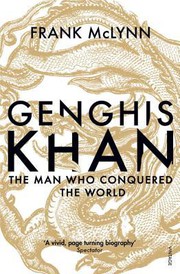
Temujin's rise from outcast to Genghis Khan and the Mongol empire he built.
Recommended by: Patrick Collison
The origins of the war between Athens and Sparta, and whether it was inevitable.
Recommended by: Patrick Collison
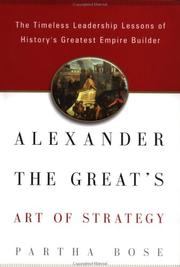
Leadership and strategy lessons drawn from Alexander the Great's campaigns.
Recommended by: Mohnish Pabrai
A contemporary's account of the long war between Athens and Sparta.
Recommended by: Matt Mullenweg, Ryan Holiday, Li Lu and 2 others
A chronicle of the Fourth Crusade and its conquest of Constantinople.
Recommended by: Paul Graham
A Roman general's own account of nine years of war against the Celts and Germans.
Recommended by: Paul Graham