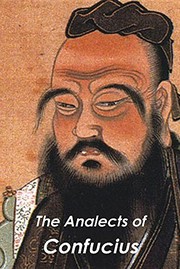
The Analects of Confucius
Sayings and ideas attributed to Confucius and his followers.
Summary
The Analects, also called the Sayings of Confucius, collects sayings and ideas attributed to Confucius and his contemporaries, traditionally thought to have been compiled by his followers. Scholars agree that much of the text was written during the Warring States period (475 to 221 BCE) and that it reached its final form in the mid-Han dynasty. In the early Han it counted only as a commentary on the Five Classics; by the late Song dynasty it was one of the Four Books and ranked above them.
Confucius held that a country's welfare depends on the moral cultivation of its people, starting with its leaders. Individuals cultivate an all-round virtue, ren, whose most basic step is filial piety, devotion to parents and older siblings. Desires need not be suppressed but reconciled through li, the rituals and forms of propriety by which people show respect for others and fill their roles in society. A ruler's first qualification is de, virtue. The Analects has been among the most widely read books in China for more than two thousand years and still shapes East Asian thought.
Key takeaways 4
- Good government begins with the moral cultivation of rulers.
- Filial piety is the first step towards the virtue of ren.
- Ritual and propriety channel desire rather than suppressing it.
- The text grew over centuries and became central to Chinese education under the Song.
Who should read it
Readers who want the founding text of Confucian ethics and its ideas on leadership.
Who recommended it 1 · 1 direct
Similar books 6
Chosen by shared topics, the entries that hold them, and the people who recommended both.
Eighty-one short chapters on the Tao, the founding text of Taoism.
“This existence-tissue is the central concern of Lao Tzu's Tao Te Ching (sixth century B.C.E.) - the seminal work in Taoism, the spiritual branch of Chinese philosophy that eventually evolved into Ch'an Buddhism.” — Maria Popova
Source: Awakened Cosmos: Poetry as Spiritual Practice
Recommended by: Maria Popova, Nat Eliason, David Perell and 6 others
An introduction to Zen, its Buddhist and Taoist origins and its principles.
Recommended by: Nat Eliason, Naval Ravikant
A guide to meditation as a rational practice, drawn from neuroscience and psychology.
“I think that the book I've probably, for the last few years, been giving out the most is Waking Up by Sam Harris.” — Susan Cain
Source: The Tim Ferriss Show Transcripts: Susan Cain (#357)
Recommended by: Nat Eliason, Susan Cain, Naval Ravikant and 1 other
Zen Buddhist teaching on meditation and Soto Zen practice.
Recommended by: Nat Eliason, Patrick Collison, Kevin Rose and 1 other
Commentaries on verses of the Tao Te Ching to awaken individual awareness.
Recommended by: Naval Ravikant